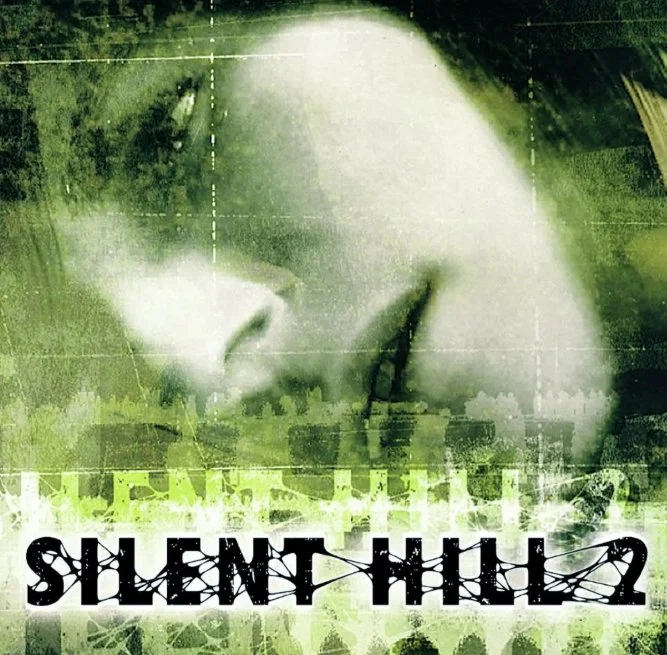
Silent Hill 2: Was James the Bad Guy?
There is a comforting way to read Silent Hill 2.
James Sunderland is a broken man. A grieving husband. A hollowed-out figure wandering through fog, decay, and psychological punishment after the unbearable loss of his wife, Mary. He is not a hero in the usual sense, but he is often treated as a tragic figure: a man crushed by illness, guilt, exhaustion, sexual deprivation, caregiver burnout, and emotional collapse.
In this reading, James is less a villain than a victim of circumstance. He did something terrible, yes, but the game seems to understand why. The town becomes a kind of purgatory. The monsters become his penance. The whole journey becomes a descent into grief, followed by the possibility of confession, punishment, or release.
It is a powerful reading.
It is also the reading James would probably prefer.
So let’s try the uglier version.
What if Silent Hill 2 is not primarily the story of a traumatised man being punished by a cruel town? What if it is the story of a selfish man whose trauma becomes his defence strategy? What if James’s grief is real, but also self-serving? What if his suffering is not evidence of innocence, but part of the psychological architecture that allows him to avoid the full moral weight of what he did?
This does not mean James is simple. He is not a cartoon villain. He is not evil in the clean, theatrical way horror often gives us. He is something more disturbing: ordinary, wounded, avoidant, weak, and recognisably human.
That is what makes him frightening.
James is not scary because he is a monster instead of a person. He is scary because he is a person who did something monstrous, then built a story in which he could still be the one who suffered most.
And the game’s genius is that, for much of the journey, we are tempted to believe him.
The Myth of Poor James
The first trick Silent Hill 2 plays is emotional positioning.
James arrives in Silent Hill after receiving a letter from Mary, his supposedly dead wife. She tells him she is waiting in their “special place.” He seems confused, numb, and fragile. He does not stride into town like an action protagonist. He drifts through it. His voice is soft. His body language is limp. His presence is almost pathetic.
That matters. James does not look like a murderer. He looks like grief in human form.
Because of that, players often begin from sympathy. We assume his sadness is morally meaningful. We assume his confusion is innocent. We assume that because he appears wounded, he must be the wounded party.
But Silent Hill 2 is not that generous.
The game slowly reveals that James did not simply lose Mary. He killed her. He smothered his terminally ill wife with a pillow, then repressed the act so completely that he could enter Silent Hill as if summoned by her ghost.
The comforting interpretation is that James killed Mary to end her suffering. A mercy killing. An impossible act of love under unbearable conditions.
But the game keeps contaminating that reading.
James may have loved Mary. He may have suffered beside her. He may have experienced genuine grief, exhaustion, despair, and guilt. None of that makes the act selfless. None of it turns Mary’s death into a simple tragedy of compassion.
The darker possibility is that James killed Mary not because her suffering was unbearable, but because his suffering was unbearable.
That distinction is everything.
Selfish Trauma
There is a version of this story that would be morally different.
Imagine a game about a person who ends the life of someone they love because that person explicitly begs for release. Imagine a story about assisted dying, impossible compassion, and the lifelong moral injury of doing something terrible for selfless reasons. That would be its own kind of horror.
But that is not quite James’s story.
James’s trauma is not clean. It is mixed with resentment. It is mixed with sexual frustration. It is mixed with disgust, exhaustion, boredom, fear, and the unbearable pressure of being trapped in a life defined by someone else’s illness.
That does not make him unrealistic. It makes him painfully realistic.
Caregiving can produce resentment. Illness can corrode intimacy. A partner can love someone and also feel trapped by them. A person can be devastated by someone’s suffering and still, shamefully, resent the way that suffering reorganises their own life.
Silent Hill 2 understands that. It does not flatten James into a moustache-twirling villain. It understands that awful acts often come from emotional mixtures people do not want to admit exist.
But explanation is not absolution.
James did not merely suffer. He acted. He ended Mary’s life. Then he retreated into a fantasy where he could continue to experience himself as bereaved rather than culpable.
That is the horror of James. Not that he feels nothing, but that he feels so much for himself.
Mary’s illness became his tragedy. Mary’s body became his prison. Mary’s suffering became the story of what James had lost. Somewhere along the way, the dying woman became secondary to the man enduring her decline.
That is the cruelest version of Silent Hill 2: James is not haunted because he loved Mary too purely. He is haunted because his love was contaminated, and he cannot bear to see what it was contaminated by.
The Nurses and the Corruption of Care
The Bubble Head Nurses are often treated as one of the most obvious symbols in Silent Hill 2: James is sexually frustrated, Mary was sick, therefore sexy nurse monsters.
That reading is not wrong, but it is too small.
The nurses are not merely sexual repression given legs. They are the collapse of care, illness, desire, disgust, and resentment into a single body.
Mary’s illness would have transformed the spaces of intimacy into spaces of care. The bedroom becomes sickroom. The wife becomes patient. Touch becomes medical, awkward, impossible, or loaded with guilt. Desire does not simply vanish in that context; it can curdle. It can become shameful. It can become displaced. It can begin to attach itself to the very environment associated with decline.
That is what makes the nurses so horrible.
They are not just “James was horny.” They are the eroticisation of the space where Mary suffered. They turn caregiving into objectification. They turn the hospital into a theatre of frustrated desire. They suggest that James’s grief is tangled with the parts of himself he would least want to confess.
The nurses ask a question the game never lets James answer comfortably:
What did Mary become to him before he killed her?
A wife? A patient? A burden? A body? A reminder of decay? A woman he loved? A woman he resented? A person whose suffering made him feel trapped?
The answer is probably not one of these. The answer is all of them.
That is why the nurses are frightening. They do not simply reveal that James desired other women. They reveal that James’s desire and Mary’s suffering had become psychologically fused. Care itself had become contaminated.
The horror is not sex. The horror is what James’s sexuality had to step over in order to survive inside him.
Maria: The Wife Without the Wound
If the nurses show us the contamination of James’s care, Maria shows us the fantasy built from that contamination.
Maria is Mary and not Mary. She has Mary’s face, Mary’s voice, Mary’s familiarity. But she is not ill. She is not dependent. She is not angry in the same way. She is flirtatious, physically available, teasing, alive, and responsive to James in ways Mary no longer could be.
She is not simply a temptation.
She is an accusation.
Maria represents the impossible bargain James wants: Mary without sickness, wife without duty, intimacy without decay, desire without guilt, replacement without consequence.
This is why Maria is so cruel as a figure. She is not just “the other woman.” She is James’s preferred edit of Mary. She embodies the fantasy that Mary’s illness interrupted something James still feels owed.
But Silent Hill 2 does not let that fantasy become comforting. Maria is repeatedly endangered, killed, revived, and returned. James is forced to lose her again and again, but each loss feels staged, almost ritualistic. The game is not simply punishing James by taking away someone he wants. It is forcing him to watch the fantasy collapse.
Every time Maria dies, the town seems to say: you do not get to replace Mary without confronting what you did to Mary.
That is why Maria cannot save him. She is not a second chance. She is the lie made flesh.
And like all of James’s lies, she cannot stay alive.
Angela and the Unstable Meaning of Kindness
Angela Orosco is often treated as a parallel tragedy: another damaged person drawn into Silent Hill by her own trauma. Her story is one of abuse, terror, and a world that has become permanently unsafe. She is not James’s symbol in any simple sense. She has her own horror.
But James’s interactions with Angela become deeply uncomfortable when we stop automatically granting him moral innocence.
On the surface, James appears kind to her. He speaks softly. He shows concern. He tries to stop her from harming herself. In another game, this might function as proof that James is fundamentally good despite his guilt.
But Silent Hill 2 is not another game.
The problem is not that James is obviously predatory toward Angela. The problem is that, by the time we understand James more fully, his gentleness can no longer be taken at face value.
Angela is vulnerable, frightened, and female. James is a man whose relationship to female suffering is already compromised. He has already turned Mary’s suffering into his own tragedy. He has already responded to illness, dependency, anger, and pain with resentment and violence. So when he encounters Angela’s suffering, the question becomes unavoidable:
Can James recognise another person’s pain without making it about himself?
This is where Angela becomes a moral stress-test, not because she exists for James, but because James’s reaction to her exposes the limits of his empathy.
He may genuinely want to help her. He may also want to feel like the sort of man who helps. Those are not the same thing.
That difference matters.
A person can perform kindness because they care. A person can also perform kindness because they need to see themselves as kind. James’s tragedy is that we can rarely separate those motives cleanly. His softness may be real, but it is not automatically trustworthy. His sadness may be real, but it does not guarantee moral clarity.
Angela senses danger everywhere. Her trauma has trained her to read threat in male bodies, voices, movements, and intentions. It would be too simple to say she is “right” about James in a literal sense. But it would also be too easy to dismiss her fear as mere projection.
The devil’s advocate reading asks us to sit with the discomfort.
What if Angela’s fear matters not because James is exactly like the men who harmed her, but because James is not as different from them as the player wants him to be?
That is a much more frightening thought than “James is nice to Angela.” It forces us to ask whether we have mistaken his wounded manner for goodness.
Pyramid Head as Judgement, Not Villainy
In most horror games, the iconic monster is the villain. It chases you, threatens you, interrupts you, and becomes the shape of danger.
Pyramid Head appears to fit that role. He is brutal, silent, oppressive, and sexually violent in presentation. He stalks James through the town like an executioner from a nightmare.
But if James is not simply the victim, Pyramid Head becomes harder to classify.
He may not be good, exactly. “Good” is too human a word. But he is honest in a way James is not.
Pyramid Head does not flatter James. He does not comfort him. He does not let him remain the tragic husband. He does not care about James’s preferred self-image. He appears as punishment, judgement, and brute fact.
That makes him morally interesting. Not righteous in the comforting sense, but clarifying.
James is a man of fog. Pyramid Head is a thing of iron.
James drifts, forgets, denies, rewrites, and evades. Pyramid Head acts. He does not explain. He does not negotiate. He does not participate in James’s self-pity. His violence is horrible, but it also punctures illusion.
This becomes especially important in relation to Maria. Pyramid Head repeatedly kills or threatens the woman who functions as James’s replacement fantasy. On a surface level, this is torment. On a symbolic level, it is correction.
James wants Maria to be real because Maria allows him to keep avoiding Mary. Pyramid Head destroys Maria because the fantasy must be destroyed. He forces James to witness the death he is trying not to remember.
That does not make Pyramid Head a hero. It makes him a punishment mechanism.
He is the part of the town, or the part of James, that refuses to allow the lie to complete itself. If James’s mind is building a defence, Pyramid Head is the prosecution. If James is constructing a romantic tragedy, Pyramid Head keeps dragging the body back into the room.
The player fears him because James fears him.
But perhaps James is right to fear him.
The Player as Defence Attorney
This is where Silent Hill 2 becomes more than a story about James. It becomes a story about us.
Video games create intimacy through control. We move James. We protect him. We manage his health. We solve puzzles for him. We help him survive. Before we know what he has done, we have already accepted responsibility for him.
That matters.
By the time the game reveals the truth, we are not neutral observers. We have spent hours inhabiting James’s confusion. We have seen the town through his eyes. We have been attacked by his monsters. We have treated his survival as our objective.
The game makes us complicit before it makes us informed.
That is one of its cruellest tricks.
Because we control James, we are encouraged to identify with him. Because we identify with him, we are encouraged to defend him. Because we defend him, we become vulnerable to his own self-excusing narrative.
We say he was grieving. We say he was exhausted. We say he was traumatised. We say Mary was suffering. We say it was complicated.
And it was complicated.
But complexity can become fog.
That may be the real horror of Silent Hill 2: not that James lies to himself, but that we are so ready to help him.
We become his defence attorneys. We collect evidence, but we often use that evidence to soften the crime. We analyse the monsters, the symbolism, the endings, the letters, the hospital, the guilt, and the grief. We turn James into a case study. We intellectualise him.
In doing so, we risk repeating his central moral failure.
We make Mary’s death about James.
The more we study James, the easier it becomes to centre him. Mary becomes the cause of his guilt. Angela becomes a mirror for his possible empathy. Maria becomes his fantasy. Pyramid Head becomes his punishment. The whole world becomes James’s mind, James’s grief, James’s wound.
That is true to the game, but it is also morally dangerous.
Because Mary was not just a symbol. Within the fiction, she was a person. A sick, angry, frightened, dying person who was killed by the man now wandering through a town built from his inability to face that fact.
The devil’s advocate reading insists on dragging Mary back into the centre.
Not Mary as saint. Not Mary as perfect victim. Not Mary as abstract suffering. Mary as the person whose life James ended.
That is the part the “poor James” reading can obscure. It is not that sympathy for James is forbidden. It is that sympathy for James can become another way of participating in his self-centredness.
When we ask, “Can James be forgiven?” we may already have moved too far into his frame.
Perhaps the better question is: why are we so much more interested in James’s pain than Mary’s death?
Was James the Bad Guy?
So, was James the bad guy?
The honest answer is yes.
The more interesting answer is: yes, but not in the way that lets us feel clean.
James is not a villain we can safely hate from a distance. He is not evil in a way that separates him from ordinary human feeling. He is bad in a more intimate, more recognisable, and more frightening way.
He is a man who loved and resented the same woman.
He is a man who suffered and still chose violence.
He is a man who wanted release and called it grief.
He is a man who killed Mary, then built a psychological cathedral to his own pain.
That is what makes him so hard to discuss. If James were purely monstrous, the game would be easier. If James were purely tragic, the game would be easier. Instead, he sits in the horrible middle: understandable but not excused, wounded but not innocent, human but not safe.
This is why Silent Hill 2 endures.
It does not ask us to solve James like a riddle. It asks us to examine why we were willing to comfort him.
Simply Puy
Forgiveness is not the most interesting question in Silent Hill 2.
Forgiveness is too tidy. It asks us to reach a verdict. It asks whether James has suffered enough, understood enough, confessed enough, punished himself enough. It turns the game into a moral transaction.
But Silent Hill 2 is not tidy.
The game’s horror is not just that James did something unforgivable. It is that he remains human afterwards. He still feels grief. He still feels longing. He still feels fear. He still wants to be seen as someone who loved his wife.
That is where the real discomfort lives.
James’s trauma is real. But it is selfish trauma. It is the trauma of someone who cannot bear the person he became. It is the trauma of a man who converted another person’s suffering into evidence of his own tragedy.
That is not rare. That is not supernatural. That is not safely confined to horror.
People do this all the time in smaller, quieter ways. They turn harm into intention. They turn guilt into sadness. They turn apology into self-pity. They make the pain they caused into the pain they feel. They become so wounded by the knowledge of their own wrongdoing that the original victim disappears from view.
Silent Hill 2 simply gives that process a town.
It gives self-pity fog.
It gives resentment nurses.
It gives fantasy a body.
It gives judgement a helmet and a blade.
And then it gives the controller to us.
That is why the devil’s advocate reading matters. Not because it proves that James is evil and everyone who sympathises with him is wrong, but because it restores the horror that sympathy can soften.
James is not innocent because he suffered.
James is not redeemed because he understands.
James is not harmless because he seems sad.
He is a man who did something monstrous, then invited us into the story where he was the one being punished.
The most frightening possibility is not that we believed him.
It is that part of us still wants to.
Table of Contents