When the Company Becomes the Curse: Yuppie Psycho and the Psychology of Institutional Horror
Yuppie Psycho is less compelling as a clean anti-corporate manifesto than as a psychological portrait of institutional life from below: humiliating, absurd, self-perpetuating, and full of people surviving by becoming slightly worse. Its politics wobble, especially around entitlement, inheritance, and who ultimately gets to “save” the company, but that instability may also be what makes its corporate horror feel so psychologically true.
Spoilers Ahead For Yuppie Psycho
More convincing as a nightmare than a manifesto
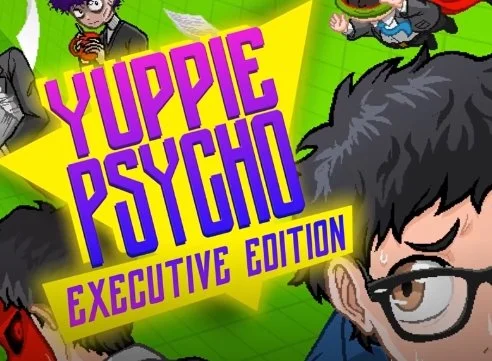
Yuppie Psycho works because it understands something many workplace satires only gesture toward: institutions do not have to make moral sense in order to feel psychologically real. Baroque Decay’s horror-comedy throws Brian Pasternack into Sintracorp, a company so grotesquely hierarchical that its office functions less like a workplace than a caste system and its employees seem half-cult, half-carcass.
That is the game’s strongest achievement. It does not merely say that work can be dehumanising. It makes dehumanisation spatial, ritual, and absurd. The office becomes a machine that no longer seems to exist for any intelligible purpose beyond preserving itself. People keep moving because stopping feels fatal. Procedures continue because nobody inside the system is permitted to ask what they are for. The result is less a tidy corporate allegory than a social nightmare whose emotional logic is immediately recognisable to anyone who has worked inside a large, opaque institution.
The psychology of the office as a hostile organism
This is where the game becomes genuinely interesting from a psychological perspective. What it captures especially well is not just “capitalism bad” in some broad sense, but the feeling of institutional life from below: status anxiety, bureaucratic depersonalisation, learned helplessness, and the moral weirdness that develops when absurd systems become normal.
Psychologically, that matters. In settings where power is opaque, rewards are arbitrary, and roles are treated as the whole person, workers often do not experience themselves as agents so much as as functions. The game externalises this by turning office routines into horror set pieces, but the underlying logic is familiar enough: a person adapts to the system not by understanding it, but by shrinking themselves to fit it. That is why Yuppie Psycho feels so sharply observed even when it is being ridiculous. Its surrealism works because it is attached to recognisable forms of institutional pressure.
Learned helplessness with fluorescent lighting
One of the most compelling ways to read the game is through learned helplessness. The concept is usually associated with exposure to repeated uncontrollable stressors, after which people stop trying to escape even when escape becomes possible. Yuppie Psycho keeps staging that condition in office form: workers trapped in pointless cycles, employees who treat the irrational as ordinary, and an environment where survival depends less on resistance than on adaptation.
Even the game’s practical systems support this reading. Between horrors, Brian restores himself by making coffee, making lunches, and using the photocopier as a save point. These are funny details, but they are also psychologically precise. Coping inside bad systems often takes the form of tiny rituals that keep the self operational without changing the structure that is injuring it.
That is also why the game’s humour does not undercut its dread. It sharpens it. A purely solemn anti-corporate horror game would likely feel too neat, too convinced of its own moral clarity. Yuppie Psycho is funnier and stranger than that. It understands that institutions are often both maddening and stupid, both oppressive and faintly laughable. Anyone who has worked somewhere chaotic enough knows that absurdity is not an alternative to harm. It is often one of the ways harm becomes liveable.
Hugo and the psychology of resentment
Hugo is where the game’s social horror becomes especially sharp. He is not compelling because he is powerful, but because he is recognisable. He feels less like a grand ideological villain than a smaller, meaner figure: someone whose low status becomes a moral alibi for trampling others on the way up.
That matters because humiliation does not automatically radicalise people toward solidarity. Very often it radicalises them toward revenge, entitlement, and the fantasy that suffering has earned them the right to dominate. Hugo carries exactly that energy. He is not simply ambitious; he is morally inflated by his own grievance. His resentment is not a wound that opens him to others, but a justification for becoming worse. In that sense, he is not outside the system but one of its most convincing products. Once status becomes the main currency of meaning, resentment is easily converted into cruelty.
This also connects with the idea of moral disengagement. In organisational settings, harmful practices become easier to perform when responsibility is displaced, euphemised, or framed as serving a larger institutional purpose. Yuppie Psycho exaggerates that process into demonic office logic, but the underlying mechanism is recognisable. Once the company becomes the horizon of justification, people can treat one another appallingly while still imagining themselves as simply doing what the structure requires. Hugo’s violence is not merely personal. It is institutionally licensed ambition.
Psychologically sharp, politically unstable
Where the game becomes less secure is in what it is finally trying to say about power. It knows with great confidence what the company feels like from the inside: degrading, self-perpetuating, irrational, and full of people adapting to poison. But it is less sure about where blame should finally settle. Is the problem the curse, the corporate family, opportunists like Hugo, inherited power, or the way everybody folds around the system until the system no longer needs a single coherent villain?
That uncertainty is not fatal, but it does matter. Yuppie Psycho feels more psychologically convincing than politically stable. It reaches toward several overlapping explanations at once, which makes it richer as atmosphere than as doctrine. It understands the emotional truth of institutional life more securely than it understands the structural truth of its own satire.
The ending problem
The endings are where the game’s satire becomes harder to pin down. On paper, the “good” route, the one where Brian saves his friends and shares coffee on the roof with Kate, offers a welcome note of relief. It gives the player something human after all the bureaucratic grotesquery. But it does not really solve the deeper problem the game has been building toward. Sintracorp still feels less like a defeated evil than a system people have simply learned to survive.
This is where the game becomes more interesting, but also less tidy. Much of Yuppie Psycho seems to mock hierarchy, entitled power, and the way institutions preserve themselves through ritual, status, and fear. Yet when the story reaches its resolution, it does not entirely escape those same structures. Power is not so much dismantled as redirected.
And that redirection matters. Hugo represents the ugly entitlement of the climber: the man who treats his own low status as a licence to brutalise others on the way up. But Hugo’s defeat does not produce emancipation from hierarchy. Instead, the curse is broken through the restoration of Rei, the rightful heir. In other words, the game rejects the spiteful opportunist, only to stabilise the system through inheritance. Hugo is too crude, too grasping, too contaminated by his own resentment to rule. Rei, by contrast, is legitimised by bloodline and position. The company is not liberated from hierarchy. It is returned to a cleaner version of it.
That is an extraordinarily bleak idea, whether or not the game fully realises it. Brian and the others may get their warm, human moment, but nepotism technically saves the day and power shifts upward once again. Perhaps that is the game’s most unsettling thought. Even when you win, you lose.
This creates a strange tension in the game’s commentary. If one wants to read it as a clean revolt from below, the ending feels wobbly, even contradictory. But if one reads it as a horror story about how institutions actually persist, that awkwardness starts to look more believable. Toxic systems rarely collapse in morally satisfying ways. More often, they shift hands, rename themselves, or survive by changing just enough to preserve their core logic. In that sense, Yuppie Psycho may weaken its critique by refusing a cleaner break, but it also becomes more psychologically convincing. It understands that escaping a cursed company is easier than ending the kind of world that made the company possible.
What the game gets right
The game’s real power, then, lies not in delivering the perfect anti-corporate thesis, but in showing how institutions deform subjectivity. It gets status dread right. It gets humiliation right. It gets the way absurd rules become normal from the inside right. It gets the emotional economy of the workplace right too: the tiny coffee-break reprieves, the fragile friendships, and the weird intimacy that sometimes develops precisely because everyone is trapped in the same hostile architecture.
And that, I think, is why the Kate rooftop ending lands at all. It is not because it solves Sintracorp. It is because it briefly restores scale. After a game spent inside monstrous systems, a cup of coffee with another person feels like a earned event. The institution remains enormous. The victory remains partial. But a sliver of the human has survived the company. In social horror, that can be enough.
Simply put
Yuppie Psycho is less impressive as a perfectly coherent corporate statement than as a psychological portrait of institutional life from below. It turns corporate culture into occult horror not because offices are literally demonic, but because large systems often do feel autonomous, absurd, and full of people surviving by becoming slightly worse. Its satire bites hardest when it stays close to lived experience: humiliation, status games, learned helplessness, moral numbness, and the strange little rituals that keep a person going inside a structure that no longer seems to exist for them at all.
That is what makes the game interesting rather than merely clever. Its politics may blur at the edges, but its psychology remains sharp. The company is not frightening because it has a witch in it. The company is frightening because, by the time the witch arrives, the workers already know how to live there.
References
Table of Contents