
The Architecture of Guilt: A Freudian Dissection of the Psychical Landscape in Silent Hill 2
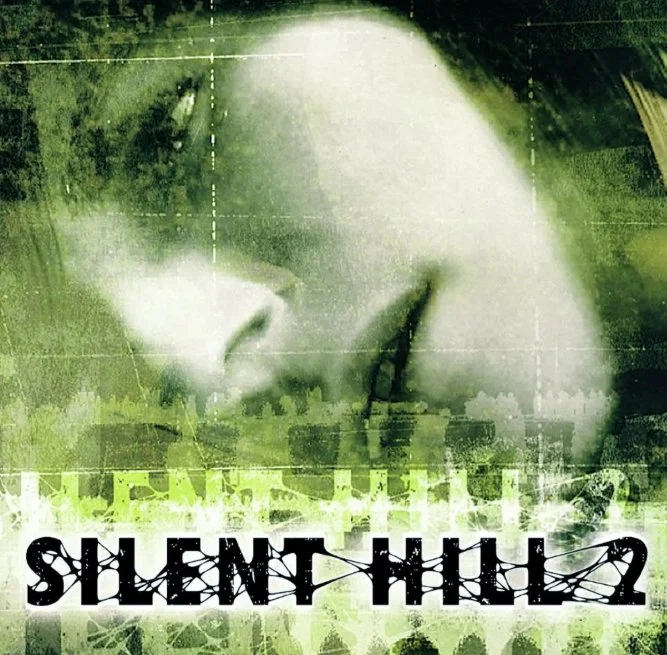
The narrative structure of Silent Hill 2 functions as a sophisticated dramatization of the human psyche, moving beyond the tropes of conventional survival horror to explore the depths of trauma, repression, and the unconscious mind. Within this framework, the town of Silent Hill serves not as a physical location in any straightforward sense, but as a topographical representation of the protagonist’s internal world. The journey of James Sunderland can be read as a punishment dream, a Freudian scenario in which the ego, burdened by an unbearable truth, constructs a nightmarish reality to satisfy a subconscious need for penance.
Spoilers ahead for Silent Hill 2
This analysis reads Silent Hill 2 through a Freudian lens, treating the town, its monsters, and its shifting environments as dramatizations of James Sunderland’s guilt, repression, and desire for punishment. Through the Freudian structural model of the psyche, comprising the id, ego, and superego, alongside the competing drives of Eros and Thanatos, the game externalizes the internal conflicts of a mind fractured by grief, violence, and self-loathing.
Psychical Topography: The Tripartite Reality of Silent Hill
The environmental design of Silent Hill 2 mirrors the Freudian topographical model of the mind, in which the boundaries between the conscious, preconscious, and unconscious remain unstable and permeable. The town manifests in three principal states: the Real World, the Fog World, and the Otherworld. Each can be interpreted as corresponding to a different layer of James Sunderland’s awareness and to a different mode of psychic defence.
In the Real World, Silent Hill is a lakeside resort town associated with vacation, intimacy, and happier memories. This world functions as the conscious domain: a realm of apparent order, familiarity, and the idealized past. Yet James does not truly enter Silent Hill through this stable reality. Instead, he arrives in the Fog World, a dreamlike and obscured version of the town that functions as a visual metaphor for the preconscious. In Freudian terms, the preconscious contains thoughts and memories that are not immediately available to awareness but can be brought into consciousness with effort. The heavy fog symbolizes uncertainty, distortion, and James’s profound state of not-knowing. His vision is limited because his self-knowledge is limited.
As James descends deeper into the town, the environment gives way to the Otherworld, a space of rust, rot, blood, industrial metal, darkness, and claustrophobic violence. This reverse side of reality corresponds to the unconscious: the domain of repressed wishes, traumatic residues, and unbearable truths. Here, repressed material returns not as thought, but as image, body, and threat. In Silent Hill 2, the Otherworld is not a universally shared objective space, but a personalized psychic hell shaped by the sufferer’s particular torment. For James, it repeatedly incorporates hospitals, corridors, cells, and prisons, all of which reflect his guilt over Mary’s illness and his own sense of being psychologically incarcerated by what he has done.
A further descent occurs in spaces such as the labyrinth and other abstract zones in which stable logic and spatial coherence collapse. These spaces can be read as the deep unconscious, where the last defensive structures of the ego begin to fail and where repressed truth presses most forcefully toward revelation.
| Reality State | Psychical Equivalent | Environmental Characteristics | Symbolic Function |
|---|---|---|---|
| Real World | Conscious | Resort town, familiarity, normality | The rejected reality of Mary’s death; the idealized past |
| Fog World | Preconscious | Dense fog, obscured vision, intermittent threats | Transitional space between knowing and not-knowing |
| Otherworld | Unconscious | Rust, decay, darkness, hostility, industrial horror | Return of the repressed; trauma given form |
| Labyrinth / abstract spaces | Deep unconscious | Disorientation, flooded spaces, broken architecture | Collapse of psychical defences; traumatic core exposed |
The fluidity between these states resembles dream logic, reinforcing the sense that James is inhabiting a psychic rather than merely physical ordeal. The cyclical movement between obscurity and revelation suggests an ego constantly oscillating between repression and the inevitable return of the truth.
James Sunderland: The Fractured Ego and the Punishment Dream
James Sunderland represents the fragile ego, caught in a desperate struggle to mediate between the unruly pressures of desire and the harsh demands of moral condemnation. His psyche has suffered a profound internal fracture caused by the repression of the fact that he killed his wife, Mary. Unable to consciously accept this act, James’s ego creates a not-me situation, pushing the memory of the murder into the unconscious and replacing it with the defensive belief that Mary died of her illness three years earlier. The game gradually reveals that this timeline is not objective fact, but part of James’s dissociative distortion.
This dissociation is so severe that James appears estranged from himself at the very beginning of the game, as though he is already wandering through a self-generated psychic theatre. The recurring corpses that resemble him, the fragmented spaces, and the personalized monsters all suggest that James is encountering displaced aspects of his own internal life. His surname, Sunderland, invites an interpretive reading of him as sundered, split apart from the truth of his own actions and from the self who committed them.
Within this psychical fragmentation, James’s journey through Silent Hill can be read as a punishment dream: an unconscious wish of the ego to atone through suffering. He cannot simply remember what he has done, because direct knowledge would be psychically catastrophic. Instead, the mind arranges a circuitous route through symbolic ordeal, allowing the truth to emerge only through repetition, terror, and punishment.
James exhibits a range of Freudian defence mechanisms throughout the narrative:
Denial: He refuses to consciously accept Mary’s death as it actually occurred, instead pursuing the fantasy that she has somehow summoned him.
Repression: He buries the memory of the murder, along with his resentment, sexual frustration, and ambivalent feelings during Mary’s prolonged illness.
Projection: He externalizes inner conflict onto the monsters and hostile spaces around him.
Displacement: He shifts his self-hatred, fear, and unresolved desire into external figures that can be fought, feared, or witnessed from a distance.
By displacing psychic contents into monsters, James allows the ego to process unbearable material in mediated form. The town becomes a cruel therapeutic apparatus, forcing confrontation through symbol rather than direct confession.
The Manifested Id: Maria and the Idealized Fantasy Object
Maria is the most significant manifestation of James’s id. She is a false double of Mary, carrying the same face and voice while appearing more flirtatious, provocative, emotionally available, and sexually inviting. From a Freudian perspective, Maria represents the return of the repressed, specifically James’s sexual desires and libidinal frustrations, which became increasingly fraught during Mary’s illness.
Maria functions as an idealized fantasy object, mediating between James’s conscious ego and his deeper, repressed desires. Where Mary became associated in James’s psyche with illness, suffering, bitterness, and guilt, Maria appears as vitality without burden, intimacy without obligation, sensuality without decay. She is not simply another woman, but a wish-formation: a version of Mary stripped of the pain, hostility, and moral demand that James could no longer bear.
Her role in the punishment dream is deeply ambivalent. On the one hand, she tempts James away from truth and toward fantasy, keeping him attached to illusion. On the other, her repeated deaths serve as traumatic repetitions that continually return him to the problem he is trying to escape. Each time Maria dies before his eyes, the scene re-enacts loss and compels James to relive the death of Mary in altered form. The psyche resurrects her only to kill her again, staging the same wound until it can no longer be denied.
Even Maria cannot remain purely ideal. At times, she begins to cough, weaken, or adopt echoes of Mary’s condition. This is crucial. James’s guilt is so pervasive that even his fantasy cannot remain uncontaminated. The repressed truth infiltrates the wish-figure, revealing that desire cannot be cleanly separated from guilt, and fantasy cannot remain untouched by the trauma it attempts to evade.
The Tyrannical Superego: Pyramid Head as Executioner
If Maria embodies the pleasure-seeking force of the id, Pyramid Head embodies the punitive force of the superego. In Freudian theory, the superego is not merely conscience in a mild or social sense, but a severe internal authority capable of relentless accusation, cruelty, and punishment. It knows the ego’s transgressions even when the conscious subject does not. James may not consciously remember murdering Mary, but the superego does.
Pyramid Head is therefore best understood as the executioner produced by James’s need for punishment. He is the form taken by a superego that has become monstrous in its severity. His heavy triangular helmet symbolizes the oppressive weight of guilt, an impossible burden that crushes thought downward and renders the self both anonymous and condemned. He is faceless because he is not a person, but a function: judgment made flesh.
Pyramid Head is repeatedly associated with acts of violence against other monsters, particularly those linked to James’s repressed sexuality. In this sense, the superego appears not merely as punisher, but as censor and destroyer of libidinal desire. The same mind that generates erotic longing also generates a force that brutalizes and humiliates it.
Most importantly, Pyramid Head repeatedly kills Maria. This is not arbitrary aggression. It is ritualistic dismantling. Each act of violence tears down James’s preferred illusion and forces him back toward the truth. The superego refuses to let the fantasy survive. It executes the delusion again and again because James, unconsciously, believes he deserves not comfort but pain.
When James finally confronts the truth of his actions, the need for this external punisher disappears. At that point, the two Pyramid Heads encountered in the hotel destroy themselves, signaling that their purpose has been fulfilled. Once guilt has been consciously acknowledged, punishment no longer requires the same monstrous intermediary.
The Bestiary of Repression: A Somatic Analysis of Monsters
The monsters of Silent Hill 2 are not generic enemies but symbolic condensations of James’s inner suffering. They externalize guilt, repression, illness, desire, disgust, helplessness, and the bodily memory of trauma. Their designs fuse the sexual and the grotesque, the sick and the erotic, the human and the deformed. They are psychical conflicts rendered somatic.
The Lying Figure
The Lying Figure appears as a humanoid body trapped within what resembles a skin-bound straightjacket. It evokes confinement, illness, and bodily suffering. This monster recalls Mary in the late stages of her disease, trapped within a body that had become a prison to herself and to James’s memory of her. The very restriction of the creature, its inability to move freely, symbolizes helplessness and frustrated contact.
Its attack, an emitted spray of toxic fluid, carries obvious associations with sickness, bodily corruption, and revulsion. On an interpretive level, it can also be read as the externalization of the emotional poison surrounding Mary’s decline, including the resentment, anguish, and hostile exchanges that contaminated their final period together. The Lying Figure is both patient and accusation.
The Mannequin
The Mannequin, composed of two pairs of feminine legs joined at the waist, is perhaps the game’s starkest image of sexual fragmentation. It lacks a head, arms, and torso, meaning it lacks identity, voice, subjectivity, and relational depth. It is sexuality reduced to body parts. This speaks to James’s deprivation and to the way repressed desire can deform perception, reducing the other to an object stripped of personhood.
The creature’s tendency to remain still until approached suggests the dormancy of repressed desire. These impulses lie hidden until proximity or attention activates them. The Mannequin thus becomes a powerful symbol of libido distorted by guilt and suppression.
The Bubble Head Nurse
The nurses combine medical associations with sexualized presentation. They merge the image of caregiving with the image of forbidden desire. For James, the hospital was a place of Mary’s suffering, but also of suspended intimacy, bodily vulnerability, and sexual frustration. The nurses embody that unstable overlap.
Their blurred or obscured faces suggest depersonalization and emotional distance. James cannot relate to them as people. They become composite symbols of hospital trauma, erotic tension, and detached bodily function. They stand at the intersection of care, lust, guilt, and disgust.
The Mandarin
The Mandarin lurks beneath the grating of the world, hanging below the surface rather than fully emerging into open space. This placement is symbolically potent. It suggests pain and anguish pushed underfoot, hidden from immediate awareness but never absent. The Mandarin is not front-stage horror but background suffering: the weight of repressed emotion suspended beneath conscious life.
Its distorted limbs and grasping form imply a suffering that cannot properly stand or articulate itself. It is a creature of submerged torment.
Flesh Lips
Flesh Lips appears as a bloated, suspended mass framed within metal restraints, evoking both the hospital bed and the mouth. It can be read as a condensation of James’s conflicted memory of Mary’s illness: confinement, dependence, revulsion, intimacy, pity, and resentment fused into one grotesque image. The mouth-like quality links it to speech, accusation, and the remembered cruelty of Mary’s final words, while the immobilized frame recalls the institutional setting in which so much of their relationship deteriorated.
Abstract Daddy
The Abstract Daddy differs from the other monsters in that it most clearly belongs to Angela’s psychic world. Its bed-like form and disturbing arrangement evoke her history of sexual abuse and domestic terror. Within James’s narrative, however, the encounter still resonates with the broader themes of bodily violation, familial horror, and violence within ostensibly intimate spaces. It is not primarily his monster, but his confrontation with it situates his own crime within a wider nightmare of damaged domesticity.
Pyramid Head
Pyramid Head stands apart from the rest of the bestiary because he is not merely another symptom but the system of punishment itself. His enormous blade, facelessness, and ritualized violence make him the governing figure of James’s self-torment. He is the superego as executioner, and every appearance intensifies the sense that James is being judged from within.
| Monster | Primary Symbolism | Psychical Source | Somatic Representation |
|---|---|---|---|
| Lying Figure | Confinement, illness, bodily suffering | Resentment, helplessness, traumatic caregiving | Restrained body, toxic emission |
| Mannequin | Sexual objectification, fragmented desire | Deprivation, repressed libido | Headless leg-form, reduced personhood |
| Bubble Head Nurse | Care fused with forbidden desire | Hospital trauma, lust, guilt | Eroticized medical figure, obscured face |
| Mandarin | Repressed anguish beneath awareness | Buried loathing, submerged guilt | Hanging beneath the floor, distorted reach |
| Flesh Lips | Illness, speech, entrapment | Sexual conflict, verbal trauma, confinement | Suspended flesh framed like a bed |
| Abstract Daddy | Domestic violation, abuse, psychic horror | Angela’s trauma intersecting with James’s moral confrontation | Bed-like fused body |
| Pyramid Head | Punishment, judgment, execution | Need for penance, superego severity | Helmet, blade, ritual violence |
Secondary Characters as Psychical Externalizations
The other principal characters in Silent Hill 2 are not simply fellow travelers but mirrors, contrasts, and refracted possibilities within James’s psychic drama. Though they are real people with their own suffering, each also illuminates some dimension of James’s struggle.
Angela Orosco: The Paternal Imago and Suicidal Guilt
Angela is a survivor of sexual and physical abuse whose version of Silent Hill is consumed by fire. Her world is hell because her memories are hell. Within James’s journey, she represents the possibility of total psychic collapse into guilt, trauma, and self-annihilation. Angela cannot imagine a life beyond her suffering. Her path bends toward death because the internalized violence she carries has made survival feel impossible.
For James, Angela acts as a dark mirror. She embodies the fatal pull of despair, the idea that some truths cannot be lived with.
Eddie Dombrowski: Narcissistic Injury and the Death of Remorse
Eddie represents another possible outcome of psychic injury: not collapse inward, but violent retaliation outward. Humiliated, mocked, and wounded by others, Eddie transforms shame into aggression. He kills to silence ridicule and remakes himself through cruelty. In psychoanalytic terms, he can be read as someone whose narcissistic injury has curdled into a paranoid and murderous defense.
For James, Eddie is a warning. He is what happens when suffering is converted into permission for violence and when conscience fails to restrain grievance.
Laura: The Unattainable Real and the Ego Ideal
Laura is distinct because she carries no crushing guilt and therefore does not experience the town as James does. She sees no monsters because she has no need to generate them. As such, she represents a connection to reality unwarped by repressed crime. She is linked to Mary’s tenderness, to childhood innocence, and to a world untouched by James’s punishment dream.
She is also the figure most capable of puncturing James’s fantasy. Her mere presence exposes the gap between his delusion and the truth. In psychoanalytic terms, she stands as a kind of uncorrupted real, an ideal ego or moral remainder: a reminder that another way of being in the world exists beyond repetition, deceit, and self-destruction.
The Dialectics of Desire: Eros and Thanatos in the Endings
The endings of Silent Hill 2 can be interpreted through Freud’s theory of the life drive and death drive. Eros seeks preservation, connection, continuity, and renewed life. Thanatos seeks destruction, repetition, inertia, and a return to the inorganic. James’s fate depends on which tendency governs him at the conclusion of the punishment dream.
The “In Water” Ending: The Victory of Thanatos
In this ending, James succumbs to the death drive. Having acknowledged his guilt, he chooses not reintegration but annihilation. He drives into Toluca Lake and joins Mary in death. This is the most total victory of the superego and of self-punishment. The crime cannot be undone, and so the ego resolves the conflict by eliminating itself.
The “Leave” Ending: The Path of Eros
In the “Leave” ending, James moves toward life. He accepts the truth, grieves Mary honestly, and departs the town alongside Laura. Symbolically, this is the ending in which Eros triumphs. Rather than choosing repetition or self-destruction, James chooses continuity, care, and the possibility of an ethical future. It is the closest the game comes to psychic recovery.
The “Maria” Ending: Repetition Compulsion
Here James rejects truth in favour of fantasy. He leaves Silent Hill with Maria, effectively selecting delusion over mourning. Because Maria is constructed from the very conflict he has refused to resolve, the ending implies not liberation but repetition. The cycle is destined to begin again. This is the ego surrendering to libidinal wish while remaining trapped in the unresolved structure of guilt.
The “Rebirth” Ending: The Chaotic Paradox
The “Rebirth” ending represents a desperate attempt to defeat loss through ritualized reversal. James turns to occult means to restore Mary, using death-bound methods in pursuit of renewed life. In Freudian terms, Eros and Thanatos are forced into unstable conjunction. The longing to restore what was lost becomes inseparable from an attachment to death itself. Love here does not heal; it becomes necromantic fixation.
The Final Confrontation: Reintegrating the Displaced Ego
The final confrontation with Mary in monstrous form gathers James’s conflicting emotions into one culminating image. This figure is at once victim, beloved, accuser, burden, and object of resentment. It condenses desire, pity, revulsion, grief, and murderous guilt into a single unbearable embodiment. What James faces at the end is not merely a final enemy, but the total psychical knot he has spent the entire game circling around.
To defeat this figure is not, symbolically, to kill Mary again, but to destroy the autonomous complex that has formed around her in his mind: the fused structure of desire, guilt, fear, and denial that has achieved a terrifying life of its own. Only then can the displaced elements of James’s ego return to him. What follows may be reintegration, collapse, or repetition depending on the ending, but the central act has occurred. The truth has been faced.
Simply Put
Silent Hill 2 can be read as a profound psychoanalytic text in which horror emerges not from the supernatural in any simple sense, but from the return of what the mind cannot bear to know about itself. The town acts as a psychical theatre, giving discernible form to guilt, repression, desire, and the need for punishment. It does not merely frighten James Sunderland; it interprets him.
Through the interplay of id, ego, and superego, through the collisions of Eros and Thanatos, and through a bestiary composed of bodily metaphors for psychic conflict, the game transforms internal life into navigable space. Silent Hill becomes a map of the fractured self.
James is therefore both protagonist and antagonist, victim and perpetrator, seeker and fugitive. His journey is not simply one of survival, but of confrontation with the truth of his own divided mind. In this sense, Silent Hill 2 remains one of the most psychologically rich works in video game history: a horror narrative in which the ultimate terror is not the monster in the corridor, but the self that created it.
Silent Hill 2: Psychology Quiz
Unravel the Darkness
Welcome to a journey into the psychological depths of Silent Hill 2. Test your understanding of James Sunderland's tormented mind and the town's unsettling symbolism.
Quiz Complete!
References
Gerber, T. (2019, February 20). Eros and Thanatos: Freud’s two fundamental drives. Epoché Magazine.
Jonah’s Books & Rants. (2023, October 26). Icons of horror: James Sunderland (Silent Hill 2).
Katethulu’s Cave of Mysteries. (2020, July 17). Silent Hill 2 retrospective, part 3: The monsters.
RPSMargaret. (2013, October 14). Silent Hill 2 and guilt: Part 4. Gnome Stew.
Silent Hill Memories. (n.d.). Endings. Retrieved March 19, 2026.
Silent Hill Wiki contributors. (n.d.). Silent Hill Wiki. In Fandom. Retrieved March 19, 2026
Table of Contents







Explore the psychology of trauma representation, examine the impact of redesign on character narratives, and explore how audience expectations shape responses to character changes in the remake.