Hell Is Me? War Tourism, Trauma Tourism and the Problem With Playing Through Someone Else’s Horror
I wanted to love Hell is Us.
That is probably the first problem. I came to it with the dangerous optimism of someone who had heard the ingredients and already started writing the meal in his head. A Souls-lite action game with Silent Hill atmosphere, political horror, civil war, generational trauma, strange monsters and a title that sounds like it was designed to make psychologists sit forward in their chair, not to mention ‘tactical poncho’ design that begs to be cosplayed while walking the dog in the rain. This should have been exactly my sort of miserable little banquet.
Instead, halfway through, I found myself wondering whether the game’s real message was not about inherited violence at all, but learned helplessness. You can have the sword, the drone, the upgrades, the lore, the clues and the freedom to explore, and still end up tired enough to stop caring.
That might not be what Hell is Us intends. It may, however, be the most psychologically interesting thing it does.
Ambition Is Not the Problem
The game deserves credit for ambition. It is not another frictionless content pipeline with skill trees stapled to a corpse. It is moody, strange, visually strong and deliberately withholding. It wants the player to investigate rather than follow a glowing shopping list of objectives. It asks you to piece together a wounded country through ruins, testimony, ritual, propaganda, atrocity and myth. That is a better starting point than most games manage, and I do not want to flatten that into “combat bad, therefore game bad.” That would be lazy, and there are already enough lazy things in the world. Mostly menus.
The problem is more specific. Hell is Us reaches for political horror, but too often gives the player the emotional role of a trauma tourist with a magic sword.
That sounds harsh, so it needs unpacking.
War Tourism With a Magic Sword
Dark tourism is the term often used for visiting places associated with death, disaster, war, genocide or suffering. It is not automatically immoral. People visit memorials, battlefields and sites of atrocity for many reasons: remembrance, education, mourning, historical understanding, even moral confrontation. The ethical problem begins when suffering becomes an experience product. When someone else’s catastrophe becomes texture. When horror becomes a place to move through, collect from, feel deep about, and then leave.
Games complicate this because moving through things is what games do. They turn worlds into navigable spaces, histories into clues, and pain into objects the player can find, interpret or resolve. That does not make games uniquely guilty. Literature, film and journalism all aestheticise suffering in their own ways. Games simply make the audience’s position more uncomfortable because they hand the player agency, or at least the performance of it.
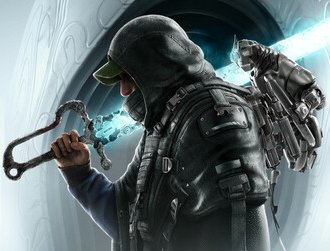
In Hell is Us, the player enters a sealed-off, traumatised country scarred by civil war, dictatorship, religious conflict and genocide. You move through ruined settlements, bodies, abandoned families, broken civilians, torture sites and moral debris. The game clearly wants this to feel heavy. Sometimes it does. Some of its images and stories are genuinely unpleasant in ways that feel earned rather than decorative.
But the player’s role keeps bending the experience into something stranger. You are an outsider, or close enough to one in function. You are moving through a devastated society that is not quite yours, reading its suffering, collecting its fragments, using its dead as environmental storytelling. You are not powerless either. You have a supernatural weapon, a drone, special survivability and the familiar protagonist privilege of being the one person who can pass through the machinery of horror and still keep going.
You become a visitor with combat privileges.
When Suffering Becomes Progression
That is where the trauma tourism feeling comes from. Hadea’s suffering is not merely witnessed. It is organised around your progress. Its corpses become clues. Its civil war becomes lore. Its atrocities become atmosphere. Its traumatised people become fragments in your investigation. Its monsters, the glowing embodiments of grief and violence, give history a convenient hitbox.
Again, this is not the same as saying the developers are careless or cynical. Quite the opposite. The game’s ambition is obvious. It wants to say something serious about how violence repeats, how propaganda hardens people, how inherited grievance becomes identity, and how whole societies can turn their wounds into permission slips for cruelty. That is worthwhile territory. The issue is that the implementation keeps softening human horror into symbolic horror.
The weapons even make the subtext uncomfortably explicit. They are called limbic weapons, which is the sort of phrase that sounds as if the game briefly got tired of metaphor and started labelling its own themes. The limbic system is tied to emotion, threat, memory and motivation, so the name is not random. It tells us, quite directly, that we are fighting emotional residue with psychologised weaponry. But that also sharpens the problem. The more the game turns political violence into emotional symbolism, the easier it becomes to treat atrocity as something to be processed rather than something committed by people, systems and institutions. You are not just carrying a sword. You are carrying a blunt metaphor with upgrade slots, It is not just a sword; it is a trauma-processing stick.
The Politics Disappear Into the Fog
This is where the political critique starts to wobble. The game gestures toward genocide, civil war and factional hatred, but it often routes the moral charge into supernatural trauma entities. That is psychologically neat. Too neat, perhaps. People do not commit atrocities because glowing grief monsters whispered bad ideas into the national mood. They do it through institutions, orders, myths, fear, obedience, propaganda, humiliation, revenge, cowardice, ambition and the cosy little madness of being told your side is righteous.
When political horror becomes too symbolic, it risks laundering the politics out of itself.
This is also why the “both sides” problem matters. A story can absolutely show atrocity committed across factions without collapsing into cheap equivalence. War is rarely tidy enough to flatter anyone for long. But fiction that invokes genocide has to be very careful with symmetry. If everyone is wounded, everyone is guilty and everyone is trapped in the same ancient cycle, then power can vanish into mood. Responsibility becomes fog. The violence feels tragic, but not always politically sharp.
Psychic Numbing and Learned Helplessness
Real atrocity reporting often produces the same emotional mush. We see suffering turned into coverage, coverage turned into discourse, discourse turned into fatigue. Numbers rise. Images repeat. Statements are issued. Denials are issued. Experts are invited to explain why everything is very complicated, which is sometimes true and sometimes a polite way of hiding a corpse under a seminar table. Eventually, horror starts arriving as background noise.
Psychologically, this is where concepts like psychic numbing and learned helplessness become useful. Psychic numbing describes the way people often become less emotionally responsive as suffering becomes larger, more abstract or more repetitive. One person’s pain can feel unbearable. A thousand deaths can become a statistic, which is a grim little design flaw in the human animal and one that modern media exploits by accident and by habit.
Learned helplessness is different, but related here. It describes what can happen when repeated exposure to uncontrollable situations teaches an organism that action does not matter. In a media context, that becomes familiar. You know more, see more, understand more, and still nothing changes. The result is not ignorance. It is exhausted detachment.
Hell is Us accidentally brushes against this. The game gives you agency, but often not agency that feels morally meaningful. You can kill the monsters. You can solve the puzzles. You can follow the clues. You can continue. Yet the deeper horror remains lodged in the world like rot in a beam. The more the game asks me to witness, the more I begin to feel less like a participant and more like a tourist moving through curated devastation.
An Archive or a Newsfeed?
That may be unfair to the game’s later revelations. Perhaps the writing ultimately clarifies its politics. Perhaps the institutional villains emerge more cleanly. Perhaps the whole thing lands with more precision than its early and middle hours suggest. But if a game about political horror requires the player to push through prolonged ambiguity, repetitive combat and symbolic misery before its moral architecture becomes clear, then that delay is part of the experience too.
Some players will experience that delay as depth. They will see an archive, a puzzle-box of violence, a country whose history has to be excavated carefully. I understand that reading. I even envy it a little. For me, the same structure began to feel like a newsfeed with a sword. Too many fragments of suffering. Too much horror arranged for consumption. Too little sense that my actions were touching the machinery underneath.
The Chosen One Problem
The combat does not help. A Soulslike where death barely matters is not really a Soulslike. It is a slightly sluggish filing system with stabbing. The enemies become obstacles between you and the next piece of suffering. The magic sword and drone also damage the horror. Silent Hill works because you are vulnerable, compromised and horribly under-equipped. A rusted pipe says something psychologically different from an ancient supernatural weapon and a sci-fi companion. One says survive. The other says chosen.
That chosen quality is where a faint white saviour structure creeps in. Not necessarily in a literal racial sense, and not in a way that should be reduced to a cheap accusation. The structure is the issue: an outsider enters a damaged place, becomes central to its meaning, survives what locals could not, interprets its pain, and moves through its trauma as the privileged agent of revelation. The country becomes the stage for the visitor’s moral journey. The dead supply atmosphere. The living supply testimony. The player supplies completion.
That is uncomfortable. It should be.
Simply Put: Hell Is Me
The title says Hell is Us, which points toward collective human responsibility. But the player experience can become something closer to Hell is Me. My journey. My fatigue. My interpretation. My heroic endurance of someone else’s catastrophe. The horror turns inward, not because the game has made me morally responsible in a clear way, but because it has made me central to a suffering world while keeping the actual politics just abstract enough to stay marketable.
And that, perhaps, is the most revealing failure. Hell is Us wants the seriousness of political horror, and I respect that. It wants to engage with genocide, trauma, propaganda and historical violence in a medium still far too comfortable treating war as a lighting preset. Its ambition is not the problem. The problem is that ambition filtered through marketable ambiguity can become morally strange. The more carefully a game avoids real-world specificity, the more it risks turning political horror into aestheticised pain.
There is a brilliant game somewhere inside Hell is Us. Maybe for some players, that is the game they are already playing. For me, it keeps becoming something more troubling: a war-tourism simulator dressed as trauma allegory, where the player walks through the wreckage of other people’s history with just enough power to continue and not enough consequence to feel clean.
That does not make Hell is Us worthless. It makes it worth criticising properly.
The game may be at its most honest when it stops being frightening and starts being exhausting. Not because exhaustion is a good substitute for horror, but because it mirrors something horribly real. Atrocity, when endlessly mediated and poorly acted upon, does not always make people more compassionate. Sometimes it teaches them to endure the sight of suffering without believing they can do anything about it.
And if Hell is Us accidentally made me feel that, then perhaps it has said something after all.
Just not, I suspect, in the way it meant to.
Check out Hell is Us on Steam
References
Hughey, M. W. (2014). The white savior film: Content, critics, and consumption. Temple University Press.
Lennon, J. J., & Foley, M. (2000). Dark tourism: The attraction of death and disaster. Continuum.
Seligman, M. E. P. (1975). Helplessness: On depression, development, and death. W. H. Freeman.
Table of Contents