What Moral Psychology Can Learn from a Bone-Saw
LISA: The Painful, the trolley problem, and the ethics of living with the damage
Content warning: spoilers for LISA: The Painful, with discussion of mutilation, violence, addiction, trauma, and moral harm.
Moral philosophy loves a clean track.
There is a trolley. There are five people tied to one line. There is one person tied to another. There is a lever. You are asked whether you would pull it.
It is elegant. Horrible, but elegant. A little ethical model railway set on which human morality can be arranged, tested, and argued over. Would you kill one to save five? Would you push a man from a bridge? Does intention matter? Does outcome matter? Are you a consequentialist, a deontologist, a coward, a monster, or simply someone who has been asked a stupid question by a philosopher with too much free time?
These dilemmas have done useful work. They have helped moral psychology explore the relationship between emotion and reason, harm and intention, action and inaction. They have given researchers a way to ask how people think when every option is bad.
But they also have a problem.
They are clean.
The participant does not bleed. The lever does not take a finger. The track does not follow them home. Nobody asks them to continue life with the consequences of the answer they have just given.
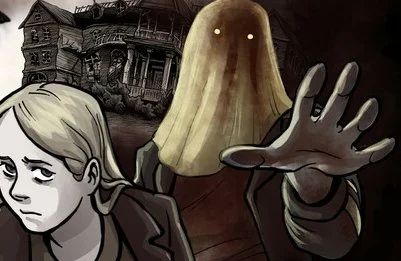
Then LISA: The Painful arrives with a bone-saw.
In one of the game’s most memorable moral confrontations, Brad Armstrong is forced by Buzzo into a choice that feels like a trolley problem dragged behind a truck until all the philosophy falls off. Brad can sacrifice a companion, preserving his own body and combat effectiveness, or he can sacrifice part of himself by losing an arm.
On paper, this looks simple. One life versus one limb. Save the person. Lose the arm. Take the noble route. Accept pain. Be good.
But LISA is not interested in moral choices on paper.
If Brad loses an arm, the game does not merely show a sad cutscene and move on. It changes him. It damages his combat ability. It alters what he can do. It makes the rest of the game harder. The decision becomes permanent not just in the story, but in the system. The wound is not symbolic. It is mechanical.
This is where LISA: The Painful becomes more than a bleak RPG with a talent for cruelty. It becomes a surprisingly sharp critique of how moral psychology often studies moral choice.
Because the real question is not simply, “Would you sacrifice for another person?”
The real question is, “Would you still sacrifice if the game made you live inside the sacrifice afterwards?”
The Problem with the Clean Lever
The classic trolley problem has become one of the great moral psychology props. It is simple enough for anyone to understand and horrible enough to provoke an answer. In its usual form, it pits a utilitarian calculation against a rule-based aversion to direct harm.
If you pull the lever and kill one person to save five, you are usually giving the consequentialist answer. You are minimising total death. You are doing the grim maths.
If you refuse, you may be obeying a deontological principle: do not directly cause harm, even for a better outcome.
That is the classic split. Outcome versus rule. Calculation versus restraint. Greater good versus moral boundary.
But there is something suspiciously comfortable about the whole thing.
In most versions, the person answering the question pays no personal price. They do not lose money. They do not lose status. They do not lose social belonging. They do not lose a body part. Their answer may reveal something, but it does not cost them anything.
This matters because hypothetical morality can be cheap.
It is very easy to be ruthless in the abstract. It is very easy to announce that one death is preferable to five when you are not the one holding the knife, hearing the scream, losing the friend, or walking into the next fight missing an arm.
The trolley problem asks what you think is right. LISA asks what you can bear.
That difference matters.
Moral psychology has long wrestled with the awkward possibility that “utilitarian” responses in sacrificial dilemmas may not always reflect noble impartial concern. Sometimes, endorsing harm for the greater good may reflect reduced emotional aversion, detachment, or a willingness to instrumentalise people. This does not mean all utilitarian reasoning is antisocial. That would be too simple. But it does mean that the same answer can come from very different psychological places.
One person may pull the lever because they are compassionately horrified by the loss of five lives.
Another may pull the lever because the one person does not feel real to them.
The answer is the same.
The person is not.
That is the problem with clean moral dilemmas. They can measure the decision while missing the psychology that produced it.
LISA Does Not Solve the Trolley Problem. It Infects It.
LISA: The Painful does not create a better trolley problem by making the numbers messier. It does something more interesting.
It infects the dilemma with self-interest.
In the Buzzo sacrifice scene, the player is not floating above the world as a neutral moral accountant. They are embedded in a system. They need Brad. Brad is not just the protagonist; he is the central tool through which the player survives the game. He fights. He absorbs danger. He carries the player’s strategy. His body is part of the interface.
So when the game threatens Brad’s arm, it is not only threatening Brad.
It is threatening the player’s future competence.
That is the genius of the scene. The bone-saw does not simply cut the character. It cuts the player’s optimisation fantasy.
Most games train us to think instrumentally. Build the strongest party. Preserve resources. Avoid permanent damage. Keep your best units alive. Make choices that keep future options open. Even when games present moral decisions, players often evaluate them through mechanical reward: Which choice gives the better item? Which companion stays? Which route unlocks the better ending? Which option keeps my build intact?
LISA understands this and then turns it against us.
The “good” choice may make the game harder.
The “selfish” choice may make the game easier.
That is not ludonarrative dissonance. That is ludonarrative resonance. The story and the system are conspiring to ask the same disgusting question:
How much morality can you afford?
The Bone-Saw as Moral Psychology
The bone-saw works because it introduces self-cost.
Self-cost is one of the things many moral dilemmas flatten or remove. In the abstract, people can endorse sacrifice because the sacrifice belongs to someone else. The hypothetical victim is a token in a thought experiment. A body on a track. A number in a calculation.
But real moral life is rarely like that.
Real moral decisions often involve personal risk. You may lose comfort, status, money, safety, belonging, career prospects, family approval, or future opportunity. You may do the right thing and become weaker for it. You may protect someone and lose something you needed. You may refuse to exploit another person and fall behind those who did.
That is what LISA captures so well.
The choice is not between morality and immorality. It is between two kinds of damage.
If Brad lets the companion die, he preserves himself as a weapon. The group may be more mechanically secure because its strongest figure remains intact. This is the cold survival logic. Protect the asset. Preserve the damage dealer. Keep the machine running.
But narratively, it is obscene. A person has been treated as expendable so Brad can remain whole. The group survives by accepting a moral wound.
If Brad loses the arm, he saves the companion. This feels more noble, more sacrificial, more humane.
But it is not clean. Brad is now less capable. Future fights may become more dangerous. Other companions may suffer because the group’s central protector is weakened. The moral choice may produce future costs that are not immediately visible.
This is what makes the scene so much more interesting than a simple “save friend or be selfish” choice. It refuses to let morality sit comfortably in one option.
Keeping the arm is rational in the language of survival, but monstrous in the language of loyalty.
Losing the arm is moral in the language of sacrifice, but reckless in the language of responsibility.
The game does not ask, “Which option is good?”
It asks, “Which kind of bad can you live with?”
The Scar That Becomes a Stat Penalty
In many games, moral decisions are cosmetic. A dialogue box appears. A character approves or disapproves. A morality meter shifts slightly toward saint or bastard. Perhaps someone mentions it later. Perhaps the ending changes.
But the player often continues largely unchanged.
LISA is crueler and smarter than that. It makes the body remember.
When Brad loses an arm, the game imposes the consequence on the player’s future. The decision alters combat. It changes what Brad can do. His damage and usefulness are affected. The player is not allowed to file the decision away as “that sad thing I chose in Act Two.” They must carry it into ordinary play.
That is where the scene becomes psychologically potent.
The immediate horror is not the whole punishment. The real punishment is repetition.
Every later fight becomes an echo of the decision. Every weakened turn reminds the player what was paid. Every moment where Brad cannot do what he once could turns the moral choice into a continuing bodily fact.
This is closer to real guilt than most morality systems manage.
Guilt is rarely one dramatic thunderclap. More often, it is a small recurring obstruction. A memory that returns during ordinary life. A hesitation. A flinch. A familiar route you avoid. A sentence you cannot hear the same way again.
LISA turns guilt into friction.
The player does not just choose pain. The player plays pain.
Optimisation and the Player’s Dirty Little Secret
The most uncomfortable thing about the scene is that it exposes the player’s priorities.
Games are very good at making us lie about ourselves.
We say we are role-playing. We say we are making the “right” choice. We say we care about the characters. We say we are invested in the story.
Then the game threatens our build.
Suddenly, the moral fog clears.
A companion is valuable, yes. But Brad’s arm? Brad’s combat power? Brad’s future usefulness? That is different. That matters. That is not just a narrative cost. That is a mechanical cost. That is the player’s problem now.
This is where LISA becomes nastily perceptive. It knows that players often treat fictional people as resources while pretending not to. Party members are loved, but they are also loadouts. Friends are friends, but they are also abilities, stats, synergies, and battle options. The game does not invent that mindset. It reveals it.
The bone-saw catches the player between two moral languages.
In the story-language, saving the companion looks humane.
In the game-language, preserving Brad may look optimal.
The player must decide which language they actually obey.
This is why the scene feels less like a test of ethics and more like a trapdoor under the player’s self-image. It reveals the gap between wanting to be good and wanting to win.
And that gap is not trivial. It mirrors something real.
In ordinary life, moral failure often hides behind systems of incentive. People do not always choose harm because they wake up wanting to be cruel. They choose harm because cruelty is profitable, convenient, rewarded, normalised, or structurally easier than care. A company protects revenue instead of people. A politician protects career instead of truth. A bystander protects comfort instead of intervening. A family protects the myth instead of the victim.
The moral choice is not presented as “be evil.”
It is presented as “be practical.”
LISA understands that “practical” can be one of the most frightening words in the moral vocabulary.
Negative Utilitarianism in a World Without Rescue
There is another reason the bone-saw scene works so well: LISA does not offer a fantasy of maximising happiness.
Many moral dilemmas are built around saving the greatest number, producing the best outcome, or choosing the least terrible path. They still carry an assumption that calculation can rescue us from moral chaos. If you just count correctly, you can find the right answer.
LISA is not that generous.
Its world is not designed around flourishing. It is designed around damage. Addiction, abuse, masculinity, shame, violence, and grief all sit under the surface like exposed wiring. In that kind of world, morality feels less like maximising happiness and more like minimising agony.
The question is not, “How do I make this good?”
The question is, “How do I stop this becoming even worse?”
That is a darker moral frame, but an important one. Many people live inside moral systems where no option restores wholeness. The best available choice may still hurt someone. The right thing may still be contaminated. Survival may require compromise. Protection may require damage. Refusal may have a cost.
This is where games can do something unusually powerful. They can make players inhabit constrained agency.
The player has control, but not enough.
They can choose, but not freely.
They can act, but only inside a rigged structure.
That is much closer to many real moral situations than the fantasy of the clean lever.
Why Games Matter to Moral Psychology
Video games are not laboratories in the strict sense. They are messy, authored, stylised, emotionally manipulative systems. They are full of genre conventions, player expectations, design tricks, and narrative contrivances.
Good.
That mess is the point.
Human morality is also messy, authored, emotional, embodied, and shaped by systems. We do not make ethical decisions as floating brains in empty rooms. We make them while tired, frightened, attached, ashamed, incentivised, pressured, hungry, loyal, angry, and afraid of what will happen next.
This is why games deserve more serious attention in moral psychology.
They can simulate not just choice, but consequence.
They can attach moral decisions to ability, status, resources, relationships, identity, and future difficulty. They can force players to continue after the answer. They can make the cost of a decision recur, mechanically and emotionally, long after the initial moment has passed.
A questionnaire can ask, “Would you sacrifice one person to save five?”
A game can ask, “Would you sacrifice part of yourself to save one person, knowing that every future battle will punish you for it?”
Those are not the same question.
The first measures a moral judgement.
The second pressures a moral self.
That distinction matters because moral life is not only about what we endorse. It is about what we do when endorsement becomes expensive.
Moral Psychology Needs More Scars
This is not an argument that moral psychology should abandon hypothetical dilemmas. They are useful. They isolate variables. They give researchers clean comparisons. They help identify patterns in judgement that might otherwise be difficult to study.
But clean tools can produce clean illusions.
If moral psychology wants to understand morality as people actually live it, then it needs to care more about self-cost, aftermath, embodiment, and incentive. It needs to ask not only what people think is right, but what people are willing to lose for it. It needs to separate compassionate harm-minimisation from cold detachment. It needs to distinguish moral principle from reputation management, and altruism from optimisation in nicer clothes.
That is what LISA: The Painful accidentally, or perhaps deliberately, understands.
The bone-saw does not save moral psychology because it is shocking. Shock is easy. Any game can be cruel. Any story can mutilate a character.
The bone-saw matters because it makes moral choice persistent.
It takes an ethical decision and embeds it in the player’s future. It refuses to let sacrifice be a beautiful idea. It makes sacrifice ugly, annoying, costly, and inconvenient. It takes the noble answer and asks whether you still like it when it makes you weaker.
That is the part moral psychology should pay attention to.
Not the gore.
The invoice.
Simply Put
The trolley problem asks whether you would pull the lever.
LISA: The Painful asks whether you would pull it if the lever took your arm.
That is a better question. Not because it is more dramatic, but because it is less flattering.
Most of us like to imagine morality as a matter of values. We believe we would do the right thing because we are the kind of person who does the right thing. But moral life is rarely so generous. The real test often comes when the right thing makes us poorer, weaker, lonelier, less employable, less comfortable, or less safe.
A moral framework that only works when nothing is lost is not a moral framework.
It is interior design.
That is why LISA lingers. Its violence is grotesque, but its insight is precise. It understands that morality is not proved in the answer. It is proved in the aftermath.
A moral dilemma is never truly about the lever.
It is about the scar left behind on the person who had to pull it.
References
Greene, J. D. (2014). Moral tribes: Emotion, reason, and the gap between us and them. Penguin.
Dingaling Productions. (2014). LISA: The Painful [Video game].
Table of Contents