How Life is Strange Reunion Failed Safi
Life is Strange: Reunion gives Max and Chloe the emotional closure many players wanted, but its treatment of Safi reveals the more intimate and psychologically richer sequel hiding underneath. By pushing a campus fire to the foreground instead of deepening the Abraxas House mystery, the game side-lines one of its most compelling characters and loses sight of the human-sized story that could have made it great.
SPOILERS AHEAD FOR THE LIFE IS STRANGE SERIES
Max and Chloe Are the Highlight, but Safi Is the Real Loss
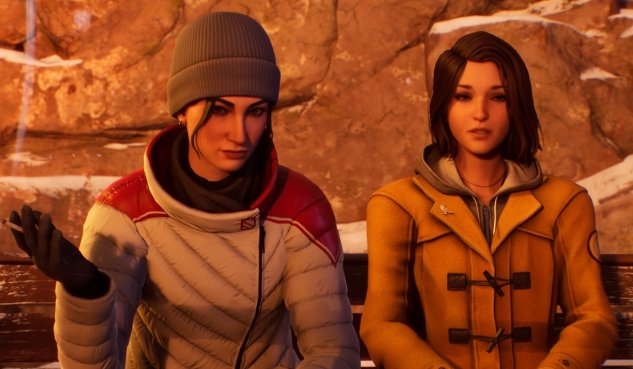
Life is Strange: Reunion has been talked about mostly as a Max and Chloe game, which is fair enough because Max and Chloe are easily the strongest part of it. Their relationship gives the game warmth, memory, and a sense of earned closure that a lot of the surrounding plot struggles to match. But the more revealing story sits elsewhere. If Reunion really fails anyone, it is Safi. Not because she is secretly the best character in the game, and not because the game owes her equal billing with Chloe, but because she is the clearest sign of the more intimate and more interesting version of Reunion that the series almost made and then backed away from.
The Game Is Pulled Between Two Different Ideas
Officially, Reunion is built around two threads. Max returns to Caledon to find the university engulfed in flames, then rewinds three days to stop the disaster. At the same time, Chloe arrives haunted by nightmares and impossible memories from a life she never quite lived. Those are not just two plot points. They are two different ideas of what this game wants to be. One is broad, external, and disaster-driven. The other is intimate, psychological, and strange in a way that actually suits Life is Strange. The problem is that the game spends too much time pretending the fire is the real centre of gravity, when the far richer material is sitting right there in Chloe’s fractured reality and Safi’s lingering presence inside it.
Safi Still Matters, and the Game Knows It
That is why I keep coming back to Safi. Reunion itself admits she still matters. Chloe’s visions are tied to Safi. Max and Chloe investigate the cause of those visions while also trying to stop the eventual fire. Safi returns to Caledon, still using her shapeshifting power to stay hidden, and the game makes clear that she is experiencing the same strange disturbances Chloe is. In other words, the game is already telling us that the real connective tissue here is not the inferno. It is memory, grief, distorted reality, and the way unresolved pain keeps leaking back into the present. Safi is not some random remnant from Double Exposure. She is built into the emotional architecture of Reunion itself.
Abraxas House Should Have Been the Real Centre of the Story
And this is exactly where the sequel could have become something much better than it is. Instead of making the fire its main engine, Reunion should have kept and deepened the Abraxas House mystery. That thread actually complements the nightmare material. Investigate the abandoned building tied to the Abraxas secret society, stop an early demolition attempt, infiltrate an Abraxas party, find a hidden basement room, discover photographs, and uncover skeletal remains in a crate. From there the mystery opens out into buried guilt, hidden history, Yasmin’s old decision to conceal a teenager’s death, and the way the past has been literally boxed up and stored beneath the institution. That is exactly the sort of story this series can carry well, it would almost echo the first game in that respect. It is conspiratorial, but still personal. It is strange, but rooted in human cowardice, greed and cover-ups. Most importantly, it gives the nightmares and the so-called quantum entanglement side of the plot something concrete to push against. You have one thread about memory becoming unstable and another about truth being deliberately buried. Those belong together.
The Fire Is Bigger, but Also Much Less Interesting
The fire, by contrast, is just too big in the wrong way. It is urgent, sure, but it is also abstract. A burning campus is a scale problem disguised as a stakes problem. It asks you to care about a place, a crowd, an institution, and a ticking clock. That can work in some stories, but it sits awkwardly in Life is Strange, which has always been better when it narrows your emotional field rather than widening it. It is easy to care about a few damaged people whose pain you can actually read. It is much harder to care about a place in peril when the more affecting story is clearly about two or three people trying not to disappear into grief, memory, and self-protection. Even some reviews of Reunion end up circling this same problem, noting that the stronger emotional material gets diluted by confused storytelling and a larger, shakier plot structure.
Moses Helps Hold the Whole Thing Together
This is also where Moses becomes far more important than the game perhaps gets credit for. One of the smarter things Double Exposure established was that Moses is not just another side character waiting to deliver exposition. Square Enix’s own character material describes him as a lovable astrophysicist fascinated by rules and systems, and in Reunion he becomes exactly the sort of person a story like this needs. He works with Max on her abilities, helps give the impossible a language, and even names Chloe’s strange extra plane of experience the “Overlight.” That matters because the group needed someone who could bridge empathy and explanation. Moses gives the story a human buffer. He does not flatten the weirdness into dry lore, but he does stop it from floating off into pure mystical fog. He also softens the emotional triangle around Max, Chloe, and Safi by giving the wider dynamic some patience and some decency. Without him, the whole thing would feel far more brittle.
Chloe and Safi Should Have Been the Two Emotional Poles
And that is exactly why Safi’s role hurts so much. She should have been more than a returning complication or a narrative irritant. She should have been one of the two poles around which the whole story turned. Chloe and Safi are not interchangeable, and that is the point. Chloe could have embodied grief that still grows, messy and scarred but still capable of loyalty, humour, attachment, and some kind of future. Safi could have embodied the opposite. Grief that contracts. Grief that starts dressing itself up as certainty, control, disguise, and withdrawal. Max in the middle then has a real role. Not just stopping a catastrophe, not just solving a cover-up, but trying to hold together two people who represent different futures of pain. That would make Max’s struggle active in the right way. She is not simply saving a place. She is deciding what kind of person she is in relation to two forms of damage. That is a much better sequel than “the university is on fire, again, sort it out.”
This Was the Better Arc Sitting Inside the Game
Seen that way, the recent Max arc becomes much clearer. The first game is about identity formation and Double Exposure is about learning to trust enough to reach out again. Reunion, if it had trusted its own better instincts, could have become a story about preserving connection when grief has split people into very different moral and emotional directions. You do not need to belabour Double Exposure to make that point. All you really need is to recognise that Reunion inherits a Safi who already carries emotional and symbolic weight, then refuses to build the sequel that weight deserves. The issue is not that the game forgets Safi. It is that it remembers her just enough to prove she should matter more.
Safi Is the Clearest Sign of the Better Game We Did Not Get
That, to me, is how Life is Strange failed Safi. It did not fail her by making her unlikeable. Plenty of unlikeable characters are interesting. It failed her by giving her the outline of a real thematic role, placing her inside Chloe’s nightmares, tying her to the game’s instability of memory and self, then choosing to spend too much of its energy on a larger disaster that was always less compelling than the people caught beneath it. The sequel had the makings of an intimate story about Max trying to save two haunted people while uncovering one buried truth at the centre of Abraxas House. Instead, it kept promoting itself into a bigger event. That is the loss. Safi is not just the character who got flattened. She is the clearest sign of the better game hiding underneath the one we got.
Sources
Life Is Strange: Reunion - Wikipedia
Life is Strange: Double Exposure | SQUARE ENIX