Scarlet Hollow and the Horror of Having Your Agency Taken Seriously
Spoiler note: This article discusses the early structure of Scarlet Hollow, especially Episodes 1 and 2, along with broad design comments from Black Tabby Games’ development writing. We try avoids major late-game story reveals.
The Rudeness of Real Choice
Most games are very polite about player agency. They tell you your choices matter, offer a few branching options, then quietly make sure you still feel clever, important, and morally aerodynamic. The world bends just enough to let you believe you have altered it, but not so much that anyone has to look you in the eye and say, “Actually, that was a bit weird of you.”
Scarlet Hollow is ruder than that, in the best possible way.
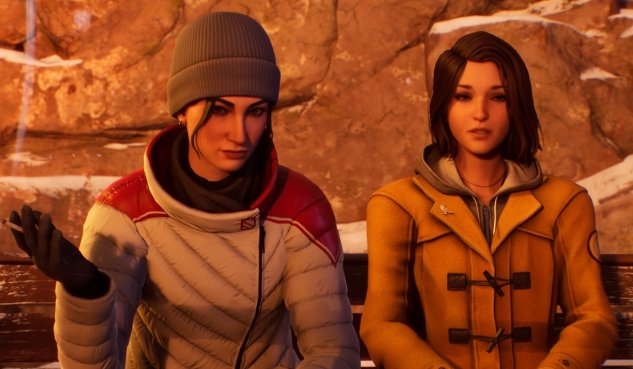
Black Tabby Games’ horror visual novel has always been interested in choice, but not in the glossy, menu-friendly sense where every option becomes a flavour of empowerment. Its early episodes were later expanded through The Roads Untraveled, a patch that gave players more room to resist, avoid, distrust, or simply refuse the social pull of certain events. In Episode 1, that means more freedom around whether you follow Stella into the woods. In Episode 2, it means more ways to resist being dragged further into supernatural trouble.
That sounds like straightforward player empowerment. A nice generous helping of agency, served warm.
The nastier trick is that Scarlet Hollow then lets other people react to it.
Choice as Social Evidence
The game does not simply give you more agency and leave it there, like a proud parent handing over a plastic steering wheel. It lets you make choices, then allows those choices to become social information.
Avoid Stella, and that is not just a route flag. It is something Stella experiences.
Go to Tabitha’s workplace instead, and that is not just “alternative content.” It is you turning up somewhere you were not necessarily wanted.
Try to stay out of things, and the story may still find you, but now it finds a version of you who has already started damaging relationships by trying to be sensible.
This is much closer to how agency works in real life, which is deeply inconvenient for everyone involved.
In self determination theory , autonomy is usually treated as one of the basic needs involved in motivation and well-being, alongside competence and relatedness. But autonomy is not the same thing as frictionless preference fulfilment. It does not mean every choice flatters you, protects you, or produces an outcome that makes you feel like the protagonist of a very emotionally supportive pamphlet.
This is where a lot of choice-driven games cheat, usually with the best intentions. They offer players agency, but then protect them from the interpersonal consequences of using it. The player can be rude, evasive, suspicious, cowardly, manipulative, or wildly inconsistent, while the surrounding cast continues to behave as though they are merely admiring an especially creative tourist.
Scarlet Hollow understands that choice is not only internal. Other people do not experience your motives. They experience your behaviour.
That is a nastier kind of horror than a monster in the woods, although the woods are not exactly helping.
The Fundamental Attribution Error, But With Cryptids
This is where the game brushes up against one of the most useful, annoying ideas in social psychology: the fundamental attribution error.
The basic idea is simple. When we explain our own behaviour, we often emphasise the situation. We were tired. We were under pressure. We did not have all the information. We were trying to make the least stupid choice from a buffet of bad ones.
When we explain other people’s behaviour, we are much more likely to treat it as evidence of character. They were selfish. They were flaky. They were cold. They were cowardly. They showed us who they really are.
The gap is not subtle, but people still fall into it constantly because, frankly, other people’s inner lives are poorly labelled and inconveniently not available in subtitle form.
Scarlet Hollow quietly weaponises that gap.
As a player, you may avoid Stella because you are cautious, suspicious, overwhelmed, or roleplaying someone who does not immediately trust a stranger with a camera and a concerning relationship to the local woodland. From inside your head, that choice can feel perfectly reasonable.
But Stella does not live inside your head. Neither does Tabitha. Neither does Kaneeka. They see what you did, not the tender little legal defence you have prepared for yourself afterwards.
That is where the game becomes socially uncomfortable. It does not simply ask, “What did you intend?” It asks, “What did your behaviour look like from outside?”
Horror often depends on being seen by something hostile. Scarlet Hollow adds a more mundane terror: being interpreted.
The Town Does Not Read Your Mind
The early alternate routes make this very clear. You can break away from Stella more cleanly. You can resist the expected pull of the plot. You can choose to spend time elsewhere. You can try to be cautious.
But caution is not socially neutral.
To you, avoidance may feel like self-protection. To someone else, it may feel like rejection.
To you, showing up at Tabitha’s workplace may feel like trying to understand your cousin or find a safer route through the story. To Tabitha, it may look like intrusion, nuisance, or one more person wandering into her life and immediately making demands.
To you, keeping your distance from supernatural trouble may feel sane. To the town, you may simply become harder to trust.
This is the unpleasant elegance of Scarlet Hollow. It treats your choices as social acts. Not moral declarations. Not abstract RPG decisions. Social acts.
That distinction gives the game much of its bite. A conventional choice system might ask whether you selected the “good” option or the “bad” option. Scarlet Hollow is more interested in whether your behaviour leaves people warmer, colder, suspicious, grateful, abandoned, annoyed, or quietly recalculating where you fit in their life.
Which, regrettably, is how people work.
Traits as Identity Theatre
The trait system deepens this further. At character creation, you choose two traits from a small set, and those traits shape what your version of the protagonist can notice, say, do, endure, or get away with.
On paper, that sounds like mechanical build-craft.
In practice, it is identity theatre.
A player who chooses Keen Eye is not just selecting extra observations. They are choosing to be the sort of person who notices.
A player who chooses Hot is not only receiving passive social advantages. They are entering a world where people may respond to them differently before they have done much of anything at all, which is mechanically useful and socially depressing in a way the game seems to understand perfectly well.
A player who chooses Powerful Build may expect bodily competence to solve problems, only to encounter a story where being strong does not mean the world has agreed to become manageable.
The traits are not just tools. They are self-concepts. They let players say, “This is who I am in this story.” Then the game has the poor manners to test whether that self-image survives contact with other people, fear, obligation, and bad information.
This is why the system feels richer than a simple stat sheet. A trait can be useful while still failing to give the player the emotional fantasy they thought they had chosen. Being strong does not make every crisis solvable. Being perceptive does not mean you know what to do with what you notice. Being charming does not mean you are safe from consequence. Being strange does not mean the world owes you clarity.
The game gives you an identity, then reminds you that identity is not the same as control.
Agency Is Not the Same as Comfort
This is the psychological heart of the game. Agency is often sold to players as comfort. More options. More paths. More ways to express yourself. More ways to avoid being shoved down a corridor by a designer with a clipboard and a dream.
But real agency is not always comforting.
Real agency means that what you do can become part of the world. It can close doors. It can sour relationships. It can make people trust you for the wrong reasons or distrust you for reasons you consider deeply unfair. It can leave behind a version of you that other characters respond to, even when you feel misunderstood by the evidence.
That is why Scarlet Hollow feels so different from games that merely advertise consequence. It is not just building a branching plot. It is building a social memory of the player.
The horror is not that the game punishes you for picking the wrong option. The horror is that the game refuses to accept your private explanation as the only truth.
First Playthroughs and the Unedited Self
This also helps explain why first playthroughs feel so psychologically charged.
A replay is curated. You know more. You have seen the consequences. You can build a cleaner version of yourself, one who trusts the right people, avoids the wrong risks, says the right things, and arrives at each moral crisis wearing the smug little expression of someone who has already checked the wiki in another life.
A first playthrough is different. It catches you before you become your own defence lawyer.
You chose quickly. You trusted someone. You avoided someone. You followed the person you liked and ignored the one who made you uncomfortable. You treated one risk as urgent and another as someone else’s problem. Later, you can justify it. Later, you can optimise it. Later, you can insist that your “real” character would have done something else if only everyone had explained themselves more clearly and stopped being so inconsiderately doomed.
But the first run has already seen you.
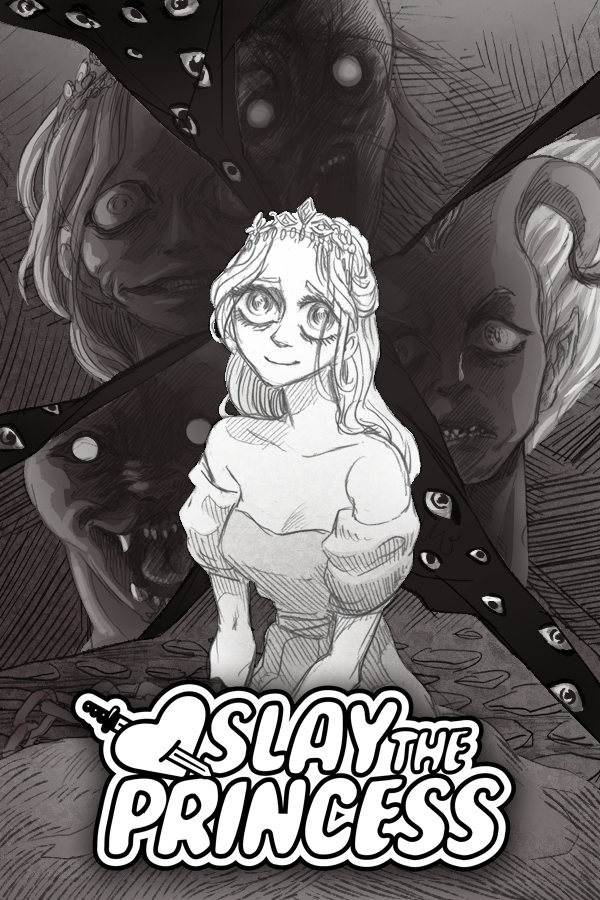
That is where Scarlet Hollow connects so neatly to Black Tabby’s wider interest in player selfhood. In Slay the Princess, choices shape the reality of the figure in front of you and the identities that emerge through repeated interpretation. In Scarlet Hollow, the effect is less abstract and more social. The game is not only asking what you believe. It is asking how belief leaks into behaviour, how behaviour becomes reputation, and how reputation starts building a version of you that may not match your preferred self-description.
There is something wonderfully mean about that. Not mean-spirited, exactly. More like a game that has decided to stop pretending psychology is clean, which is gloriously refreshing.
Simply Put
Once agency is taken seriously, it stops being simple empowerment. It becomes responsibility.
Not the tedious moralising kind where a game wags its finger because you picked the naughty option. The stranger kind, where even reasonable choices leave marks.
The horror is not that you lacked freedom. The horror is that you had enough freedom to become legible.
This is why the early alternate routes work so well as psychological design. They do not say, “Fine, here is the path for players who dislike Stella, have fun being correct.” They say, “Fine, you can avoid her. Now let us follow the social consequences of that avoidance.”
The player gets to be authentic, but authenticity is not automatically rewarded. Sometimes being authentic means being avoidant, prickly, distrustful, or self-protective in ways other people do not find charming.
That is a richer understanding of agency than most games allow. It respects the player too much to keep them innocent.
And that may be the real horror of Scarlet Hollow. Not the creatures, not the family rot, not the town with more secrets than seems administratively reasonable, but the quiet insistence that your choices are not private decorations. They are acts in a shared world. They are noticed by people who do not have access to your internal monologue. They accumulate. They misfire. They close doors while opening stranger ones.
A lesser game tells you that your choices matter.
Scarlet Hollow lets them matter badly.
References
Table of Contents