Goldilocks, Moral Leniency, and the Psychology of Privilege
A Cottage, A Child, and a Moral Puzzle
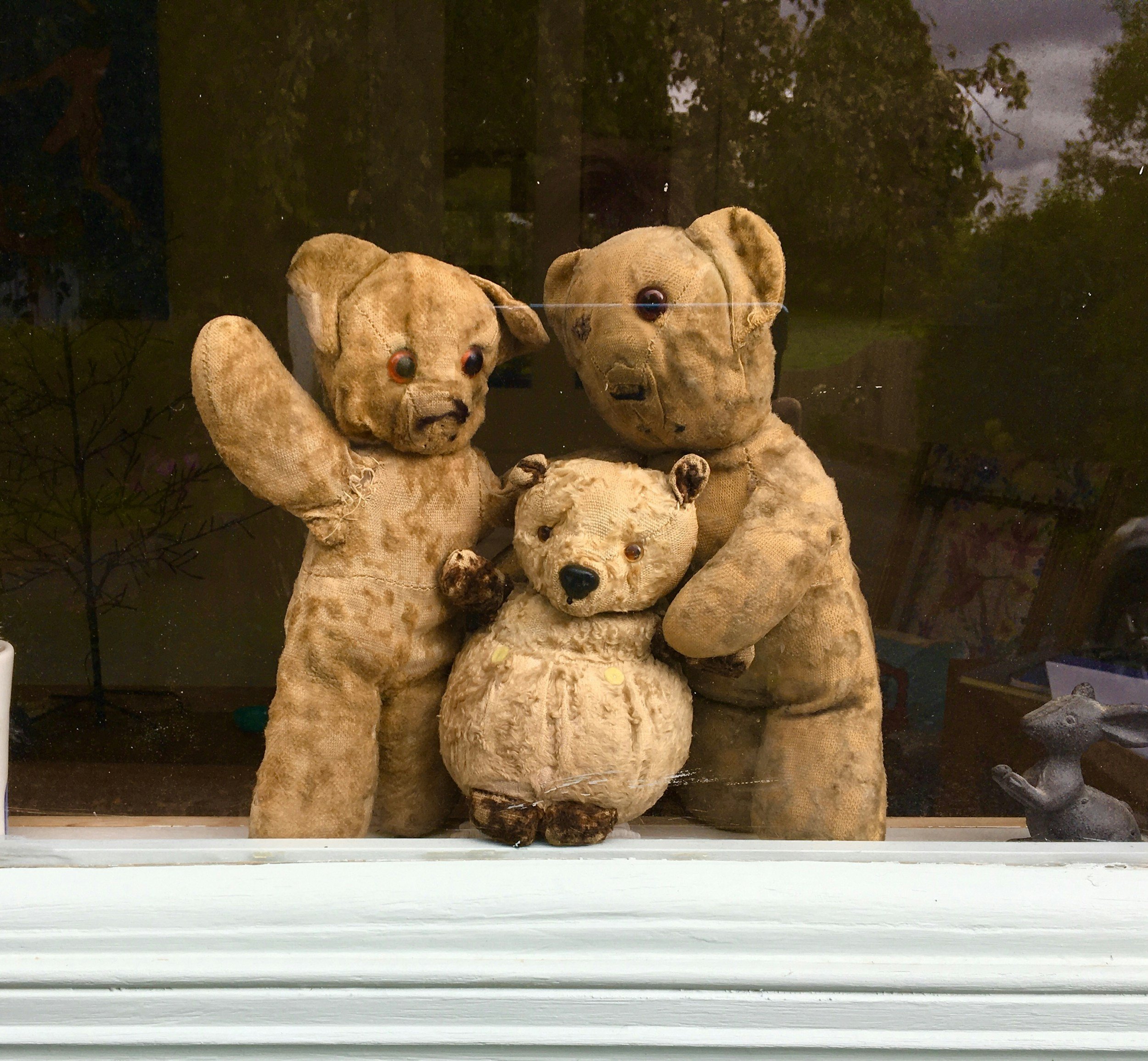
The story of Goldilocks and the Three Bears occupies a strangely secure place in Western childhood. It is familiar without feeling serious, mischievous without feeling threatening, and moral without feeling punitive. A child wanders into the forest, discovers a cottage, samples porridge, tests chairs, breaks one, climbs upstairs, falls asleep in a stranger’s bed, and ultimately flees when confronted by the homeowners. The tale concludes not with restitution or reprimand, but with escape.
For generations, this narrative has been received as light entertainment, often framed as a lesson about moderation or preference. Children are taught that some things are too hot, too cold, too large, or too small, and that the goal is to find what is “just right.” Yet when the story is examined outside its rhythmic structure and illustrative charm, a more psychologically interesting question begins to emerge. Why does Goldilocks, whose behaviour involves trespass, consumption of others’ property, and damage to personal belongings, remain a sympathetic figure?
The answer is not as simple as claiming that fairy tales are unrealistic or exaggerated. Rather, the enduring warmth toward Goldilocks reveals something about how moral judgement operates. We rarely evaluate behaviour in isolation. Instead, we interpret actions through layers of narrative framing, perceived intent, and social identity. The cottage becomes less a setting and more a stage upon which these psychological processes quietly unfold.
Reframing the Story: From Whimsy to Violation
To see this more clearly, it is helpful to remove the tonal cushioning that typically surrounds the tale. Imagine describing the events in neutral, almost legalistic language. A minor enters a private residence without permission. She consumes food prepared by the occupants. She sits in and ultimately breaks a piece of furniture belonging to the youngest resident. She proceeds upstairs, enters a bedroom, and occupies a bed. When confronted, she flees the scene.
Nothing in this retelling is inaccurate. Yet the emotional resonance changes dramatically. What previously felt playful now appears invasive. The behaviour has not altered, only the framing has.
This shift illustrates a central principle in moral psychology: judgement is profoundly sensitive to narrative structure. Stories guide attention. They signal where to place empathy, they modulate emotional intensity, in the traditional version of Goldilocks, several features work together to soften the transgression. The repetition of “too hot, too cold, just right” creates rhythm and predictability. The scale of the setting feels miniature and domestic rather than threatening. The bears, though wronged, are anthropomorphised in a way that diffuses seriousness. Most importantly, the story centres Goldilocks’ experience rather than the bears’ loss.
Because we follow her curiosity rather than their violation, the moral weight subtly shifts.
Perspective and the Allocation of Sympathy
Perspective is one of the most powerful tools in shaping moral intuition. When readers are granted access to a character’s internal experience, they are more likely to interpret that character’s actions generously. In Goldilocks, the audience accompanies the child as she navigates the cottage. We share her uncertainty, her experimentation, and eventually her fear when the bears return.
The bears, by contrast, are largely defined by their reaction. Their discovery of the eaten porridge and broken chair is acknowledged, but not emotionally elaborated. Their interiority remains thin. As a result, sympathy flows toward the intruder rather than the residents.
More about why we care more about beings we believe have minds Here.
If the narrative were reversed, beginning instead with a family returning home to find their meal disturbed and their child’s chair destroyed, the emotional alignment might shift. The same sequence of events would take on a different moral hue. This simple exercise demonstrates that moral evaluation is rarely a neutral assessment of facts. It is shaped by whose perspective anchors the story.
When considering questions of privilege, this mechanism becomes especially relevant. Groups whose perspectives dominate cultural narratives often receive greater empathy and interpretive flexibility. Groups whose perspectives are marginalised may find their grievances minimised or backgrounded. Goldilocks offers a contained illustration of how this dynamic can operate.
Identity, Innocence, and the Halo Effect
The interpretive generosity extended toward Goldilocks does not arise solely from perspective. It is also deeply tied to how she is typically represented. In most modern depictions, she is young, blonde, white, and physically small. These characteristics activate culturally embedded associations of innocence and harmlessness.
The halo effect, first described by Thorndike, refers to the tendency for one positive trait to influence overall judgement. When a character is perceived as cute, vulnerable, or socially familiar, observers are more inclined to attribute benign motives to them. Behaviour that might otherwise trigger suspicion is reframed as naïve exploration.
Consider how differently the broken chair might be interpreted if the intruder were described as larger, older, or physically imposing. The same action could be seen as reckless rather than accidental. The emotional interpretation of behaviour is inseparable from the social identity of the actor.
This is where the discussion begins to intersect with privilege. When certain identities are culturally coded as safe and familiar, they are granted what might be called interpretive cushioning. Ambiguous behaviour is read charitably. Mistakes are softened. Harm is contextualised rather than condemned.
Goldilocks benefits from this cushioning. Her youth, femininity, and whiteness combine to produce an assumption of innocence that shapes every stage of the narrative.
More on the halo effect and attribution bias Here.
It is also worth remembering that Goldilocks was not always a young blonde child. In Robert Southey’s 1837 published version of the tale, the intruder was described as a “foul-mouthed” old woman. Only in later retellings did the character shift toward the now-familiar image of a small, attractive girl. That evolution is not incidental. The transformation from an abrasive elderly trespasser to a “pretty” child significantly alters the moral tone of the story. Through the lens of the halo effect, the change is psychologically revealing. As the character became more socially appealing and culturally familiar, her transgression became easier to soften. The culture did not merely preserve the tale; it reshaped the intruder in a way that amplified sympathy.
Ingroup Bias and the Quiet Power of the “Default” Child
Beyond the halo effect, there is a subtler dynamic shaping audience response: the psychology of ingroup identification. Social identity theory proposes that individuals instinctively categorise others into groups, deriving part of their self-concept from group membership. Even minimal similarities can generate preferential empathy and leniency. When a character feels culturally familiar, readers are more likely to interpret their behaviour through a lens of shared understanding.
Goldilocks occupies what might be described as the position of the “default” child in Western storytelling. She is not marked as different. She does not require contextual explanation. Her identity aligns with longstanding literary norms in which childhood protagonists are implicitly white and socially unthreatening. Because she conforms to that template, her presence feels ordinary rather than intrusive.
The bears, by contrast, are doubly distanced. They are animals, and they are coded as a family unit outside the human social world. Even though they are anthropomorphised, they do not fully occupy the psychological category of neighbour or peer. As a result, identification gravitates toward the child rather than the residents.
This matters because empathy is rarely distributed evenly. Research consistently shows that people extend greater moral flexibility toward those they perceive as belonging to their ingroup. When wrongdoing occurs within the ingroup, explanations emphasise situational factors, misunderstanding, or developmental immaturity. When wrongdoing is attributed to an outgroup member, explanations more readily invoke character flaws or threat.
Goldilocks’ interpretive protection is therefore not simply about her individual traits. It is about her placement within a culturally dominant identity category that feels familiar and proximate. She does not have to earn sympathy. It is extended almost automatically.
Innocence Attribution and the Uneven Distribution of Childhood
If we look more closely at how innocence is allocated, the psychological picture sharpens further. Developmental categories such as childhood are not applied uniformly across social groups. Research examining adultification bias has found that Black children, particularly boys, are often perceived as older and less innocent than white children of the same age. This shift in perception affects disciplinary outcomes, empathy, and assumptions about intent. This bias is commonly referred to as the ‘Innocence Gap’ (Goff, et al., 2014), more on that Here.
The relevance of this finding is conceptual rather than literal. Goldilocks represents a form of childhood that is fully protected. Her actions are interpreted through a developmental lens. Curiosity becomes exploratory learning rather than boundary violation. Damage becomes clumsiness rather than irresponsibility. Her fear when confronted by the bears re-centres the narrative around her vulnerability, effectively overshadowing the harm she has caused.
Innocence attribution functions as a cognitive filter. When observers categorise someone as innocent, they default to charitable explanations. The same behaviour performed by someone perceived as less innocent invites suspicion. In ambiguous situations, this difference becomes decisive.
The cottage scenario is deeply ambiguous. Goldilocks does not articulate malicious intent. She does not appear threatening. She simply moves through the environment, testing and sampling. In such ambiguity, identity fills the interpretive gap. Because she embodies culturally protected childhood, audiences resolve uncertainty in her favour.
This is one way to understand privilege psychologically. It is not merely the possession of advantages. It is the assurance that ambiguity will likely be resolved generously rather than harshly.
From Individual Perception to Structural Leniency
At this point, the analysis moves from individual bias to patterned outcomes. If a single observer interprets Goldilocks charitably, that is a cognitive event. When entire audiences across generations interpret her charitably, that becomes a cultural pattern.
Structural leniency refers to the consistent extension of softer judgement to particular social categories. It does not require explicit endorsement. It operates through tone, narrative closure, and consequence distribution.
In Goldilocks, structural leniency appears in the story’s resolution, there is no reckoning, the broken chair is not repaired, the consumed porridge is not replaced, the moral tension dissipates when Goldilocks runs away. The emotional climax is her fright, not the bears’ loss.
This asymmetry subtly communicates that her transgression is temporary and forgivable. The harm experienced by the bears is narratively contained and emotionally secondary.
When similar asymmetries appear in real-world contexts, they shape perceptions of fairness. Consider how media narratives describe minor legal infractions committed by individuals from different social backgrounds. Some are framed as youthful mistakes. Others are framed as early signs of criminality. Language choices, emphasis, and outcome framing collectively create patterns of leniency or severity.
Goldilocks benefits from narrative leniency so complete that it feels invisible. That invisibility is precisely what makes it instructive.
The Goldilocks Principle Revisited: Preference and Entitlement
The cultural afterlife of the story is equally revealing. The “Goldilocks principle” has come to symbolise the search for optimal balance. In educational psychology, it describes the value of moderate challenge. In economics and design, it refers to finding conditions that are neither excessive nor insufficient.
Yet within the original narrative, the principle carries a different undertone. Goldilocks does not encounter the porridge and adapt herself to its temperature. She evaluates it against her personal preference. The chairs and beds are not approached with caution or respect for ownership. They are tested for suitability.
This evaluative stance reflects a broader psychological pattern associated with individualistic cultures, in which personal comfort and preference are treated as central organising principles. Environments are appraised according to how well they meet one’s needs.
When such a stance is supported by structural privilege, it becomes easier to move through spaces with confidence that one’s preferences matter. Discomfort is seen as something to be corrected rather than endured.
Again, the story does not explicitly advocate entitlement. However, it rehearses a script in which a character enters an unfamiliar space and treats it as available for assessment. The bears’ ownership does not generate hesitation. The cottage becomes a testing ground for personal satisfaction.
In contexts where social hierarchies exist, entitlement and privilege often intertwine. Individuals whose identities align with dominant norms may experience fewer barriers when asserting preference. Their comfort is less likely to be questioned. Their presence is less likely to be scrutinised.
Goldilocks moves through the cottage with unexamined assurance. That assurance, when viewed psychologically, is part of the story’s deeper architecture.
Counterfactual Shifts and the Fragility of Sympathy
One of the most revealing exercises in social psychology involves altering a single variable in a scenario and observing how interpretation changes. If we replace Goldilocks with a character coded as socially marginalised, many readers report a subtle but noticeable shift in tone. The broken chair feels heavier. The intrusion feels more transgressive. The ending feels less playful.
This shift underscores a crucial point. The moral content of the story is not carried solely by the actions. It is carried by the identity of the actor and the cultural meanings attached to that identity.
Privilege, in this sense, is the stability of sympathy. It ensures that narrative interpretation remains gentle even when behaviour crosses boundaries.
The fact that this stability can dissolve under counterfactual adjustment suggests that it is not inherent to the behaviour itself. It is constructed through cultural expectation.
Cultural Learning and the Formation of Moral Schemas
Fairy tales may seem trivial, yet they function as early moral training grounds. Through repetition, they contribute to the formation of schemas that organise future perception.
When children repeatedly encounter narratives in which certain identities are treated as inherently innocent and others as potentially threatening, those associations can become part of their cognitive scaffolding. The process is rarely conscious. It unfolds gradually through exposure.
Goldilocks is one story among many. On its own, it does not determine moral attitudes. However, as part of a broader narrative ecosystem, it participates in shaping expectations about who belongs, who deserves empathy, and who can transgress without severe consequence.
Understanding this process does not require condemnation. It requires attention.
Editorial Note: The Violence of the Benefit of the Doubt
We must eventually stop calling it a "fairy tale" and start calling it a standard operating procedure.
In the real world, the "interpretive cushion" Goldilocks enjoys is a form of social armor. When we allow a character to trespass, steal, and destroy without a narrative demand for justice, we are rehearsing the same white leniency that governs our courtrooms, our classrooms, and our streets.
The "whimsical" escape of Goldilocks is the direct ancestor of the "troubled youth" headline used for white perpetrators, while marginalized children are "suspects" before they are even students. This is the brutality of the halo effect: it doesn't just make Goldilocks look innocent; it makes her victims look like the aggressors for simply being in her way.
To grant Goldilocks her "curiosity" while denying a Black child their "innocence" is not a mistake of storytelling—it is a reinforcement of white supremacy as a cognitive default. The story works because we have been trained to believe that certain bodies are entitled to the world, and other bodies are merely the furniture they are allowed to break.
Simply Put: The Mirror in the Cottage
The question that began this analysis was deceptively simple: Why does Goldilocks feel innocent?
The answer is a complex web of psychological protection. Narrative perspective aligns our hearts with her curiosity. The halo effect and ingroup bias grant her an unearned interpretive advantage. Structural leniency ensures that her escape is framed as a relief rather than an evasion of justice.
The bears remain in their cottage—their resources drained, their sanctuary violated, and their child’s belongings shattered. Meanwhile, the story follows the fleeing girl, inviting us to breathe a sigh of relief that she got away.
When we smile at that ending, we are participating in a quiet, ancient tradition of erasing the victim to protect the protagonist.
Goldilocks is not a villain, and she is not a hero. She is a mirror. She shows us that our moral compasses do not point North; they point toward familiarity. She reveals that privilege is not just about what you have, but about what you are allowed to take without being called a thief.
The cottage in the forest is not a place for children to learn about porridge. It is a place for us to learn about ourselves. If we never wondered why she wasn't punished, it’s because we’ve been taught that for some, the world is always meant to be "just right"—no matter who has to pay for it.
References
Table of Contents