Applied Psychoanalysis in Modern Media: Why Freud Fits Television and Jung Fits Video Games
Psychoanalysis may no longer dominate scientific psychology, but it remains surprisingly powerful as a way of interpreting modern media. Freud’s ideas about repression, desire, guilt, and hidden motive often feel especially at home in television drama, while Jung’s concepts of archetypes, shadow, and individuation seem almost built for video games. The reason may lie not just in the stories these media tell, but in the very different ways we experience them.
Psychoanalysis has long occupied an awkward place in modern intellectual life. As a scientific framework, much of it is contested, revised, or rejected. Freud’s theories are often criticised as speculative, overly sexualised, and difficult to test. Jung’s work, meanwhile, is frequently treated as more spiritual than scientific, drifting into myth, symbolism, and archetype in ways that make empirical psychologists uneasy. Yet for all that, both thinkers remain stubbornly alive in popular culture. Their ideas continue to appear in criticism, storytelling, character analysis, and everyday conversation about what fiction means and why it resonates.
Part of the reason is simple. Whatever their scientific limits, Freud and Jung offered something many later theories did not: a vivid language for hidden motives, internal conflict, dreams, symbols, transformation, and the fractured nature of the self. They made the mind narratively legible. They turned inner life into drama.
That matters when we turn to modern media. Television and video games are not just entertainment technologies. They are ways of organising experience. They shape how stories unfold, how audiences engage, and what kinds of psychological interpretation feel natural. Not all theories fit all media equally well. Some frameworks illuminate one form better than another, not because the theory is universally true, but because the structure of the medium invites certain kinds of reading.
This is where a compelling pattern appears. Freud often feels particularly well suited to television. Jung, by contrast, often feels unusually at home in video games. That does not mean television is inherently Freudian, nor that games are only understandable through Jungian symbolism. Rather, it suggests that each medium tends to foreground the kinds of psychological dynamics that each thinker made central. Television thrives on repression, desire, family tension, guilt, neurosis, and the slow revelation of motive. Video games excel at symbolic journeys, archetypal roles, shadow selves, transformation, and the player’s movement through meaningful worlds.
Put more simply, Freud helps us read characters as conflicted subjects. Jung helps us read worlds as symbolic journeys. Television privileges the former. Video games often excel at the latter.
Why psychoanalysis still works as media analysis
Before getting too deep into Freud and Jung, it is worth clarifying why psychoanalysis still has value here at all. If these theories are scientifically controversial, why keep using them?
The answer is that media criticism does not always ask the same questions as experimental psychology. A lab study asks whether a claim about the mind is measurable, falsifiable, and replicable. Criticism often asks something slightly different: what interpretive lens helps us make sense of a story, a recurring image, a character dynamic, or the emotional structure of an experience? In that context, psychoanalysis persists not because it offers flawless science, but because it offers enduring symbolic and narrative tools.
Freud gives us repression, defence mechanisms, displacement, projection, wish fulfilment, repetition, guilt, forbidden desire, family conflict, and the return of what has been buried. Jung gives us archetypes, shadow, persona, anima and animus, individuation, symbolic descent, and the encounter with forces that feel older and larger than the conscious self. Whether one accepts every part of these systems is almost secondary to the fact that they remain culturally intuitive ways of discussing fiction.
This is especially true for media that repeatedly dramatise internal struggle. Stories are full of contradictions: people hide things from others, hide things from themselves, become trapped in behavioural loops, project unwanted traits onto enemies, fear their own impulses, or embark on journeys that change them at a deep symbolic level. Psychoanalysis remains useful because modern media keeps producing experiences that look psychoanalytic, even when no writer consciously intends that language.
The question, then, is not whether Freud or Jung are universally correct. It is why one often feels more at home in one medium than another.
Why Freud fits television
Television is an ideal environment for Freudian interpretation because it is so good at extending inner conflict across time. It lives in repetition, delay, secrecy, relational tension, and the gradual exposure of motives that characters themselves may not fully understand. Long-form television, in particular, allows desire and defence to play out not in a single dramatic burst, but across episodes, seasons, and evolving relationships.
Freud’s psychology is deeply dramatic. His theory is full of collisions between what a person wants, what they can admit wanting, what society permits, and what the mind does to manage the tension. This is precisely the kind of structure television handles well. A character says one thing but wants another. They repress a fear, develop a symptom, sabotage intimacy, become compulsively drawn back into the same pattern, or lash out at another person for qualities they cannot tolerate in themselves. These are not just clinical concepts. They are engines of serial drama.
Television is especially suited to repression because it unfolds through partial disclosure. The audience often sees a character before fully understanding them. Over time, the gap between behaviour and motive becomes part of the pleasure. This is a deeply Freudian dynamic. Characters can appear rational while acting irrationally, morally upright while driven by envy, loving while resentful, composed while barely containing panic or rage. The viewer is placed in the role of interpreter, trying to work out what lies beneath the visible surface.
This is one reason family dramas, prestige television, thrillers, and psychologically dense sitcoms so often invite Freudian reading. Family structures are particularly important here. Freud, whatever his limitations, understood that human beings are formed in intimate relational systems full of dependency, rivalry, affection, identification, resentment, and ambivalence. Television is built to dramatise these systems. It excels at showing how people become trapped in old roles, repeat unresolved conflicts, and recreate childhood dynamics in adult relationships.
The medium’s episodic nature also lends itself to repetition compulsion. A character may keep choosing the wrong partner, returning to the same destructive environment, recreating the same betrayal, or refusing the same painful truth. Television gives these loops room to breathe. It can show not only a single bad decision, but the rhythm of recurring self-defeat. Freud is useful here because he offers a language for why people repeat what hurts them. They do not simply fail to learn. They remain psychically attached to unresolved conflict.
Even the social experience of television reinforces this Freudian feel. To watch a show is often to observe from slight distance. The viewer interprets, diagnoses, anticipates, and questions. They are not usually acting within the world but watching others reveal themselves through dialogue, hesitation, slips, routines, fantasies, and emotional contradiction. Freud thrives in this observational space. His work is at its strongest when we are trying to understand why someone is not transparent even to themselves.
There is also something inherently Freudian about the television close-up. Faces, pauses, micro-expressions, awkward silences, sudden anger, inappropriate jokes, or odd tonal shifts all become clues. TV lets us read symptoms. It turns speech into evidence. What is unsaid matters as much as what is said. A glance can function like a confession. A recurring behaviour can feel like a wound speaking indirectly.
For all these reasons, television often encourages a psychological posture of suspicion. We ask what this character is hiding, denying, defending against, or unconsciously seeking. That is a very Freudian mode of engagement. The viewer becomes less a fellow traveller and more an analyst of motive.
Television as a medium of hidden motive
Freud fits television not only because TV contains dramatic characters, but because the medium itself structures experience around hidden motive and delayed understanding. It is not just what television tells us. It is how it tells it.
Television is built from continuity. Characters remain with us long enough for contradictions to accumulate. We do not encounter them once, as we might in a film, and leave. We live with them. We watch them fail, repeat, dissemble, regress, improvise, and unravel. This sustained exposure creates the feeling that there is always more beneath the surface. A single contradiction is a plot point. Repeated contradictions become a psyche.
That is why television so often feels like the ideal home for defence mechanisms. Denial, projection, rationalisation, displacement, reaction formation, splitting, and repression all become dramatically legible across time. We can see how a character protects themselves from difficult truths and how those protections eventually fracture. The serial form allows symptoms to develop a history.
This also makes television particularly good at moral ambiguity. Freud’s vision of the mind is not a simple battle between good and evil. It is a messy negotiation between desire, conscience, social pressure, and reality. TV thrives in that terrain. A person can be sympathetic and appalling, self-aware and blind, caring and cruel, often within the same scene. The medium’s strength lies in sustaining these contradictions without resolving them too quickly.
In that sense, television is a medium of psychic realism. Not realism in the sense that everything is mundane, but realism in the sense that people are layered, inconsistent, and never wholly knowable. Freud’s central insight, however overstated in places, was that human beings are not masters of their own house. Television repeatedly stages this idea. Characters speak confidently while their actions betray them. They construct stories about who they are, and those stories slowly erode. The result is a medium that often feels built for the Freudian imagination.
Why Jung fits video games
If Freud helps us understand television’s fascination with hidden motive, Jung often feels better suited to video games because games do not just show conflict. They make the player move through it. They are participatory, symbolic, and often structured like journeys of confrontation and transformation. This shifts the psychological emphasis. Instead of asking only what a character secretly desires or represses, games invite us to ask what a world, encounter, or system symbolises.
Jung’s work is especially appealing here because it is so concerned with mythic patterns, archetypal figures, and the integration of divided aspects of the self. Whether or not one accepts the full machinery of the collective unconscious, his language maps remarkably well onto how many games are designed. Players step into strange realms, take on roles, face trials, acquire powers, descend into darkness, meet guides, fight monsters, confront doubles, and emerge altered. This is not merely plot. It is the logic of play itself.
Games are uniquely comfortable with archetypes. Characters often need to be legible quickly and functionally. Mentors, tricksters, shadows, warriors, healers, rulers, sacrificial figures, corrupted heroes, and threshold guardians all appear with striking regularity. Some of this is inherited from myth and fantasy traditions more broadly, but Jung provides a language for why these figures feel resonant. They are not just stock characters. They are recurring psychic forms that structure how players understand challenge, identity, danger, and growth.
The shadow is perhaps the clearest Jungian bridge to games. Jung used the term to describe the aspects of the self that are denied, disowned, or pushed out of conscious identification. In games, the shadow frequently becomes literal. It appears as an evil twin, a corrupted version of the hero, a rival who embodies unwanted traits, a monstrous transformation, or a route the player could take but fears. Boss fights in particular often lend themselves to shadow readings. They are rarely just obstacles. They are confrontations staged at the edge of identity.
Games also make persona unusually visible. In Jung’s work, the persona is the social mask, the role presented to the world. In games, masks, classes, builds, avatars, costumes, faction alignments, and dialogue choices all become forms of playable identity. The player is not only analysing a character’s inner life from the outside. They are experimenting with forms of self-presentation from within the system. This makes Jung especially useful because his thought is so attuned to the tension between who we appear to be, who we believe ourselves to be, and what remains unintegrated beneath the mask.
Perhaps most importantly, games are excellent at staging individuation. For Jung, individuation is not simply self-improvement. It is the process of becoming more whole through confrontation with unconscious material and the integration of divided parts of the self. This maps surprisingly well onto many game structures. The player begins limited, fragmented, or uncertain, encounters trials that expose inadequacies or hidden capacities, confronts internal and external darkness, and gradually becomes more coherent or more fully realised. Even levelling systems can take on symbolic significance here. Growth is not only numerical. It is existential.
Unlike television, which often centres on watching a person fail to understand themselves, games frequently place the player inside a process of symbolic becoming. The player does not merely observe transformation. They enact it.
Video games as symbolic spaces
What really makes Jung feel at home in games is that games are not just stories. They are worlds. They organise meaning spatially, mechanically, and ritually. A player moves through forests, ruins, labyrinths, castles, underworlds, dreamscapes, liminal corridors, and thresholds of initiation. They descend, ascend, unlock, purify, corrupt, and choose. Such spaces do not need to be explicitly Jungian to invite symbolic reading. Their very design encourages it.
Games also literalise inner states in ways other media often cannot. Corruption can be a meter. Fear can alter the environment. A fractured identity can become a branching narrative. A hidden self can be a secret boss. Guilt can be embodied in a repeating world state. Light and darkness can function both mechanically and psychologically. The game does not have to explain the metaphor because the player performs it.
This is one reason dreamlike or myth-heavy games are so often read through Jung. Their logic is less about realistic causation and more about symbolic resonance. The player encounters images, spaces, and systems that feel meaningful before they are fully understood. Jung’s framework is attractive in these situations because it takes symbolic density seriously. It assumes that not all meaning is propositional. Some meaning is encountered through image, pattern, and emotional recognition.
Agency matters here too. In television, the audience typically asks, what is going on with this character? In games, the player is more likely to ask, what am I becoming in this world, and what does this confrontation mean? Even when the protagonist is distinct from the player, interactivity creates a different kind of identification. The psychological weight falls less on diagnosis and more on participation.
That makes games especially receptive to mythic and transformative interpretation. Freud often asks why someone behaves this way. Jung often asks what this symbolic journey is doing to the self. Video games, as a form, are unusually good at making that second question feel urgent.
The importance of agency
The difference between Freud and television on one hand, and Jung and games on the other, becomes much clearer when we focus on agency.
Television is primarily a watched medium. However emotionally involved we become, the characters act and we interpret. We may anticipate their choices, judge their motives, empathise with their suffering, or become frustrated by their blindness, but the relationship remains largely observational. This aligns naturally with Freudian analysis, which often places emphasis on uncovering hidden cause, unconscious conflict, and the meaning of symptoms. We stand outside the character and ask what deeper forces are driving them.
Video games alter that relationship. The player acts, even if only within constraints. They choose routes, timing, tools, alliances, styles, and responses. They inhabit systems rather than merely witnessing them. This does not eliminate interpretation, but it shifts the centre of gravity. Instead of treating psychology only as an explanation for behaviour, games make psychology feel experiential. Conflict is navigated, repeated, and embodied.
That is one reason Jung often appears more intuitive in games. His work is less interested in reducing behaviour to hidden cause than in mapping encounters with symbols, archetypes, and transformative oppositions. He is concerned with wholeness, fragmentation, descent, rebirth, and the integration of what has been split off. These are not only things a character can go through. They are things a player can feel themselves performing.
The game loop itself can become psychologically meaningful. Repetition is no longer only a narrative pattern but a lived one. Failure and retry, death and return, darkness and insight, each become ritualised. Progress is earned through confrontation. The player learns not merely what the character is like, but how the world demands adaptation, recognition, and change. This structure naturally invites a more Jungian frame because it makes growth feel like passage rather than diagnosis.
Freud as diagnosis, Jung as journey
At the risk of over-simplification, the difference can be framed this way: Freud is often strongest when we are analysing conflict. Jung is often strongest when we are interpreting journeys.
Freud gives us the logic of symptom, compromise, prohibition, ambivalence, and concealed wish. He teaches us to look for what is disguised, displaced, or repressed. This makes him especially potent in media where dialogue, relationships, and recurring emotional patterns are central. Television, with its long arcs and sustained character exposure, is ideal ground for this kind of interpretation.
Jung gives us the logic of symbols, archetypes, oppositions, psychic development, and the integration of the self through confrontation with what has been disowned. He teaches us to read the world not just as backdrop, but as a field of inner meaning. This makes him especially potent in media where movement through space, symbolic challenge, and player identification matter. Video games, as interactive worlds, are particularly well suited to that frame.
Seen this way, the difference is not just between two thinkers. It is between two styles of psychological meaning-making. One asks what hidden conflict explains this behaviour. The other asks what pattern of transformation this experience enacts. Both questions matter. But different media make one or the other feel more natural.
Why Jung became aesthetically portable
There is also a cultural reason Jung seems to travel so easily into game criticism. Jung’s ideas have had a long afterlife in mythology studies, fantasy fiction, spiritual writing, literary criticism, and popular discussions of archetypes. His concepts often feel broad, evocative, and aesthetically flexible. Designers may never mention Jung directly, yet still build worlds full of shadows, masks, archetypal figures, sacred cycles, and journeys toward self-knowledge.
Freud had an enormous cultural impact too, but his influence often enters through character analysis, psychosexual tension, family dynamics, neurosis, taboo desire, and questions of repression. These are crucial in screenwriting and drama, but they tend to operate closer to motive and interpersonal conflict than symbolic world architecture. Jung, by contrast, often seems to hover over the realm of setting, myth, imagery, and transformational structure.
That makes him highly attractive in game studies and in player interpretation. A game world does not need to be realistic to feel psychologically rich. In fact, symbolic exaggeration often increases its interpretive power. Jung’s vocabulary is useful precisely because it does not insist on strict realism. It takes dreams, myths, and recurring images seriously. Games do too.
Exceptions that keep the argument honest
Of course, any clean distinction between Freud and television or Jung and games can become too tidy if pushed too far. There are many exceptions, and they matter.
Some games are highly Freudian. Games centred on taboo desire, family trauma, repression, compulsive repetition, voyeurism, guilt, or psychic breakdown often lend themselves more readily to Freud than Jung. Psychological horror in particular can feel intensely Freudian when it emphasises buried memories, distorted desire, or the return of what the protagonist has tried to suppress. Not every game is a symbolic quest for wholeness. Some are nightmares of symptom and breakdown.
Likewise, some television is deeply Jungian. Myth-heavy fantasy, dreamlike mystery, symbolic horror, and shows built around doubles, prophecy, sacred cycles, or collective imagery can invite Jungian analysis very naturally. Television is perfectly capable of staging archetypal conflict and transformational symbolism. In some series, the world itself feels like a psyche.
This is important because the real claim is not that one thinker belongs exclusively to one medium. It is that certain media forms tend to privilege certain questions. Television often makes us ask what characters are hiding from themselves and how their relationships reproduce inner conflict. Games often make us ask what a journey, world, or confrontation symbolises and how the player is transformed by moving through it. The fit is a tendency, not a law.
And there is value in resisting rigid binaries here. Some of the richest criticism comes from crossing the streams. A game may be Jungian in world structure and Freudian in character pathology. A television series may be Freudian in its family dynamics but Jungian in its mythic architecture. The point of applied psychoanalysis is not to force a single lens over every work. It is to notice where a lens illuminates something the medium is already doing.
What this says about modern media
If Freud seems at home in television and Jung in video games, that tells us something broader about how modern media organises psychological experience.
Television remains one of our most powerful forms for studying people through time. It invites us to watch selves fracture, adapt, conceal, repeat, and expose themselves in relation to others. It is intensely social, often domestic, and deeply invested in motive. Even when television becomes spectacular, its strongest emotional power often lies in seeing how a person cannot escape the contradictions within them. This is where Freud remains useful. He gives us a grammar for conflict that television dramatises with remarkable ease.
Video games, by contrast, specialise in enacted meaning. They do not only ask us to witness a mind. They ask us to traverse a structure, inhabit a role, and confront opposition through action. Their psychology is often spatial, procedural, and symbolic. Growth is rarely only internal reflection. It is movement through systems that make inner tensions playable. This is where Jung becomes illuminating. He gives us a grammar for transformation that games so often embody.
Seen this way, psychoanalysis remains relevant not because modern media proves Freud or Jung correct, but because these thinkers named enduring patterns in how human beings imagine conflict and change. Media keeps returning to those patterns because they are dramatically and emotionally generative. Repression still makes stories. So does shadow. Defence mechanisms still shape characters. So do archetypes. The modernity of the medium does not erase the old psychological structures. In some cases, it makes them even more visible.
Simply Put
Psychoanalysis may no longer command the scientific authority it once claimed, but it still offers powerful tools for understanding why different media feel psychologically different. Freud and Jung survive not only because they are historically influential, but because they continue to map onto recurring structures in storytelling and experience.
Freud fits television because television is so often about watching conflicted selves reveal themselves over time. It is a medium of hidden motive, repetition, interpersonal entanglement, and partial disclosure. Jung fits video games because games invite players into symbolic worlds structured around transformation, archetypal encounter, shadow confrontation, and the gradual integration of self through action. Television asks us to interpret behaviour. Games ask us to inhabit journeys.
That distinction is not absolute, and the best criticism will always remain flexible. But as a broad pattern, it helps explain why old psychoanalytic ideas continue to feel strangely alive in modern media. They persist because they do more than describe minds. They describe forms of experience. And different media, by virtue of how they engage us, keep bringing different parts of that psychoanalytic inheritance back to life.
In the end, the most interesting lesson may be this: psychoanalysis remains compelling not when it pretends to be final truth about the human mind, but when it helps us see how stories, systems, and symbols organise the felt drama of being a self. Television makes that drama visible in people. Video games make it navigable in worlds.
Examples
To make the contrast more concrete, it helps to look at a few works that clearly embody these Freudian and Jungian tendencies. In broad terms, television often dramatizes hidden internal conflict, while video games more readily externalise psychological struggle through symbolic worlds and playable journeys.
Freudian Examples: Television (The Drama of Repression)
In these shows, the plot is driven by what characters cannot admit to themselves and how their past family traumas dictate their present failures.
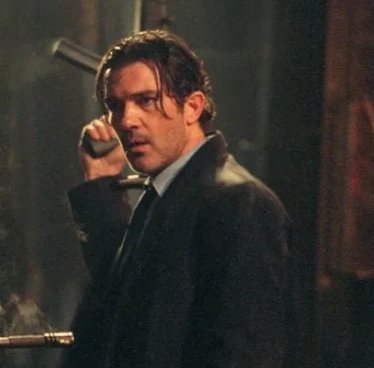
The Sopranos (Tony Soprano): The ultimate Freudian text. The entire show is framed by psychotherapy. Tony’s panic attacks are "symptoms" of repressed maternal hatred and the conflict between his "Id" (mob violence/desire) and a crumbling "Superego" (the rules of the Mafia and family).
Mad Men (Don Draper): A study in Displacement and Identity. Don Draper is a constructed persona hiding a traumatized "inner child" (Dick Whitman). His compulsive womanizing and advertising genius are both "wish fulfillments" designed to fill a void left by childhood neglect.
Succession (The Roy Siblings): A textbook look at Oedipal rivalry. The children are trapped in a "repetition compulsion," constantly seeking the love of a father (Logan Roy) who they also unconsciously wish to "kill" (dethrone) to gain their own autonomy.
In Treatment: This show literalizes the Freudian "talking cure." By focusing almost entirely on faces and dialogue in a closed room, it treats the television screen as a diagnostic window into the patient's unconscious.
Jungian Examples: Video Games (The Symbolic Journey)
In these games, the world isn't just a setting; it is a projection of the psyche. The player’s progress represents the "integration" of different parts of the self.
The Persona Series (Explicitly Jungian): This series uses Jung’s terminology directly. Characters literally summon "Personas" (social masks) to fight "Shadows" (repressed emotions). To grow stronger, characters must "face their other self" and accept their darker traits.
Elden Ring / Dark Souls: These games focus on Archetypes (The Maiden, The Elden Lord, The Crone). The player’s journey through a decaying, mythic world mirrors the "Descent into the Unconscious." The cryptic lore and symbolic bosses represent universal psychic struggles rather than simple "villains."
Celeste (Madeline & Badeline): A perfect literalization of The Shadow. The protagonist, Madeline, is chased up a mountain by a dark, purple-haired version of herself ("Part of Me"). The game is not won by defeating the Shadow, but by eventually merging with it to reach the summit—a pure "Individuation" arc.
The Legend of Zelda (Link, Zelda, Ganon): These represent the Collective Unconscious. Link is the "Eternal Hero" archetype; Zelda is the "Anima/Wisdom"; Ganon is the "Shadow/Power." Every game is a ritualized retelling of the same psychic balance being restored.
The "Cross-Over" Exceptions
As we note, the lines sometimes blur. Here are two examples that flip the script:
| Work | Medium | Why it flips the lens |
|---|---|---|
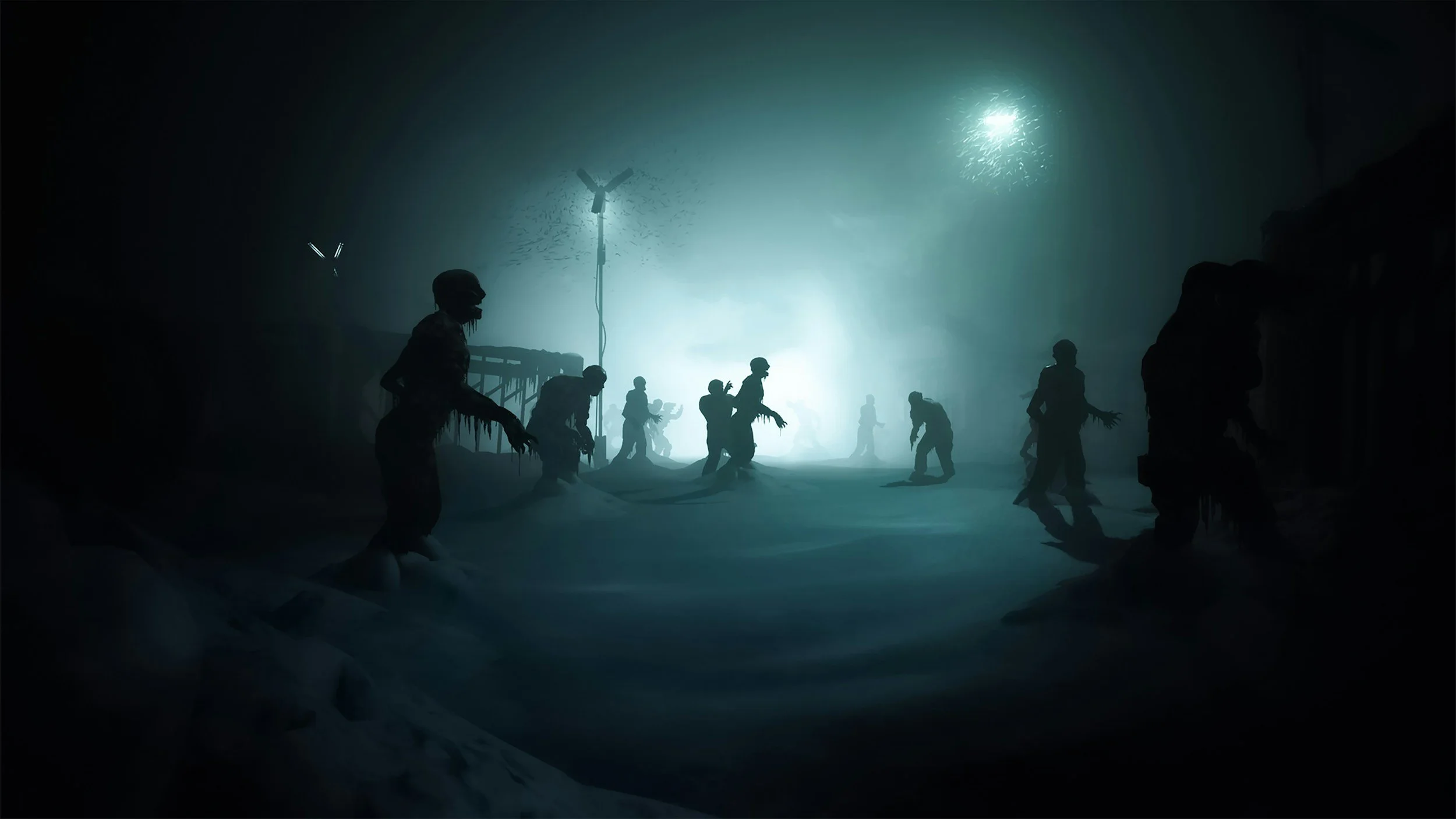
| Silent Hill 2 | Video Game | Freudian: The monsters aren't mythic archetypes; they are manifestations of the protagonist's specific sexual guilt and repressed trauma regarding his wife. |
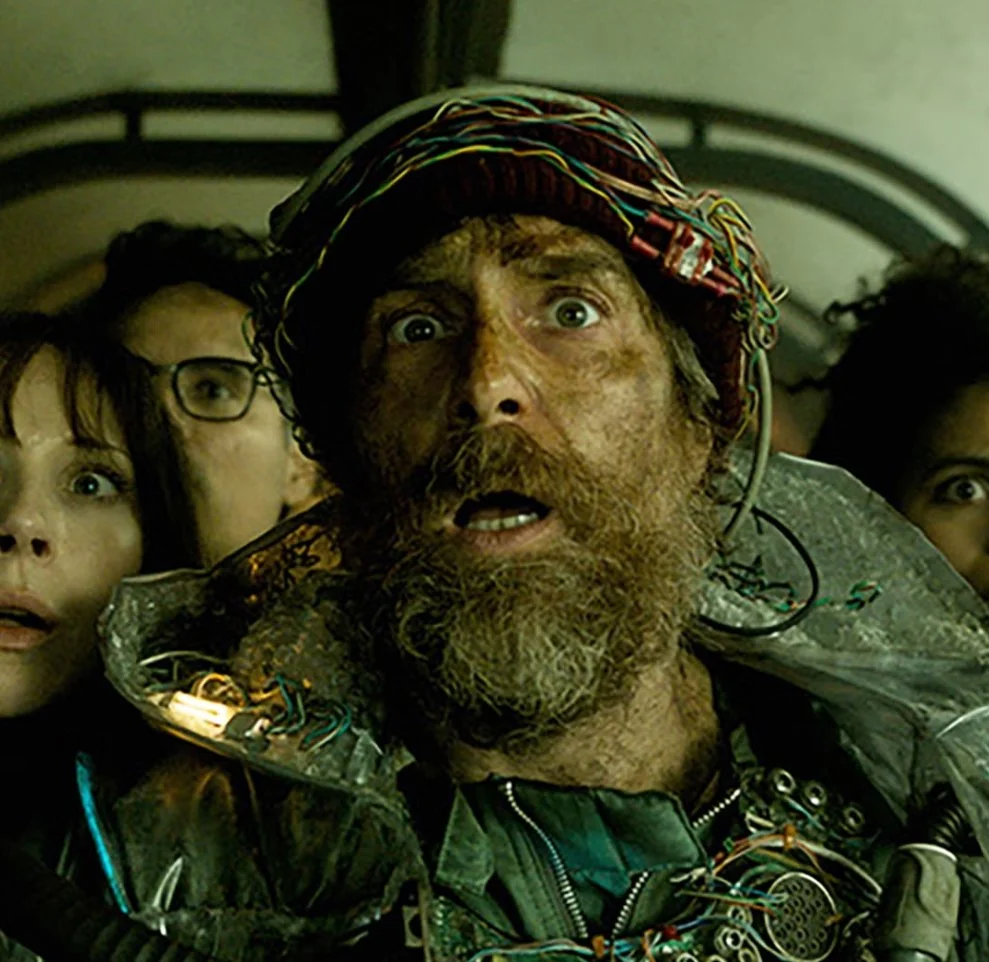
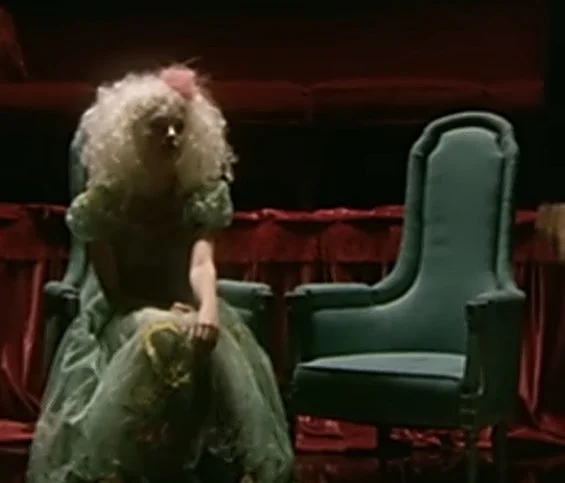
| Twin Peaks | Television | Jungian: While it has "soap opera" elements, it is dominated by the "Black and White Lodges," dream-logic, and the "Dweller on the Threshold"—deeply symbolic, mythic territory. |
References
Freud, S. (1923). The ego and the id. Hogarth Press.
Freud, S. (1900). The interpretation of dreams. Macmillan.
McGowan, T. (2015). Psychoanalytic film theory and The rules of the game. Bloomsbury.
Murray, J. H. (1997). Hamlet on the holodeck: The future of narrative in cyberspace. MIT Press.
Table of Contents