The Innocence Gap: How Childhood Is Not Perceived Equally
What Is the Innocence Gap?
The Innocence Gap refers to a documented psychological bias in which Black children are perceived as older, less innocent, and more culpable than white children of the same age. The term is most closely associated with research conducted by Phillip Atiba Goff and colleagues in 2014, published in the Journal of Personality and Social Psychology.
At its core, the Innocence Gap reveals that childhood is not a purely biological category in the minds of observers. It is also a social perception shaped by race.
To understand why this matters, we need to begin with how people normally think about children.
Childhood as a Protected Category
Across cultures, childhood is associated with vulnerability, dependency, and moral immaturity. Children are assumed to lack full intent. When they make mistakes, those mistakes are often attributed to developmental limitation rather than malicious character.
This developmental buffering is central to legal systems, educational policy, and parenting norms. It reflects an assumption that children require protection rather than punishment.
However, psychological research suggests that this buffering is not distributed equally.
The 2014 Study: “The Essence of Innocence”
In their landmark paper, Goff, Jackson, Di Leone, Culotta, and DiTomasso (2014) investigated whether Black boys are perceived differently from white boys in terms of innocence and age.
Participants were asked to estimate the ages of children from photographs and to rate their perceived innocence. The findings were striking.
From around the age of 10 onward, Black boys were consistently perceived as:
Older than white boys of the same age
Less innocent
More responsible for their actions
More deserving of harsher treatment in hypothetical legal scenarios
This phenomenon is sometimes referred to as adultification bias.
In other words, Black children were psychologically moved closer to adulthood in the minds of observers.
Why Age Perception Matters
Age is not merely a number. It carries moral implications.
When someone is perceived as older, observers are more likely to assume:
Greater intentionality
Greater awareness of consequences
Greater moral responsibility
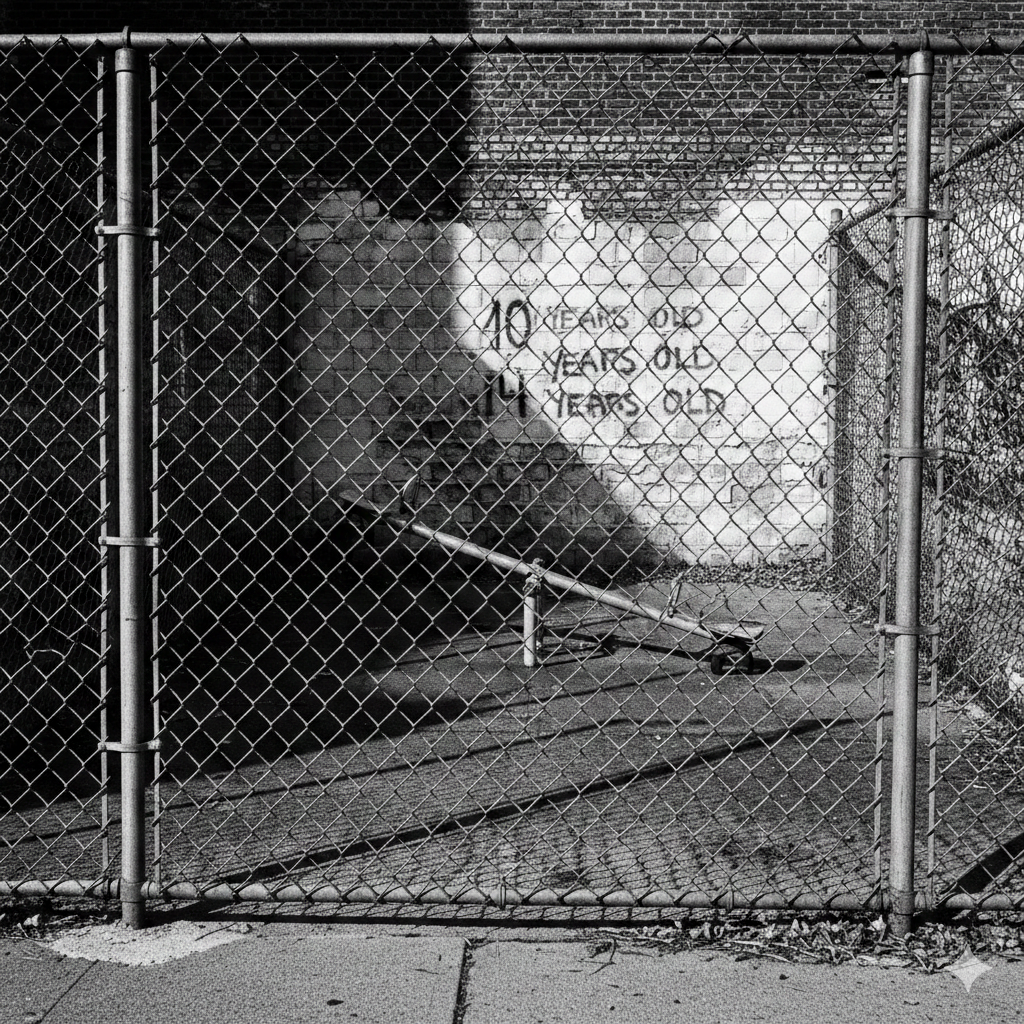
If a ten-year-old is perceived as thirteen, the buffer of childhood begins to thin. Behaviour that might be excused as immaturity may instead be interpreted as deliberate misconduct.
The Innocence Gap therefore has cascading consequences. It alters how behaviour is interpreted long before any formal decision is made.
Mechanisms Behind the Innocence Gap
The Innocence Gap does not arise from conscious hostility alone. It is shaped by implicit associations.
Several psychological mechanisms are relevant:
1. Implicit Racial Stereotypes
Cultural narratives often associate Black males with threat or criminality. Even when individuals reject these stereotypes explicitly, implicit associations may persist.
2. Dehumanization Processes
Research has shown that Black individuals are sometimes unconsciously associated with adult-like or animalistic traits. This reduces perceived vulnerability.
3. Prototype Mismatch
The culturally dominant prototype of a “child” in Western contexts has historically been white. When a child does not match that prototype, observers may unconsciously perceive them as less archetypally childlike.
These processes do not require explicit prejudice. They operate quickly and often outside conscious awareness.
Real-World Consequences
The Innocence Gap is not confined to laboratory settings. It has implications for:
School discipline
Juvenile justice
Policing interactions
Media framing
If Black children are perceived as older and less innocent, they may receive harsher disciplinary responses for identical behaviour.
For example, studies have shown racial disparities in school suspensions beginning in elementary school. The Innocence Gap offers one explanatory lens for why identical behaviour might be interpreted differently depending on the child’s race.
The consequences extend beyond punishment. Reduced perceptions of innocence can also reduce empathy. When a child is seen as less vulnerable, observers may feel less protective concern.
Innocence as a Social Construction
One of the most unsettling implications of this research is that innocence is not evenly distributed. It is socially constructed.
Biologically, a ten-year-old is a ten-year-old. Psychologically, however, age perception is filtered through social categories.
This challenges a comforting assumption that childhood is universally recognised and protected.
Instead, childhood itself appears to be stratified.
The Moral Dimension
The Innocence Gap forces us to reconsider how moral responsibility is assigned. If observers systematically attribute greater culpability to certain children, then moral judgement is not neutral.
This does not imply that all observers are consciously biased. Rather, it demonstrates that cultural associations shape perception at a foundational level.
When ambiguity arises, identity fills the gap.
Broader Theoretical Context
The Innocence Gap intersects with several broader psychological theories:
Social Identity Theory: Ingroup members receive more leniency.
Implicit Bias Research: Automatic associations influence judgement.
Dehumanization Theory: Reduced perceived humanity reduces empathy.
Attribution Theory: Behaviour is interpreted differently depending on group membership.
Together, these frameworks help explain why childhood can be perceived unevenly.
Why This Matters for Psych 101
For introductory psychology students, the Innocence Gap illustrates three important lessons:
Perception is not objective.
Social categories influence moral judgement.
Bias can operate without conscious intent.
It is a powerful example of how cognitive shortcuts intersect with social structure.
Returning to the Core Idea
The Innocence Gap is not about isolated prejudice. It is about patterned perception.
It reveals that innocence, one of the most morally protective categories in society, is not immune to bias.
When certain children are perceived as older and less innocent, they lose access to the developmental leniency that childhood is meant to provide.
That is not merely a cognitive quirk. It is a structural vulnerability.
Reference
Table of Contents