The Luxury of Boredom and the Privilege of Mixtape
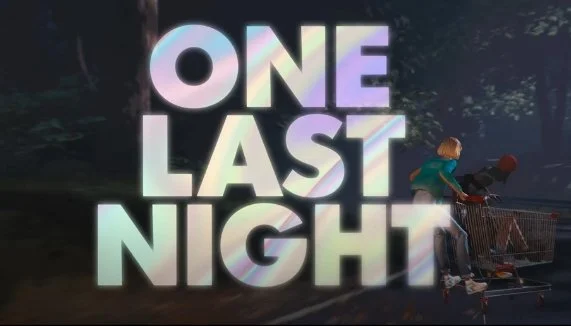
Mixtape is a beautiful game. That should probably be said first, before the knives come out and everyone starts behaving as if criticism is an act of vandalism.
It is funny, stylish, emotionally literate and, at its best, quietly devastating. It understands the strange religion of teenage friendship: the sacred mission to score booze, the mythic importance of a bad plan, the absolute freedom that a couple of friends and an abandoned shed can provide. It knows that adolescents are often profound about utterly unimportant things because the thing itself is not really the point. The point is that the self is waking up and grabbing whatever objects are nearby.
But there is another reading of Mixtape, and it sits slightly awkwardly underneath all that beauty.
This is not just a coming-of-age story. It is not simply an end-of-an-era story, or a musical nostalgia piece, or a friendship autopsy wrapped in licensed tracks and gorgeous animation. It is also a game about the luxury of boredom. More specifically, it is about the privilege of having enough safety, space and cultural capital for boredom to become romantic.
That, I think, is part of why the response to Mixtape has become so oddly divided. Some critics have treated it as a near-universal masterpiece of youth, memory and emotional transition. Some players have gone the other way, attacking its lack of traditional mechanics, its short length, its “is this even a game?” structure, and the sense that it is more interactive music video than challenge-based design.
Both reactions make sense, but both miss the more interesting cultural friction. The problem is not that Mixtape lacks meaning. It is packed with meaning. The problem is that the meaning depends on a very specific social world being treated as if it belongs to everyone.
Mixtape is not universal teenage nostalgia. It is middle-class Americana nostalgia, polished into something dreamy, exportable and expensive. Its great emotional fantasy is that adolescence is a time of aimless wandering, private rituals, low-stakes rebellion, music snobbery, suburban mythology and protected boredom. For some people, that fantasy feels like coming home. For others, it may feel like being shown a security they never had.
The Material Conditions of the Cult-de-Sac
The setting of Mixtape matters.
The game gives its teenagers room. Not just emotional room, but physical room. Streets to skate through. Spaces to trespass in. Suburban edges to haunt. Places where being young means being unsupervised, not endangered. Its world is low-density, breathable and weirdly clean, even when it is trying to look messy. The characters can sneak out, mess about, run around, skate down roads, avoid the law, drink, make bad decisions and still exist within an environment that feels fundamentally buffered.
That buffer is easy to miss because the game frames it as atmosphere. But atmosphere is never politically neutral. A quiet street is not just a quiet street. An abandoned space that can become a teenage kingdom is not just a cool location. A town where rebellion is dramatic but not truly dangerous is doing a lot of structural work in the background.
The freedom of Mixtape is not freedom in the abstract. It is freedom made possible by safety.
This is where the game’s nostalgia becomes classed. The adolescent night out, as Mixtape imagines it, depends on certain material conditions: enough neighbourhood safety to roam, enough social trust to trespass without catastrophic consequences, enough parental distance to make mischief possible, enough economic stability for boredom to become a problem rather than a luxury. The characters are not bored because their world is empty. They are bored because it is stable enough to be explored.
That is a very particular kind of teenage life.
For many adolescents, boredom is not romantic. It is not cinematic aimlessness. It is being stuck indoors because the area outside is unsafe, over-policed, under-resourced, or simply hostile. It is having nowhere to go because every supposedly public space has been sold, monitored, closed, priced out, or designed to discourage young people from existing too visibly. It is not “we made this place ours.” It is “there is no place for us, and everyone becomes annoyed when we improvise one.”
Mixtape is at its most seductive when it turns wandering into poetry. But wandering itself is a privilege when the world lets you do it without asking too many questions.
Rebellion Without Real Consequence
This does not mean the characters have no problems. They do. The game is not empty comfort. There is loneliness in it, fear in it, change in it, and the awful knowledge that friendship can become a memory while everyone is still laughing.
But its rebellion is cushioned.
The teenagers in Mixtape push against boundaries, but those boundaries feel elastic. Adults exist as obstacles, not as systems. The law is something to dodge and oppose, not something that permanently alters the course of your life. Trouble is part of the adventure. It gives the night flavour. It gives the friendship a shared mythology. It does not feel like it could close the future.
That distinction matters.
In a more precarious social world, the same behaviours would not read as charming teenage chaos. Scoring booze, sneaking into places, running from authority, hanging around outside at night, getting caught in the wrong place with the wrong group of friends: these things are not equally low-stakes for everyone. Class, race, neighbourhood, gender, policing and family structure all change the meaning of “just messing about.”
This is where Mixtape becomes both emotionally powerful and culturally narrow. It captures the feeling of a teenage group believing itself immortal, but it does so inside a world where immortality is, at least temporarily, believable. The environment lets the characters behave as if consequences are mostly theatrical. That is not a moral failing of the game. It is the fantasy the game is selling.
And it sells it beautifully.
The point is not “this game is bad because the characters are privileged.” That would be tedious, and also not especially insightful. Art is allowed to depict comfort. Art is allowed to be specific. The point is that Mixtape becomes weaker when its specific comfort is mistaken for a universal adolescence.
The game is not about youth. It is about a kind of youth.
Stacy Rockford and the Capital of Cool
Stacy Rockford is a brilliant character because she is recognisable in a slightly unbearable way.
She is the curator. The taste-maker. The one who seems to understand life through music before she fully understands it through language. She turns songs into identity, and identity into a kind of emotional architecture. This is exactly what teenagers do, especially teenagers who are bright, sensitive, socially hungry and quietly terrified that they might not be interesting enough without a soundtrack.
But Stacy’s coolness also has material conditions.
Taste is often treated as personal, but taste is never only personal. Pierre Bourdieu’s work on cultural capital is useful here because it reminds us that what people call “good taste” is often tied to class, education, access and social positioning. Liking the right things, knowing the right references, having the confidence to dislike popular things in a stylish way, curating yourself through music and art: none of this floats free from background.
A pristine ’90s alternative identity was not equally available to everyone. It required access. Music cost money. Magazines cost money. Band shirts cost money. Transport cost money. Time cost money. Even knowing what to be snobbish about depended on channels of discovery that were not evenly distributed. The ability to build a self out of carefully selected cultural material is easier when the basics of life are not constantly taking up all the room.
This is where Stacy’s music snobbery becomes more than a character quirk. It is a form of capital.
The game knows she is a bit much. It enjoys her intensity. It understands the adolescent need to make taste feel like morality, as if liking the right band means you have seen through the false world and emerged, tragically, as the only person in town with a decent CD collection. This is funny because it is true. It is also classed because not everyone gets to turn adolescence into curation.
Some teenagers inherit scarcity, instability, care responsibilities, unsafe neighbourhoods, social exclusion, religious pressure, family breakdown, or the ordinary exhaustion of not having enough money. Some still build fierce, beautiful identities through music and friendship, of course. Working-class youth cultures have always done that, often with more invention and less polish. But Mixtape is not really interested in the grit of cultural invention under constraint. It is interested in taste as dreamy self-mythology.
Again, that is not a failure. It is a lens. But it is a lens polished by comfort.
Boredom as a Protected State
Boredom gets a bad reputation, partly because people talk about it as if it is just a failure to be sufficiently productive. But boredom can be developmentally useful. It creates space for imagination, risk, social invention and self-experimentation. Teenagers need unstructured time. They need places where nothing much is happening so that they can make something happen, even if that something is idiotic and involves lying badly to an adult.
Mixtape understands this beautifully. Its characters are not efficient. They wander. They escalate nonsense. They load small moments with huge emotional importance. They behave as if the night has narrative obligations. This is exactly what boredom can do when it is held inside enough safety. It becomes a pressure cooker for meaning.
But protected boredom is not the same as empty time.
A teenager with a safe neighbourhood, tolerant local spaces, available friends, enough money for small adventures, and no pressing household responsibilities experiences boredom differently from a teenager working shifts, caring for siblings, avoiding danger, managing family chaos, or living somewhere that treats young people as a nuisance the moment they appear in groups larger than two.
This is where the phrase “the luxury of boredom” earns its keep. The game’s version of boredom is spacious. It is boredom with scenery. Boredom with music. Boredom with mobility. Boredom with friends. Boredom that can be turned into a quest because the characters have enough freedom to move through the world rather than merely endure it.
The night becomes epic because nothing real is trying to crush it.
That is not an insult. It is the condition that makes the game possible.
The Synthesized Americana Lens
There is another layer to this: Mixtape is not an American memoir in the straightforward sense. It is an Australian studio building a highly recognisable American teenage dreamscape through the accumulated grammar of film, music videos, coming-of-age stories and alternative culture.
That does not make it fake. People borrow imagined geographies all the time. British teenagers grow up with American high schools in their heads. Australian artists can understand American suburbia through cinema. A person from Manchester can have a more emotionally accurate memory of a filmic California than of some actual places they have physically visited, because the brain is not a border control office, thank God.
But the result is still important. Mixtape is not simply remembering a place. It is synthesising one.
Its America is not documentary. It is a playlist. A mood board. A memory of movies, songs, fashion, youth culture and emotional postures, stitched together into a Pacific Northwest-ish, Northern California-ish, John Hughes-ish, alternative ’90s dreamspace. It feels authentic not because it is local, but because it is fluent in the symbols of authenticity.
That is very modern. Nostalgia has become less about returning to a real past and more about consuming a well-produced emotional texture. We no longer need to have lived the moment to miss it. We just need the right songs, the right colour palette, the right camera language, the right sort of teenage yearning standing near a road at sunset.
Mixtape is not cynical about this. That is part of its charm. It clearly loves the material. It believes in its own emotional world. But it also turns a very particular version of youth into a premium cultural object: beautifully animated, tightly scored, expensively licensed and sold as a universal ache.
This is where Annapurna’s presence is not irrelevant.
Annapurna Interactive has helped bring some wonderful, strange, emotionally ambitious games into the world. If wealthy publishers want to fund distinctive indie projects rather than another live-service content treadmill, fine. Good. Please continue. The world has enough battle passes trying to mug people in the menu.
But funding shapes aesthetics. A game like Mixtape can afford polish, music rights, marketing confidence and a kind of luxurious aimlessness that mirrors the privilege inside the story itself. The production context and the narrative fantasy begin to rhyme. Here is a game about the luxury of protected teenage boredom, made with the kind of cultural and financial backing that allows boredom to become art rather than a risk on a spreadsheet.
That does not invalidate it. It makes it more interesting.
Why the Backlash Makes Sense, Even When It Is Crude
Some of the backlash against Mixtape has been predictable. The usual arguments appear whenever a narrative-led game receives high praise. “There is no gameplay.” “It is just walking.” “It is too short.” “Critics only like it because it is artsy.” “How can this get a perfect score when my preferred seventy-hour inventory spreadsheet with dragons only got an eight?”
Some of that is dull. Some of it is culture-war noise. Some of it is the eternal inability of gamers to accept that different objects can have different aims, a discovery we may reach as a species shortly after we solve death.
But underneath the crude version of the backlash, there may be a more interesting irritation. Mixtape asks players to accept its emotional world as enough. It does not offer the usual compensations of difficulty, mastery, optimisation or mechanical depth. It says: walk through this memory, feel this friendship, inhabit this mood, trust the soundtrack, accept the ache.
For players who recognise the social world it depicts, that can feel profound. For players who do not, it may feel indulgent.
This is not just about mechanics. It is about cultural access. If the emotional fantasy lands, the game’s lightness feels elegant. If the fantasy does not land, the same lightness can feel empty. One player sees a delicate interactive poem about youth, friendship and change. Another sees a short, expensive nostalgia machine about attractive teenagers with good music taste wandering through a world that never really threatens them.
Both players may be responding honestly.
That is why the polarization around Mixtape is not only a debate about games as a medium. It is a debate about whose memories get to be treated as art.
The Friendship Autopsy Still Works
None of this removes what Mixtape does well.
The friendship material still works. The last-night structure still hurts. The dialogue still captures that teenage habit of being sincere in the direction of nonsense. The game still understands that groups survive by refusing to name the thing that might break them. Nobody wants to say, “This will not be the same after tonight,” because saying it makes the future arrive early.
In fact, the class critique can make the friendship reading sharper.
The tragedy of Mixtape is not only that the group may drift apart. It is that the world which allowed the group to exist in this form was always temporary. School, suburbia, youth, music, shared boredom, loose parental oversight, cheap rebellion, the belief that a night can become legend if everyone commits hard enough: all of it is a social arrangement. It feels eternal from the inside because teenagers are very bad at recognising infrastructure. To be fair, so are most adults, which is why we keep pretending Wi-Fi is a personality trait.
The game’s blind hope depends on not naming the ending. Its privilege depends on not naming the conditions.
That is the more critical reading: Mixtape is not merely about the end of a friendship. It is about the end of a protected social world that the game itself is too enamoured with to fully interrogate. It notices the emotional loss, but not always the material shelter that made the lost world possible.
And yet, that partial blindness is also part of why it feels true. Teenagers rarely understand the structures holding them. They understand the shed, the song, the bottle, the friend, the road, the night. They know what it feels like to belong before they know what paid for the conditions of belonging.
Simply Put
So where does that leave Mixtape?
Somewhere more interesting than masterpiece or fraud.
It is a beautiful, expensive sandbox of comfort. A game about friendship, change and the crushing reality people choose not to name, but also a game built on a narrow fantasy of youth as safe rebellion. It deserves praise for how precisely it captures the emotional weather of teenage kinship. It also deserves scrutiny for how easily it turns a specific, protected form of adolescence into a supposedly shared human memory.
The point is not that Mixtape should have represented every kind of teenage life. No single game can do that, and art becomes very boring when every story is forced to apologise for not being a census. The point is that its emotional universality should be questioned. The ache is real. The setting is not neutral. The friendship is recognisable. The freedom is not evenly distributed.
That is why the game’s critical success and player backlash are so revealing. One person’s cozy trip down memory lane is another person’s reminder of a security they never possessed. One player sees the sacred boredom of youth. Another sees a beautifully produced fantasy of being allowed to waste time safely.
Both reactions can be true.
Mixtape works because it understands that teenage friendship is a temporary world. It becomes more complicated when we ask who gets to have that world, who gets to wander through it, who gets to rebel without being ruined, and who gets to be bored long enough for boredom to become art.
That is not a reason to dismiss the game.
It is a reason to listen to the discomfort sitting underneath the soundtrack.
References
Annapurna Interactive. (2026). Mixtape. Annapurna Interactive.
Putnam, R. D. (2015). Our kids: The American dream in crisis. Simon & Schuster.
Sharot, T. (2011). The optimism bias. Current Biology, 21(23), R941–R945.
Table of Contents