Mixtape and the Friendship Autopsy: Why the Game Hurts More Than Nostalgia Should
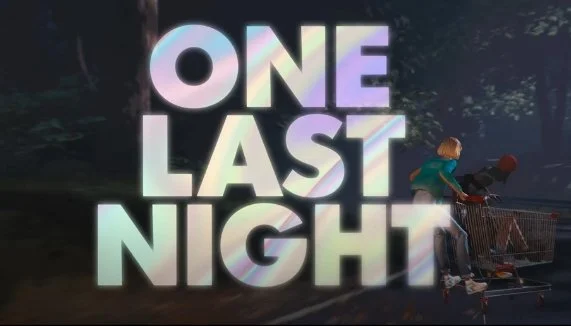
Mixtape is a joyfully depressing experience, at least for me.
I went in expecting a nostalgic musical romp through the ’90s, and yes, it absolutely has that. First loves. Getting busted. Sneaking about. The sacred teenage mission of scoring booze. The absolute freedom that a couple of friends and a long-abandoned shed can provide, which is not real freedom in any legal or practical sense, but still feels more alive than most carefully scheduled adult leisure.
But that was not the part that got me.
What hit me was that, from the outset, Mixtape is framed as the last night together for a group of friends. We do not really believe that. They do not really believe that. But they also sort of do. They act eternally bonded in a moment that feels impossibly important, and it is important, but it is also just another teenage gathering dressed up as legend because nobody quite knows how to admit what is happening.
That tension is the bruise at the centre of the game. The hope of eternal kinship mixed with the quiet gut punch that, realistically, you may never see these people in the same way again. Maybe you will message occasionally. Maybe you will like each other’s photos. Maybe one day you will say, “We should meet up,” and absolutely none of you will mean it with enough force to defeat calendars, geography, partners, jobs, children, mortgages, tiredness, or the simple fact that you have all become slightly different people.
That is what Mixtape understands so well. Teenage friendship often feels permanent because nobody involved has yet learned how easily life dismantles a group without ever requiring a dramatic betrayal. Sometimes the end of an era looks exactly like another night out.
This Is Not Just a Coming-of-Age Story
The easy reading is that Mixtape is a coming-of-age game. That is not wrong, exactly. It has the ingredients. Teenagers. Music. Recklessness. First kisses. Big feelings. A night out that clearly thinks very highly of itself.
The slightly duller version of the argument is that Mixtape is about nostalgia. Again, yes, obviously. The soundtrack is not exactly hiding in the cupboard. The whole game is built around the emotional logic of the playlist, where a song can turn a tiny moment into a personal mythology. Anyone who has ever treated a burned CD, a MiniDisc, an iPod playlist, or a suspiciously labelled folder of MP3s as an extension of the soul will understand the machinery.
But the more interesting reading is that Mixtape is a commentary on friendship under pressure. Not friendship as a sentimental category. Not friendship as a montage of shared jokes, bad hair and emotionally significant songs. Friendship as a temporary social world, built by people who need it to feel permanent because they are using it to hold themselves together.
That is where the game becomes more painful than a normal nostalgia piece. Nostalgia usually lets us look backwards from a safe distance. Mixtape puts us inside the moment before the memory has fully formed. The characters are still performing the friendship, still joking, still questing, still turning the night into legend, but the loss is already visible around the edges.
The game is not asking us to remember the music. It is asking us to examine the friendship while it is still laughing.
Friendship as a Temporary World
Teenage friendships are not just social decoration. They help create identity.
Your friends give you a language. They give you a taste culture. They give you in-jokes, rituals, enemies, places, stories and stupid little rules nobody outside the group would understand. They help decide what is funny, what is embarrassing, what counts as courage, what kind of music has moral value, and which local areas feel like sacred territory despite being, in most cases, a field, a bench, a shed, a bus stop, or a grim patch of woodland filled with broken glass and ambition.
Psychologically, this is part of why adolescent friendship can feel so intense. Belonging is not a luxury add-on to human life. It is one of the basic conditions through which people organise themselves, regulate emotion and make meaning (Baumeister & Leary, 1995). Peer relationships also become especially important during adolescence, when identity is still being assembled and tested in public. Friendship is not just something teenagers have. It is part of how they find out who they are allowed to be.
That is why Mixtape does not need world-ending stakes. The world that is ending is smaller, stranger and more personal. It is the world of Stacey, Slater and Cassandra as a unit. The game’s emotional weight comes from the fact that this unit has its own rules, memories and mythology. The group is not simply three individuals standing next to each other. It is a little society.
This is where social identity theory becomes useful, without needing to drag the whole article into a seminar room and dim the lights. Tajfel and Turner argued that part of the self is formed through group membership: people understand themselves through the groups they belong to and the emotional significance of those memberships (Tajfel & Turner, 1979). A teenage friendship group is not the same thing as a formal social category, obviously. Nobody is filling out tax forms as “shed people.” Still, the principle applies beautifully. The group becomes a source of identity.
You are not only yourself. You are yourself with them.
That distinction matters because when the group changes, something more than a routine is lost. A version of the self starts to go with it. There is the person you are alone, the person you are with family, the person you pretend to be in public, and then there is the very specific creature you become around the people who knew you during your most experimental, self-important and badly dressed years.
Losing that group is not just losing company. It is losing a mirror that reflected a particular version of you back with complete confidence, even when that version was, objectively, a bit much.
The Last Night Nobody Wants to Name
The cruelty of Mixtape is that everyone knows what the night means, but nobody wants to say it clearly.
This is painfully human. Groups often survive by refusing to name the thing that might break them. Nobody wants to say, “This will not be the same after tonight,” because saying it would make the future arrive early. So they lean into ritual. They chase the party. They score booze. They revisit old places. They talk nonsense with unbearable seriousness. They behave as if enough intensity can bully time into submission.
Teenagers are particularly good at this, partly because they are often living through major transitions before they have a decent emotional vocabulary for them. Late adolescence and early adulthood are full of identity exploration, instability, movement and role change (Arnett, 2000). People leave for university, jobs, relationships, cities, new versions of themselves. Friendship does not always end, but it often stops being maintained by default.
That difference is brutal. School friendships are partly sustained by proximity. You see each other because the institution keeps placing you in the same rooms, corridors, streets, buses, parties and accidental disasters. Once that structure disappears, the friendship has to survive by intention. That is a different animal. It requires effort, planning and the willingness to turn affection into admin, which is possibly the least romantic sentence ever written about friendship but unfortunately still true.
Mixtape captures the moment just before that change. The characters are still inside the old structure, emotionally if not practically. The friendship still feels like a fact of nature. Of course they are together. Of course this matters. Of course this bond will outlast everything. The night becomes a ritual of continuity at the exact moment continuity is becoming less certain.
That is the friendship autopsy. The patient is still alive, still making jokes, still insisting everything is fine, but the signs are there.
Blind Hope Is Not Stupidity
It would be easy to call the characters naïve. They think they will stay close. They act as if the friendship is too important to be altered by distance, adulthood or the usual small erosions of time. From the perspective of anyone who has lived long enough to watch group chats become digital museums, this looks painfully optimistic.
But blind hope is not always stupidity. Sometimes it is a protective fantasy.
Optimism bias refers to the tendency to expect more positive outcomes for ourselves than may be realistically likely (Sharot, 2011). In everyday terms, this is the little voice that says, “We’ll keep in touch,” even when everyone involved is about to be scattered into different cities, jobs, relationships and sleep schedules. It is not accurate, but it is useful. At least for a while.
The hope that “we’ll always be like this” allows the group to enjoy its final form without collapsing into grief. They need the lie because the truth is too adult, too administrative and too ugly. People leave. People change. Messages slow down. Reunions become vague. Someone cancels, then someone else cancels, then years pass and the friendship becomes less a living routine than a private archive.
Blind hope protects the present from being ruined by the future.
That is not a flaw in the characters. It is part of what makes them recognisable. Most people have had some version of this. The final night before university. The last shift at a job where everyone swears they will keep meeting up. The last summer before things become complicated. The final gathering before someone moves away. Everyone knows something is ending, but the group agrees not to look directly at it. There are drinks to get. Songs to play. Bad decisions to arrange in a row and call a personality.
Mixtape understands that denial is not always cowardice. Sometimes it is the emotional scaffolding that lets us survive transition without becoming unbearable company.
Why Teenagers Are Profound About Unimportant Things
One of the game’s sharpest pleasures is its dialogue. The characters talk with that very specific teenage mixture of sincerity, nonsense and accidental philosophy. They are profound about utterly unimportant things, which is one of the great signs of adolescent awakening.
At that age, everything tiny can feel as if it has cosmic weight because you are discovering interior life in real time. A song lyric, a road sign, a bottle, a field, a kiss, a shed, someone saying something slightly off in a car park. Suddenly it all seems to point toward some huge hidden truth about existence. From the outside, nothing is happening. Three teenagers are standing around talking rubbish. From the inside, the self is being assembled out of noise, loyalty, embarrassment and weather.
That is why the game’s ridiculousness works. Teenage profundity is often funny because the object is trivial, but the emotion attached to it is not. The conversation might be about a band, a dare, a party, a local rumour or whether a particular place is haunted by vibes rather than ghosts. Underneath that, the group is dealing with loyalty, desire, fear, belonging, shame, separation and the faint suspicion that adulthood may be a scam with better stationery.
This is where nostalgia becomes more complicated than simple longing. Contemporary psychological research often frames nostalgia as bittersweet and socially meaningful. It is not merely a desire to return to the past. It can support meaning, social connectedness and self-continuity, helping people feel that their past and present selves are connected (Sedikides & Wildschut, 2018). That is exactly the emotional territory Mixtape walks into.
The game is not nostalgic because the past was objectively better. It is nostalgic because the past contained selves and groups that can no longer be accessed directly. Music becomes the key. Places become containers. Small objects carry too much meaning because they are standing in for people, rituals and versions of life that have already started to disappear.
A long-abandoned shed is not just a shed when it once gave a group somewhere to become itself.
Time Makes Friendship Visible
One reason the “last night” frame works so well is that endings change attention.
Socioemotional selectivity theory suggests that perceived time horizons shape motivation. When time feels open-ended, people are more likely to pursue exploration, novelty and future-oriented goals. When time feels limited, they tend to prioritise emotionally meaningful experiences and relationships (Carstensen et al., 1999). Although this theory is often discussed in relation to ageing, the broader point is useful here: when people sense an ending, even a temporary or symbolic one, the emotional value of the present sharpens.
That is why the last night becomes so charged. It is not because the party itself is uniquely important. It is because the night has been contaminated by finitude. Suddenly every joke feels archival. Every argument feels like it might become part of the official record. Every stupid little mission becomes a ritual because the group is running out of chances to do this exact thing in this exact form.
The tragedy is that the characters are too young to fully understand what they are grieving, but old enough to feel it. They know something is changing. They do not yet have the adult language for it, so they convert it into action. Move. Skate. Drink. Kiss. Sneak. Run. Remember. Make the night epic because the alternative is sitting still and admitting that the group may not survive its own future.
This is the crushing reality they choose not to name.
Not because they are weak. Because naming it would be cruel.
Why Games Can Make This Hurt Differently
A film can show you a last night. A novel can describe one beautifully. A game can make you participate in the rituals that allow the denial to continue.
That is why Mixtape works as more than an interactive playlist. Its mechanics may be light, but the lightness is part of the point. You are not mastering a system. You are moving through memories, moods and social performances. The game asks you to inhabit the group’s rituals rather than merely observe them. The wandering, the dares, the music, the small acts of rebellion and the private geography all become playable forms of belonging.
This matters because friendship is not usually experienced as a thesis. It is experienced through repetition. The same routes. The same places. The same jokes. The same stupid plans that somehow work just often enough to keep the group overconfident. Games are unusually good at representing that kind of embodied memory because they can turn social routine into action. They can make you feel the rhythm of a group.
And then, quietly, they can make you realise the rhythm will not last.
That is the clever ache of Mixtape. It does not need to tell us, constantly, that everything is ending. It lets the player feel the pressure of an ending inside the very behaviours meant to deny it. The more the night tries to become legendary, the more obvious it becomes that something ordinary and irreplaceable is slipping away.
The Friendship Before It Becomes an Archive
Eventually, most old friendships become archives.
Not all of them, obviously. Some survive. Some adapt. Some become stronger because the people inside them are stubborn enough, compatible enough, or geographically lucky enough to keep choosing each other. But many friendships from adolescence become something stranger. They become songs you cannot hear neutrally. They become places you cannot pass without remembering a version of yourself who was louder, thinner-skinned, more certain and probably wearing something regrettable. They become stories you tell badly because half the meaning belonged to people who are no longer there to complete the joke.
Mixtape sits in the painful moment before that archive is sealed. Stacey, Slater and Cassandra are still together. The friendship is still alive. The night is still happening. But the memory has already started forming around them.
That is why the game is joyfully depressing. It remembers the thrill of teenage freedom without pretending that freedom was pure. It remembers the absurd seriousness of adolescence without sneering at it. It understands that the booze, the music, the sneaking out and the all-night myth-making were never only about rebellion. They were ways of building a small world before the larger one arrived and started charging rent.
The game is not really saying, “Wasn’t youth amazing?”
It is saying something sadder and more honest: wasn’t it strange how much of ourselves we built out of people we were never going to keep in quite the same way?
And perhaps that is why it lands so hard. Not because it reminds us of being young, but because it reminds us that some friendships end long before anyone admits they are over. They do not always break. They thin. They stretch. They become harder to summon. They survive as affection, as memory, as a name you are still happy to see appear on a screen, even if the living world you once shared has quietly closed.
The last night together is never just one night. It is the moment when blind hope does its final piece of work. It lets everyone laugh, drink, run, talk nonsense and act immortal for a few more hours.
Then morning comes, because morning is rude like that.
References
Beethoven & Dinosaur. (2026). Mixtape [Video game]. Annapurna Interactive.
Table of Contents