Self-Determination Theory Applied to Open-World Games
Why freedom in games only works when it gives players something worth doing.
Open-world games often sell themselves on freedom. Go anywhere. Do anything. Climb that mountain. Ignore the main quest. Spend three hours collecting mushrooms, upgrading trousers, annoying guards or trying to make a horse obey the basic laws of pathfinding.
At their best, open-world games feel like possibility. At their worst, they feel like someone has tipped a filing cabinet onto a fantasy map and called it adventure.
The difference is not just size. A huge map does not automatically feel freeing. Sometimes it feels like admin with nicer clouds. What makes an open world psychologically satisfying is whether it supports the player’s basic motivational needs. This is where self-determination theory becomes useful.
Self-determination theory argues that people are more motivated when three psychological needs are supported: autonomy, competence and relatedness. In plain terms, people want to feel that they have meaningful choice, that they are becoming more capable, and that they are connected to something beyond a sterile task list.
Open-world games are basically laboratories for these needs. They invite players into a space and then quietly ask: do you feel free here, do you feel capable here, and do you care about anything here?
Some games answer yes with confidence. Others hand the player 184 icons and hope nobody notices the smell.
Autonomy: freedom is not the same as empty space
Autonomy is the feeling that your actions are meaningfully yours. It does not mean doing absolutely anything with no structure. That is not freedom. That is being abandoned in a field with a stamina bar.
A good open-world game gives the player choices that feel self-directed. It lets players form intentions, test ideas and create their own route through the world. The crucial point is that the game has to respond well enough for those choices to feel real.
This is why The Legend of Zelda: Breath of the Wild became such a useful example of open-world design. It does not simply say, “Here is a big map.” It says, “Here is a world with systems. Try something stupid and see what happens.”
You can climb, glide, cook, sneak, freeze objects, exploit physics, use weather, start fires, avoid fights, improvise weapons and solve shrine puzzles in ways that sometimes seem only slightly legal. Tears of the Kingdom pushes this even further with construction, fusion and bizarre player-made engineering. The player’s autonomy comes from the fact that the world is not only large; it is permissive.
That distinction is important. Many open-world games offer a huge number of activities, but the activities are fixed. Go to the marker. Clear the camp. Collect the object. Watch the number go up. This can be pleasant enough, in the same way alphabetising a drawer can be pleasant if life has been especially cruel that week, but it is not the same as autonomy.
A player can have hundreds of things to do and still feel strangely controlled. The map is full, but the behaviour is narrow.
Skyrim offers a different form of autonomy. Its famous appeal is less about systemic physics and more about identity. Be a stealth archer, accidentally become a stealth archer, promise yourself you will not become a stealth archer, then become a stealth archer with a hat. The game lets players inhabit a fantasy role with unusual looseness. You can follow the main story, ignore it, join factions, wander into caves, decorate a house, hoard cheese wheels and behave as if the fate of the world is a mild scheduling concern.
Skyrim’s autonomy comes from role freedom. Breath of the Wild’s autonomy comes from systemic freedom. Both can be powerful, but they work in different ways.
The design lesson is simple enough: open worlds do not need to offer infinite freedom. They need to offer legible, meaningful freedom. Players do not need to be able to do everything. They need to feel that what they choose to do belongs to them.
Competence: players need to feel lost without feeling useless
Competence is the feeling that you are getting better. Games are unusually good at this because they can show progress through skill, knowledge, timing, strategy, equipment and confidence. The player does not just think, “I understand this.” They feel it in their hands.
Open-world games have a tricky relationship with competence. They often want players to feel small at first, surrounded by danger and mystery. That can be exciting. The problem is that feeling small can easily become feeling stupid, and feeling stupid rarely sells a fantasy unless the fantasy is “person trapped in menu system.”
Elden Ring is probably one of the clearest examples of competence done brutally well. Its world gives the player enormous freedom, but it does not flatten itself around the player’s comfort. You can wander into places you are not ready for. You can be flattened by something with too many limbs and a concerning work ethic. The game does not always explain itself warmly, but it does give players a deep structure of learnable patterns.
The first time a player faces Margit, the Fell Omen, they may feel underpowered, underprepared and personally disrespected. Later, after exploring Limgrave, upgrading weapons, learning dodge timings, summoning help, changing tactics or simply calming down enough to stop panic-rolling into doom, the same fight becomes readable. Not easy, necessarily. Readable.
That is competence.
The player has not only gained numbers. They have gained understanding. Elden Ring’s open world supports competence because it lets players leave, grow and return. The world becomes a teacher, although admittedly one of those teachers who throws furniture first and marks the essay later.
This is different from open-world progression that relies mostly on level-gating. If a wolf kills the player because the wolf is secretly Level 47 and the player is Level 6, the lesson is not very interesting. The player has learned that the wolf has a spreadsheet. True competence comes when the player can understand why they failed and what they might do differently.
Breath of the Wild also supports competence through experimentation. At first, the systems feel loose and slightly chaotic. Over time, players learn how temperature, stamina, weather, weapon durability, enemy behaviour and environmental tools fit together. The competence is not only combat skill. It is practical intelligence inside the world.
This is why tutorials in open-world games are so difficult. Too much instruction kills discovery. Too little instruction leaves the player muttering darkly at the UI. The best open-world games teach through structured freedom. They give players enough friction to learn, but enough support to keep trying.
Competence is not about making the player feel powerful all the time. It is about making improvement feel possible, visible and earned.
Relatedness: the world needs something to care about
Relatedness is the need to feel connected. In games, this can mean connection to characters, communities, factions, places, stories or even imagined versions of oneself. Open worlds can be spectacular at this, but they can also fail in a uniquely depressing way.
A map can be huge and still feel lonely in the wrong sense. Not lonely like Shadow of the Colossus, where emptiness has meaning. Lonely like a shopping centre after closing, where everything technically exists but nothing seems glad you came.
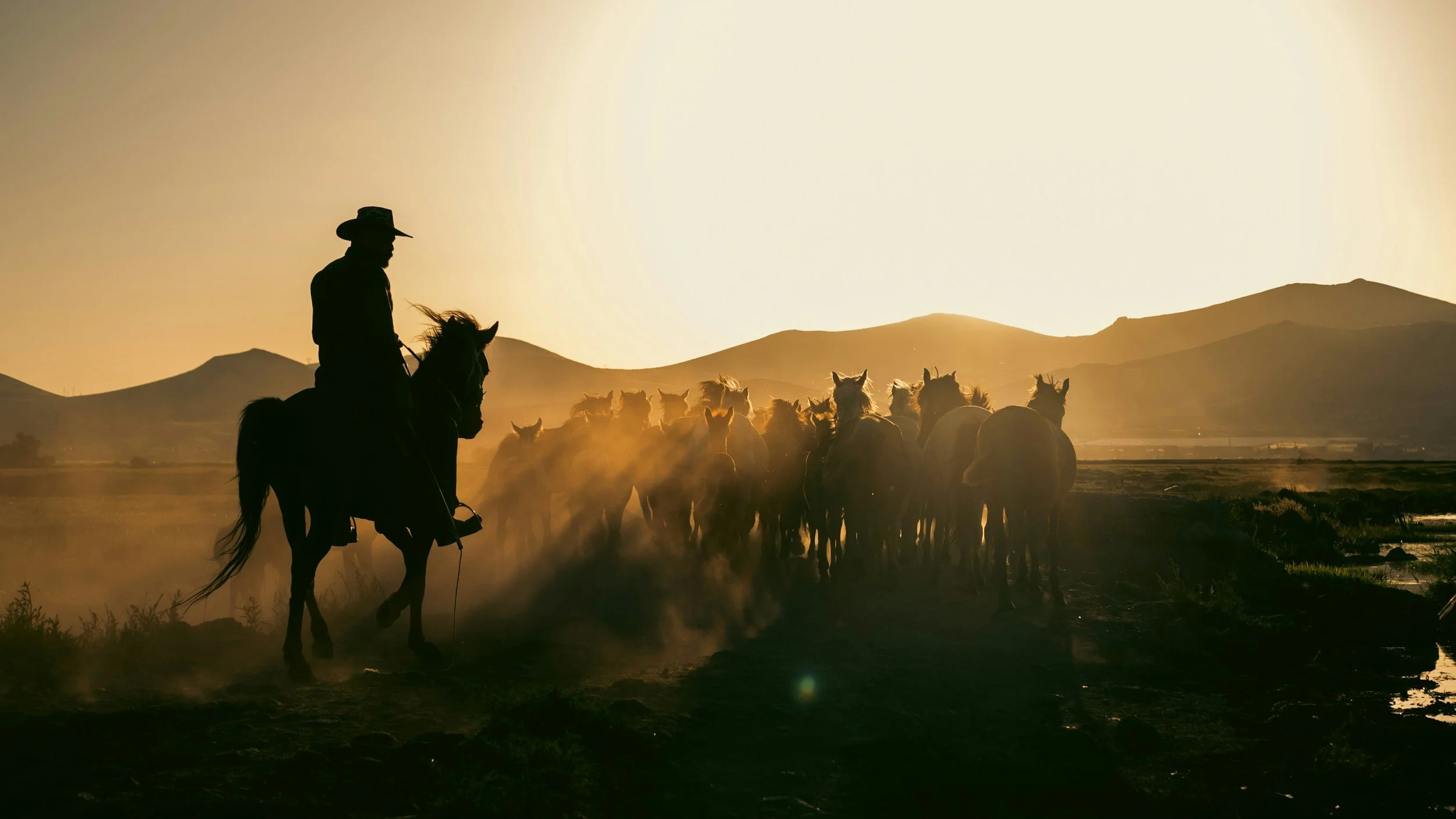
Red Dead Redemption 2 shows how relatedness can hold an open world together. Its world is vast and atmospheric, but the player’s emotional centre is often the Van der Linde gang. The camp matters because it gives the world a social anchor. Arthur Morgan is not just moving across terrain. He is embedded in obligations, loyalties, disappointments, jokes, debts, resentments and relationships.
That social texture changes how the world feels. Hunting is not only resource gathering. Bringing food back to camp can feel like contributing to a fragile community. Small interactions accumulate. Characters remember things, complain, tease, sing, argue and generally behave like a family system with horses and worse financial planning.
This does not mean Red Dead Redemption 2 is pure autonomy heaven. It is famous for giving the player a huge world while sometimes being very strict during missions. Step slightly outside the expected path and the game may fail you with the emotional warmth of a tax letter. But its relatedness is strong enough that many players forgive the control, because the world feels inhabited by people they have come to know.
The Witcher 3 offers another version. Geralt is not a blank slate. He has a voice, a history, relationships and a fairly specific emotional range, mostly somewhere between exhausted professional and man who has seen too many damp corpses before breakfast. This limits player autonomy in one sense, but it strengthens relatedness. The player is not simply projecting into an empty avatar. They are inhabiting a character with ties to Ciri, Yennefer, Triss, Vesemir and a wider world of moral debts.
The open world becomes meaningful because quests are often connected to people, grief, exploitation, superstition, family, power and consequence. A village contract is rarely just a monster checklist. Often the monster is the least psychologically troubling part of the situation.
This is one reason some open-world games with technically impressive maps fail to linger emotionally. They provide activities but not attachments. The player clears regions, collects items and upgrades gear, yet leaves with very little memory of who lived there or why any of it mattered.
Relatedness does not always have to come from characters. Minecraft often creates relatedness through place and shared creation. A player can become attached to a base, a landscape, a ridiculous bridge, a half-finished storage room or a server full of friends whose architectural taste should perhaps be reviewed by an independent body. The connection comes from investment. The world matters because the player has left marks on it.
Open worlds work best when they stop being scenery and become somewhere the player has a relationship with.
The problem with checklist freedom
The awkward truth is that many open-world games understand the language of freedom better than the psychology of freedom.
They give players a map. They fill it with icons. They offer crafting, side quests, towers, currencies, factions, collectibles, challenges, upgrades, daily tasks and enough minor resources to make the inventory screen look like a medieval branch of B&Q.
Some players enjoy this structure, and that is fine. Checklist play can be soothing. It gives order, completion and reliable progress. There is nothing inherently wrong with clearing icons from a map. Human beings have found comfort in much worse.
The problem begins when the game mistakes quantity for motivation.
A checklist can support competence because it gives visible progress. It can support autonomy if players can choose what to pursue and why. It can support relatedness if the tasks connect to characters, communities or world meaning. But when the checklist becomes the whole game, motivation thins out.
The player is no longer asking, “What do I want to do next?” They are asking, “What has the map decided I have not yet tidied?”
That shift is subtle, but it changes the emotional flavour of play. The game still offers freedom on paper, but the player begins to feel managed. The world becomes a workplace with dragons.
Self-determination theory helps explain why this can feel so flat. The game may be giving the player constant rewards, but rewards alone are not the same as motivation. A player can be busy without feeling autonomous. They can level up without feeling competent. They can meet hundreds of NPCs without feeling connected to anyone.
That is when an open world becomes large, polished and strangely dead.
Why constraints can make open worlds feel freer
One of the more interesting lessons from self-determination theory is that autonomy does not require the absence of constraints. In fact, constraints can make autonomy more satisfying.
A game with no structure can feel meaningless. A world where every option is equally available and equally unimportant becomes bland. Players need friction, direction, limits and consequences. Choice feels better when it has shape.
Elden Ring uses danger as a constraint. You can go almost anywhere, but the world will absolutely inform you when you have made a poor life decision. That danger gives exploration weight.
The Witcher 3 uses character as a constraint. You can make choices, but you make them as Geralt. His identity gives the story emotional coherence.
Red Dead Redemption 2 uses narrative as a constraint. Arthur has relationships, responsibilities and a tragic social world closing around him. The player’s freedom sits inside that dramatic pressure.
Breath of the Wild uses physics and environmental rules as constraints. You are free because the systems are consistent enough to be used creatively.
This is the bit that bad open-world design often misses. Freedom does not mean removing all boundaries. It means creating boundaries the player can understand, test, bend and use.
A blank space is not freedom. A good playground is freedom. The slide, swing, climbing frame and fence are all constraints, but they create possibilities. Without them, you are just standing in a field, wondering who arranged this disappointing afternoon.
What open-world designers can learn from self-determination theory
Self-determination theory does not give designers a magic recipe. Games are too complicated for that, and players are too varied. Some players want mastery. Some want immersion. Some want social play. Some want to build a house, ignore the plot and spend forty minutes adjusting a rug.
Still, the theory gives us a useful way to ask better questions.
For autonomy: does the player have meaningful choice, or only a long list of assigned chores?
For competence: does the world help the player become more capable, or does it merely increase numbers?
For relatedness: does the player care about anyone or anything in the world, or are they just passing through a beautifully rendered storage cupboard?
The best open-world games tend to satisfy all three needs at once. A player chooses their own goal, struggles with it, improves, and connects that goal to a place, character or personal story. That is when open-world design becomes more than size. It becomes motivation architecture.
Breath of the Wild lets players solve problems in their own ridiculous ways. Skyrim lets players inhabit a chosen fantasy identity. Elden Ring turns exploration and defeat into earned competence. Red Dead Redemption 2 makes the world feel socially and emotionally inhabited. The Witcher 3 ties exploration to moral consequence and character attachment. Minecraft lets players turn space into place through creation.
None of these games is perfect. Perfect games are suspicious anyway. But each one understands at least part of the psychology of open-world motivation.
Simply Put
Open-world games are often judged by scale. How big is the map? How many quests are there? How long does it take to cross from one side to the other? How much can you do before the main story starts clearing its throat in the background?
Self-determination theory suggests better questions.
Does the game let players act with intention? Does it help them feel more capable over time? Does it give them something to care about?
When the answer is yes, an open world feels alive. When the answer is no, even the biggest world can feel like a very expensive errands board.
Freedom in games is not about dumping players into space. It is about giving them enough agency, mastery and connection that their choices begin to feel like stories they helped make.
That is the difference between an open world and a large map with commitment issues.
References
Bethesda Game Studios. (2011). The Elder Scrolls V: Skyrim. Bethesda Softworks.
CD Projekt Red. (2015). The Witcher 3: Wild Hunt. CD Projekt.
FromSoftware. (2022). Elden Ring. Bandai Namco Entertainment.
Mojang Studios. (2011). Minecraft. Mojang Studios.
Nintendo. (2017). The Legend of Zelda: Breath of the Wild. Nintendo.
Nintendo. (2023). The Legend of Zelda: Tears of the Kingdom. Nintendo.
Rockstar Studios. (2018). Red Dead Redemption 2. Rockstar Games.
Table of Contents