The Affirming Isolation of the Statement Game: Sorry We’re Closed and the Limits of Queer Horror as Declaration
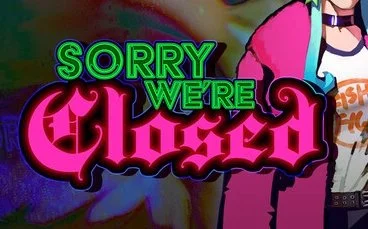
Sorry We’re Closed feels like a necessary reclamation: a stylish, queer survival-horror game in which love, desire, and transformation are not coded into the margins but placed squarely at the centre. Yet the same affirming force that makes it so distinctive can also make it feel strangely closed, rewarding recognition from those already attuned to its emotional truth while leaving less room for ambiguity or dissent.
The Statement Game and Its Built-In Risk
There is a particular kind of game that does not merely tell a story or build a world, but announces a position. It does not simply invite interpretation; it arrives already leaning toward a verdict. These are what I think of as statement games. They can be exciting, necessary, and culturally meaningful, especially when they speak from places that games have historically neglected or caricatured. But they also face a particular artistic risk: the clearer and more affirming the statement becomes, the easier it is for the work to start speaking most powerfully to those who already agree with it, and the harder it becomes for anyone outside that frame to feel genuinely addressed.
That tension sits at the centre of Sorry We’re Closed.
Style, Queerness, and Critical Warmth
On the surface, the game is easy to admire. It is stylish in a way few horror games are stylish, happily dressing its survival-horror bones in neon, glamour, camp, grime, and desire. Its Steam page pitches it as an “eccentric story-driven survival horror game” about demons, angels, and what happens when both sides collide, combining fixed-camera exploration with arcade-style shooting and a demonic Third Eye that lets Michelle see between worlds. It also wears its identity quite openly: Steam’s user tags lean heavily into LGBTQ+, survival horror, female protagonist, psychological horror, retro, and atmospheric. It has landed extremely well with players too, sitting at “Overwhelmingly Positive” overall. (store.steampowered.com)
None of that success is accidental. The game clearly knows how to sell itself, and, to be fair, much of that appeal is earned. Critics have praised its visual identity, its offbeat dialogue, its soundtrack, and the way it lets queer relationships exist not as side seasoning but as the emotional centre of the work. Thom Stone at GameCritics opens by declaring that “Survival Horror Has Never Been More Queer,” praising the game’s offbeat dialogue and queer-inflected tone, while Stephanie Sterling’s review is equally clear that the game’s “inherent queerness” is deeply baked in rather than tokenistic. Sterling’s phrasing is revealing: what they value is not simply the presence of queer characters, but the fact that the queerness feels casual, natural, and integral to the world.
Why Representation Still Matters
That matters. As an ally, I do not think representation is some superficial bonus that serious criticism ought to politely look past. It matters that queer players see worlds that feel closer to their own experience. It matters that horror, a genre so often obsessed with repression, monstrosity, concealment, and desire, should make room for explicitly queer stories rather than endlessly circling them in code. A game like Sorry We’re Closed is not wrong to be affirming. In many ways, that is part of its value.
But affirmation is not the same thing as depth, and representation is not the same thing as execution. If criticism means anything, it has to be able to hold those truths together.
Where the Game Becomes More Interesting
The more I sit with Sorry We’re Closed, the more it feels like a game with a compelling message, a striking aesthetic, and a genuine emotional investment in queer love and transformation, but also a game whose symbolism is often so eager to declare itself that it risks flattening the people not already standing inside its worldview. That, for me, is where it becomes interesting. Not because it fails, exactly, but because it reveals a broader problem with statement games: they can become affirming in ways that are also isolating.
Love, Change, and the Cost of Crossing Boundaries
A lot of the game’s thematic architecture appears to turn on love, change, and the cost of crossing boundaries. Sterling reads it as a story about what love demands of people, writing that “Love is give and take,” and arguing that the game is partly about what happens when somebody wants love without accepting the sacrifice, compromise, or transformation that love entails. Their discussion of the Chamuel subplot is especially useful here. Chamuel, an angel losing divinity through a relationship with a demon, becomes a foil to the Duchess because both characters want love, but only one is willing to accept that love changes a person. (thejimquisition.com)
This is where Sorry We’re Closed is at its strongest. When it narrows its focus to the uncomfortable truth that intimacy changes people, that desire complicates identity, and that freedom often comes with loss, the game becomes psychologically interesting rather than merely symbolically loud. Even a Steam lore discussion, in a more informal way, circles this same point, with one player describing “the whole theme of the game” as change and “finding your footing in new situations.” That is not a bad summation. The game is clearly preoccupied with crossing into altered states and then having to live with the consequences. (steamcommunity.com)
The Great Divide and the Limits of Liberation Metaphor
The trouble begins when that theme gets mapped onto a broader moral structure that feels less exploratory than declarative.
The Great Divide, at least from the way the game presents it, seems to function as more than lore. It reads as metaphor. On one side sits order, prohibition, separation, and safety; on the other sits collision, risk, pain, and freedom. The implication, or at least the one the game seems repeatedly tempted by, is that the side of order is also the side of repression, while breaking the divide becomes not merely dangerous but authentic. This is powerful symbolism, especially in queer art, where crossing a boundary can represent liberation from a social script that never fit in the first place. But it is also symbolism with a built-in simplification. If order becomes synonymous with falsehood and rupture becomes synonymous with truth, then anyone who is comfortable where they are starts to disappear from the moral imagination of the game.
That is my reservation.
When “Authenticity” Becomes Too One-Directional
The game’s metaphor seems at risk of sliding toward a structure in which conventionality is always suspect, stability is coded as spiritual deadness, and crossing over is treated as the privileged site of the real self. This does not make the game anti-straight in any blunt or cartoonish sense, but it does create a background hum of “straight equals repressed” energy, not because the game says that overtly, but because the moral geometry increasingly seems arranged around the idea that the normative side of the divide is there to be escaped, unmasked, or surpassed. What gets lost in that arrangement is the simple possibility that some people are not secretly trapped by the lives they already inhabit.
That is a limitation of quite a lot of liberation metaphors, not just this one. They can be emotionally resonant for people who have experienced conventionality as a burden or a lie, but they can become strangely doctrinaire if they stop accounting for those whose comfort, sincerity, or peace within social norms is not merely false consciousness waiting to be shattered. In other words, a metaphor that begins by challenging one norm can end by installing another.
From Exploration to Declaration
This is where the game starts to feel like a statement game in the less generous sense. It is not merely expressing a point of view; it is arranging the emotional truth of the narrative so that one answer already feels morally superior. And that matters because it changes how persuasion works. A game that explores leaves space for competing recognitions. A game that declares tends to reward recognition only if the player already arrives with the right symbolic key.
The Power and Limit of Affirmation
To be clear, that does not mean the game lacks value. Quite the opposite. For players already inclined toward its worldview, this may be exactly why it lands so hard. Its queerness is not tentative, apologetic, or watered down. It is confident. It affirms rather than begging to be tolerated. The very thing that limits its reach may also be what makes it feel emotionally important to its intended audience. This is why I do not think the right response is to sneer at its representation or pretend that cultural resonance is some lesser form of achievement. There is a genuine artistic and political power in building a horror game that says: this is not subtext, this is the text.
When Goodwill Starts Doing Some of the Work
Still, it is worth noticing when critical warmth begins to blur together several different judgements. A game can be refreshing, culturally meaningful, aesthetically bold, and unevenly executed all at once. These are not mutually exclusive states. Yet some of the response to Sorry We’re Closed does make me wonder whether its reputation is being buoyed not only by what it consistently achieves, but by what people are happy to see it attempting. The retro survival-horror aesthetic is certainly doing some of the work. So too is the understandable goodwill generated by a queer-led horror game that feels distinct from the usual parade of pallid prestige misery. Steam users overwhelmingly love it. Critics have been generous. And while much of that praise is deserved, it is hard not to suspect that the game is also benefiting from a convergence of representational enthusiasm, stylistic freshness, and genre nostalgia. (store.steampowered.com)
Craft Still Matters
The craft question matters here because the game is not flawless on its own chosen terms. Even positive critics acknowledge that the combat is awkward in execution. Sterling says it has “good ideas set back by some awkward implementation,” while GameCritics singles out the boss fights as one of the weakest points, arguing that they tend to collapse into the same basic strategy. The negative end of the spectrum is harsher: Niche Gamer calls the combat “woefully undercooked and unbalanced,” complaining that the game compensates for thin mechanical depth by swarming players with fodder. Even allowing for tonal differences between outlets, there is a clear through line here. The game’s style, story, and atmosphere are carrying more of the load than its action systems are.
That does not ruin the game, but it is relevant to the broader argument. If a work is already likely to generate extra affection because of what it represents, then weaknesses in structure or mechanics may be forgiven more quickly than they would be elsewhere. Again, that is not a dismissal of representation. It is a reminder that criticism should be able to distinguish between being glad a game exists and being convinced it is excellent in every respect.
What the Game Is Trying to Say and Where It Missteps
In the end, I think Sorry We’re Closed is doing something real. Its message, as best I can see it, is that love is bound up with change, that desire crosses imposed divisions, that safety can become spiritual imprisonment, and that queer intimacy deserves not merely tolerance but centrality. Those are serious themes, and when the game narrows itself to the interpersonal level, especially around the cost and instability of love, it becomes compelling. Its style is not empty. Its queerness is not decorative. Its emotional ambitions are genuine.
But the game also missteps in ways that are inseparable from those ambitions. Its symbolism can be too on the nose. Its moral divide can feel too clean. Its liberation metaphor risks flattening those who are not secretly yearning to cross over. And as a statement game, it sometimes feels less interested in persuading beyond the already persuaded than in rewarding recognition from those already aligned with its emotional truth.
Simply Put: The Affirming Isolation of the Statement Game
That may be enough for many players, and perhaps enough is the wrong word. For some, that affirming clarity will be the point. Yet as criticism, I think it is worth holding onto the tension. Statement games often become culturally necessary because they say what other works have avoided saying. They can feel like a release. A correction. A claim to space. But the same force that makes them affirming can also make them isolating. They do not always open a dialogue. Sometimes they close a circuit.
Sorry We’re Closed is at once better and more limited than its loudest praise suggests. It is a stylish, heartfelt, queer survival-horror game with real thematic intent and a distinctive voice. It is also a reminder that the difference between exploration and declaration matters. When a game already knows the truth it wants to tell, the question is no longer whether that truth is sympathetic. The question becomes whether the work has left enough room for anyone else to meet it there.
TL:DR Review: A Necessary Statement, but a Closed Circuit
Sorry We’re Closed is a stylish, unapologetic reclamation of survival horror. It takes the genre’s long history of coded queerness and pushes it into the foreground with confidence, flair, and a clear emotional agenda. That gives it real force. It also gives it its central limitation.
The Good
Aesthetic power: The game is rich with style, mixing camp, grime, neon, and retro-horror language into something that feels distinct in a genre often split between nostalgia and prestige bleakness.
Thematic ambition: When it focuses on love, transformation, and the cost of intimacy, it becomes genuinely compelling. The Chamuel subplot is especially strong here.
Affirming identity: The game does not ask permission to centre queer desire. For many players, that confidence will be part of what makes it feel valuable.
The Mixed
Mechanical friction: The combat does not always live up to the style or themes, often feeling more awkward than deep.
Symbolic bluntness: The Great Divide metaphor is evocative, but also rather one-directional, treating order as repression and rupture as truth in ways that can feel more declarative than exploratory.
Final thoughts
This is a culturally meaningful and aesthetically confident game, but also one whose reach may be narrower than its strongest praise suggests. It affirms powerfully, but it does not always persuade beyond those already aligned with its emotional logic.
Verdict: Stylish, meaningful, and limited — more interesting than airtight, and more valuable than flawless.
References
à la mode games. (2024). Sorry We’re Closed [Steam store page]. Steam. https://store.steampowered.com/app/1796580/Sorry_Were_Closed/
Sterling, S. (2025). Sorry We’re Closed – It must be love (review). The Jimquisition. https://www.thejimquisition.com/post/sorry-we-re-closed-it-must-be-love-review
Stone, T. (2025). Sorry We’re Closed review. GameCritics. https://gamecritics.com/thom-stone/sorry-were-closed-review/
Steam Community. (2025). Lore discussion thread/questions (SPOILERS) :: Sorry We’re Closed general discussions. https://steamcommunity.com/app/1796580/discussions/0/4632611275488149301/
Table of Contents