When “Unplayable” Is the Point: What an unplayable game?! Gets Right About Accessibility
Making a game impossible for able-bodied players in order to show why accessibility matters is a delicate thing to attempt. an unplayable game?! succeeds because it does not turn disability into spectacle, but exposes the quiet design assumptions that so often pass as normal.
A Risky Premise That Could Easily Have Gone Wrong
There is an obvious danger built into a game like an unplayable game?!. Any attempt to make a point about disability by frustrating able-bodied players risks collapsing into spectacle, self-congratulation, or a kind of conceptual trap in which disability becomes a dramatic device rather than a lived reality. It is not difficult to imagine a far worse version of this idea: something smug, something patronising, or something that mistakes temporary inconvenience for empathy. That is why this game is so interesting. It takes a premise that could easily have come across as ableist and instead turns it into a thoughtful piece of accessibility design criticism.
The reason it works is that it does not simply punish able-bodied players for the sake of a reveal. It is doing something more careful than that. Rather than reducing disability to a twist, it exposes how many games quietly assume a particular kind of body, a particular kind of dexterity, and a particular kind of ease with simultaneous inputs. In other words, it is not really about making players suffer. It is about making design assumptions visible. That distinction is what saves it.
Check out this unique experience on Steam
What the Game Actually Does
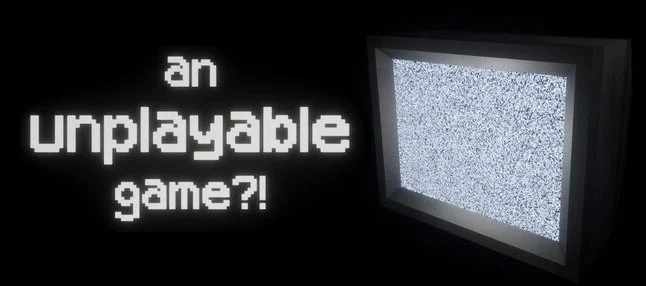
The game’s core trick is elegantly simple. You are not controlling a platformer directly in the way most players would expect. Instead, you play a platformer on an in-game television using an on-screen controller, which means interaction is filtered through a cursor and reduced to one button press at a time. That matters because it immediately breaks the invisible comfort many players have with conventional platforming grammar. Things that are usually taken for granted, such as running while jumping, holding a button to modulate movement, or executing timed combinations without thinking about them, stop feeling natural and start feeling impossible.
That design choice is more than a gimmick because the game does not stop at proving a point. It then introduces accessibility settings that transform what initially feels impossible into something manageable. Run Hold Assist turns running from a hold into a toggle. Jump Hold Assist removes the need to sustain a press for full-height jumps. Timing Assist freezes time unless the player moves, effectively converting a reaction-speed challenge into something more like a micro-puzzle. There is also a game speed setting, along with visual indicators that make direction and velocity clearer. The point is not merely that settings exist, but that they fundamentally alter the relationship between player and obstacle. The challenge is not erased; it is reconfigured.
That is one of the game’s most important insights. Accessibility settings are still too often talked about as though they were compromises or softeners, as though they dilute some pure intended experience. an unplayable game?! demonstrates something more uncomfortable for that line of argument: in many cases, accessibility is not the difference between a game being hard or easy, but between it being impossible or playable at all. Can I Play That?’s Indie Spotlight puts this especially well, arguing that the game shows accessibility options can be the difference between “difficult” and “impossible,” which is a much more precise way of framing the issue than the lazy “easy mode” discourse that still dominates online debates.
The Strongest Thing It Understands
What the game understands, and what far too many arguments about accessibility continue to miss, is that the problem is not disabled players failing games. The problem is often that games are designed around a narrow and unspoken model of who the player is supposed to be. That model usually assumes someone who can hold buttons comfortably, combine inputs fluidly, react quickly, read visual information clearly, and sustain the necessary physical or cognitive load without unusual strain. Because those assumptions fit many able-bodied players well enough, they often disappear into the background and become mistaken for neutrality.
That is why this game works so well as a teaching tool. It does not merely tell players that accessibility matters. It makes default design feel strange enough that its assumptions come into view. Several players and critics responded to it in precisely those terms. One Steam reviewer wrote that it “should be shown in game dev classes,” while another disabled player described it as feeling “almost like a gift.” Laura K. Dale, writing in Accessibility’s 2025 accessibility recap, singled it out as one of the most effective short-form attempts to capture the feel of motor control barriers in video games.
That reaction matters because it suggests the game is not simply winning points for having a worthy message. It is being recognised by players, critics, and accessibility-focused institutions for how clearly it translates design assumptions into something legible. That does not make it beyond criticism, but it does show that the game is doing more than making a fashionable statement. It is contributing something useful to the accessibility conversation.
Where the Game Earns Its Goodwill
Part of the reason the game feels sincere rather than performative is the developer’s posture around it. The solo developer, yemáko, framed it from the outset as a short game about the importance of accessibility settings, and also explicitly linked the project to wider backlash against accessibility discourse, particularly the sort of “git gud” rhetoric that tends to surface around games such as Elden Ring and Dark Souls. In that sense, the game is not appearing in a vacuum. It is a response to a culture that still treats accessibility as a threat to design integrity rather than part of design itself.
More importantly, the game did not stop at making its argument and walking away. Post-launch support seems to have been unusually in keeping with the project’s own politics. A disabled player on the Steam forums requested a vibration toggle because they play on gamepad due to disability and routinely need vibration disabled. The developer replied by calling its absence a “total oversight,” and a patch followed shortly afterwards adding that toggle. Later updates also introduced the ability to mute the TV static, an alternate readable font and a startup message explaining the static mute option. That is not just good optics. It is the kind of ordinary, responsive labour accessibility actually requires.
That anecdote is worth dwelling on because it captures something many accessibility debates flatten. Accessibility is not a badge you earn by caring about the issue. It is an ongoing design practice that involves listening, revising, admitting oversight, and treating barriers as fixable rather than defensible. In that sense, one of the most persuasive things about an unplayable game?! is not just the game itself, but the way its post-release support reinforces its argument.
Its Scope Is Real, and So Are Its Limits
None of that means the game is above criticism. In fact, one of the fairest ways to praise it is to be clear about what it does and does not do. Its metaphor is strongest when dealing with motor and mobility barriers: simultaneous inputs, sustained holds, timed precision, and dexterity assumptions. That gives it a sharp focus, but it also means it cannot stand in for accessibility as a whole. One Steam reviewer pointed this out explicitly, noting that the game really covers physical disability rather than the full range of disabled experience. Can I Play That?’s coverage similarly notes that the game lacks narration outside the developer commentary and offers no real audio assistance for blind players. Those are not gotchas so much as reminders of scope. The game is about accessibility, but it cannot resolve all accessibilities issues at once. This shows where intention and realism collide the ethos of making a game for all runs into the reality of scope, with the developer themselves stating the best you can do is your best.
That limitation matters because there is always a temptation, especially with conceptually neat games, to overstate what they have solved. an unplayable game?! does not provide a universal model for disability representation, nor does it magically bridge the gap between able-bodied understanding and disabled experience. A short platforming experiment cannot carry that much weight. What it can do, and what it does quite well, is illuminate one important part of the problem: the way apparently ordinary mechanics are often built around assumptions that feel natural only to those already well served by them.
It is also fair to say that the game’s cultural reach seems limited. It received meaningful attention in accessibility-focused spaces, from Can I Play That?, Laura Dale’s Access-Ability, and GAConf, but much less from larger mainstream outlets. Beyond a metadata-style game page on Kotaku, it does not appear to have broken into the broader critical conversation in a substantial way. That is not the game’s fault, but it does shape what it can do socially. Its persuasive force is strongest among people already willing to think about accessibility seriously, which means its value may lie less in changing hostile minds than in giving sympathetic players and designers a more vivid language for the issue.
Why It Should Be Required Playing for Game Designers
Even with those limitations, I think the game makes a compelling case for itself as something that should be played, discussed, and dissected by people entering game design. Not because it provides a complete theory of accessibility, and not because one short game can replace broader engagement with disabled players and accessibility specialists, but because it teaches a lesson many designers still need to learn: there is no neutral player. There are only players whose bodies and capacities happen to fit a given design well enough that the fit becomes invisible.
That lesson matters far beyond accessibility settings menus. It forces designers to think more carefully about what counts as difficulty, what counts as friction, and what counts as artistic intent. Not every barrier is meaningful. Not every demand placed on a player is profound. Sometimes what gets romanticised as challenge is simply design provincialism: one person’s habits and capacities quietly elevated into the standard by which everyone else is judged. an unplayable game?! does not demolish that ideology single-handedly, but it does expose its absurdity with unusual clarity.
That is also why the game avoids feeling merely preachy. It is not just arguing that developers should be nicer or more considerate. It is making a deeper point about design itself. A game is not accessible because it exists, and it is not inaccessible only when something has gone spectacularly wrong. Accessibility is bound up with the basic question of who the game imagines as its player, and how flexible it is willing to be when real players fail to match that imagined norm. In that sense, accessibility is not an optional ethical add-on. It is part of the craft.
Simply Put
What impresses me most about an unplayable game?! is not that it has a noble message, but that it finds a form capable of carrying that message without collapsing into cheap moral theatre. Making a game impossible for able-bodied people in order to demonstrate why accessibility matters is a very delicate thing to attempt. Done badly, it would have felt ableist in spite of itself. Done badly, it would have used disability as a lesson for other people while remaining incurious about disabled experience. Yet this game largely avoids those traps because it understands that its task is not to simulate disability wholesale, but to expose the assumptions that make exclusion feel normal in the first place.
It is also to the developer’s credit that the game’s politics are not confined to the concept. The post-launch updates, the responsiveness to disabled players, and the willingness to keep adding features all help the game feel less like a one-off statement and more like an earnest contribution to a larger conversation. That does not erase its limits, nor should it. It remains a focused intervention rather than a comprehensive answer. But within that scope it achieves something genuinely valuable. It shows, with more clarity than many bigger and richer games manage, that accessibility is not about making games easier in some shallow sense. It is about whether a game has been designed to meet player variation with seriousness rather than indifference.
For that reason alone, I think it deserves to be treated as more than a clever curiosity. It should be required playing for aspiring game designers, not because it is flawless, but because it captures a foundational truth that far too much of the medium still resists: when a game becomes unplayable for some players, that is not always a reflection of their limitations. Very often, it is a reflection of ours.
References and Sources
badgames.zip. (2025, October 20). an unplayable game?! [Steam store page]. Steam. https://store.steampowered.com/app/3957890/an_unplayable_game/
badgames.zip. (2025, November 11). Update: MORE accessibility options + 1 NEW commentary node [Devlog post]. itch.io. https://badgameszip.itch.io/an-unplayable-game/devlog/1110966/update-more-accessibility-options-1-new-commentary-node
[Steam discussion thread], (2025, October 19). Feedback . Steam Community. https://steamcommunity.com/app/3957890/discussions/0/605296473031058226/
Kotaku. (n.d.). An Unplayable Game?!https://kotaku.com/games/an-unplayable-game
LauraKBuzz. (2025, December 19). LauraKBuzz 2025 Video Game Accessibility Recap – Access-Ability. https://laurakbuzz.com/2025/12/05/2025-video-game-accessibility-recap-access-ability/
Rongen, M. (2025, November 11). Indie spotlight: An unplayable game?! Can I Play That? https://caniplaythat.com/2025/11/11/indie-spotlight-an-unplayable-game/
Steam Community. (n.d.). an unplayable game?! reviews [User reviews page]. Steam Community. https://steamcommunity.com/app/3957890/reviews?browsefilter=toprated
WhatsOnSteam. (2025). an unplayable game?! - a game about accessibility settings that’s just a bit too hard for you to play effectively [Reddit post]. Reddit. https://www.reddit.com/r/WhatsOnSteam/comments/1obo1kx/an_unplayable_game_a_game_about_accessibility/
Table of Contents