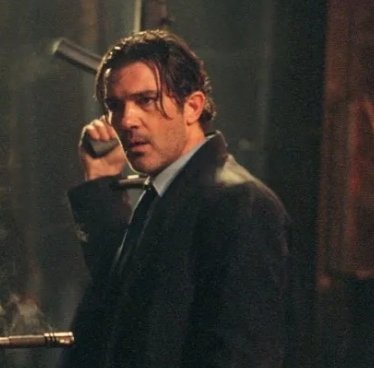
Sherlock Holmes eliminates the impossible. Dale Cooper follows intuition into improbable territory. Dirk Gently believes everything is connected. But perhaps the most interesting distinction between these fictional detectives concerns something that happens long before we discover the truth: how we decide what deserves our attention.
By JC Pass | Simply Put Psych
Contains minor spoilers for Season One of Twin Peaks (1990), but nothing beyond it.
At one point during the first season of Twin Peaks, FBI Special Agent Dale Cooper takes several members of the local police department into the woods and begins throwing rocks at a glass bottle. This is apparently a legitimate component of the investigation into Laura Palmer's murder, although precisely how the Federal Bureau of Investigation might feel about the procedure is probably best left unexplored.
Cooper describes an investigative method inspired by a dream about Tibet, combining physical coordination with intuition. Suspects' names are read aloud, stones are thrown and the results recorded with an extraordinary degree of seriousness. At one point, Deputy Andy manages to find himself on the receiving end of a ricochet, demonstrating that the exercise possesses at least one reliable outcome: somebody standing nearby might get hurt.
What makes the scene so entertaining is that Cooper isn't an incompetent investigator. He's observant, organised and perfectly capable of conducting a conventional criminal investigation. Yet he also seems remarkably comfortable placing confidence in procedures that offer no independently established reason to believe their results are meaningful. His professional competence and questionable investigative methods coexist without appearing to cause him much concern.
Watching him, I began thinking about two other fictional detectives: Sherlock Holmes and Dirk Gently. Arthur Conan Doyle's Holmes is celebrated for deduction and the systematic elimination of possibilities, while Douglas Adams' holistic detective approaches the world through the conviction that everything is fundamentally interconnected. Cooper seems to occupy an intriguing position somewhere between the two, combining traditional investigative practice with a willingness to entertain possibilities that others might dismiss before examining them.
The comparison gradually settled into three questions. Holmes asks, What must be true? Cooper invites us to ask, If this were true, how would it work? Dirk Gently approaches the unknown with something closer to Why not?
These aren't quotations or scientific categories of reasoning. They're shorthand for three attitudes towards uncertainty, inspired by fictional characters whose actual methods are considerably messier than any neat classification would suggest. Nevertheless, I think they offer a useful way of examining how we reason, particularly when we're trying to understand something for which we don't yet possess enough information.
Because before we can establish what's true, we face an earlier problem. We have to decide which possibilities are worth investigating in the first place.
Sherlock Holmes and the Limits of Elimination
Sherlock Holmes is perhaps the most recognisable fictional embodiment of rational investigation. His famous principle, expressed in The Sign of Four, is that once the impossible has been eliminated, whatever remains, however improbable, must be true (Conan Doyle, 1890). The appeal is obvious. The world might initially appear confusing, but sufficiently careful observation and reasoning should allow us to narrow the possibilities until the correct explanation emerges.
There's something wonderfully reassuring about this approach. It promises a world in which apparently inexplicable events can eventually be understood, provided we're clever and attentive enough to recognise the important details. Where others see confusion, Holmes sees a problem waiting to be organised. The truth is already present in the evidence; our task is to discover how the pieces fit together.
Yet there's a complication with Holmes' reputation for deduction. Much of his reasoning isn't strictly deductive at all.
Deduction involves conclusions that necessarily follow from their premises. If the premises are true and the reasoning is valid, the conclusion cannot be false. Criminal investigation rarely provides such certainty, because a particular observation may be consistent with several different explanations. Footprints, damaged objects, unusual behaviour and conflicting testimony can all suggest what happened without logically establishing that one interpretation must be correct.
Holmes frequently works backwards from observed effects towards possible causes, a process better described as abductive reasoning. Carson (2009), examining Holmes' methods in relation to criminal investigation, makes this distinction, showing how the detective often develops explanations that account for available evidence rather than deriving conclusions that necessarily follow from it.
Imagine a locked room containing a broken window. An investigator might reasonably suspect that someone entered through the window, particularly if an object has disappeared from the room. Yet the damage might have occurred before the room was locked, been caused from inside or even been deliberately arranged to suggest a burglary. The broken window is evidence, but it doesn't determine its own explanation.
This matters because an explanation can account for the available facts while remaining incorrect. Sometimes several competing explanations can accommodate the same observations, and choosing between them requires additional information.
It also exposes the limitation in Holmes' famous principle: we can only eliminate the possibilities we've considered.
Suppose we begin with six possible explanations and systematically rule out five. The remaining explanation might appear overwhelmingly convincing, particularly if our investigation has been careful and thorough. But what if there was a seventh possibility that never occurred to us? What if the assumptions that determined our original list were themselves mistaken?
The problem isn't that elimination is irrational. It's that eliminating every explanation we've imagined doesn't establish that we've imagined every explanation worth considering.
Psychological research on cognitive closure offers a related insight. Kruglanski and Webster (1996) examined the motivation to arrive at definite knowledge, including processes they described as seizing upon an explanation and freezing that judgment against subsequent revision. Reaching conclusions is often necessary, especially when decisions must be made under uncertainty, but the pressure to settle on an answer can encourage premature commitment.
Holmes' fictional brilliance lies partly in his ability to identify possibilities that others have overlooked before narrowing them through evidence. His approach isn't devoid of imagination, despite the popular caricature of a man who simply eliminates alternatives until only certainty remains. Indeed, the creativity involved in recognising an unconventional explanation is often as important as the subsequent reasoning.
The danger comes when we mistake having exhausted our own ideas for having exhausted reality's possibilities. An investigator might be wonderfully rigorous in evaluating a list of explanations while never realising that the correct answer was excluded before the investigation properly began.
That is where Cooper's apparent openness becomes interesting, although his methods introduce problems of their own.
Dale Cooper and the Difference Between an Insight and a Conclusion
What initially attracted me to Cooper's investigative style was his willingness to entertain possibilities without becoming visibly embarrassed by their apparent absurdity. He's delighted by ordinary things, curious about unfamiliar experiences and seemingly comfortable allowing ideas to develop before deciding whether they fit conventional expectations. That combination of competence and curiosity makes him an appealing alternative to the stereotypical detective who regards every unusual suggestion as an irritation.
My interpretation of his approach became: If this were true, how would it work?
It's a useful question because it allows us to explore an idea without first committing ourselves to believing it. Suppose an improbable explanation were correct. What consequences would follow? Which observations would we expect to encounter, and what additional evidence might help us distinguish it from competing possibilities?
This is a form of hypothetical reasoning that can be valuable when the obvious explanations aren't working. Rather than immediately dismissing something as unlikely, we temporarily entertain it and examine what it would imply. The resulting investigation might reveal that the idea is mistaken, but it could also expose assumptions that had gone unquestioned.
There is, however, an important complication: Cooper doesn't consistently behave like the disciplined hypothetical investigator I've just described.
His rock-throwing exercise is not a controlled examination of competing explanations. It's an intuitive procedure that he appears to trust despite having no demonstrated reason to believe that striking a bottle bears any relationship to identifying a murderer. His experience in the red room presents a similar difficulty. Cooper emerges from a dream expressing considerable confidence that he possesses information relevant to Laura Palmer's murder, even though the subjective experience itself provides no reliable means of establishing that confidence.
In these moments, Cooper isn't merely considering unusual possibilities. He's granting them authority.
That makes his character more psychologically interesting than the comforting interpretation in which he occupies the enlightened middle ground between Holmes' rationality and Dirk's eccentricity. Cooper demonstrates that conventional expertise and questionable beliefs can coexist within the same person. Someone may be highly competent in a profession while remaining susceptible to unjustified certainty in situations where their expertise offers little relevant guidance.
Research on intuitive expertise helps explain the distinction. Kahneman and Klein (2009) examined when intuitive judgments can be reliable, identifying two particularly important conditions: an environment containing sufficiently predictable regularities, and opportunities to learn those regularities through appropriate feedback.
An experienced firefighter might recognise signs of danger before consciously identifying every relevant cue, because years of exposure have allowed meaningful patterns to be learned. Someone encountering a wholly unfamiliar situation may experience an equally powerful sense of certainty without possessing comparable expertise.
The feeling of knowing something doesn't tell us whether the conditions necessary for accurate intuition were present.
Cooper's dreams may provide him with ideas worth investigating, but the vividness of those experiences doesn't establish their evidential value. Nor does the fact that he's a capable FBI agent mean his intuitive methods are automatically reliable. The important distinction is between the psychological experience that generates a hypothesis and the evidence required to justify it.
Klayman and Ha (1987) provide a useful perspective through their work on hypothesis testing. They challenged the simplistic assumption that searching for confirming instances is always a defective reasoning strategy, demonstrating that the informativeness of a test depends on the circumstances and the hypotheses under consideration. Seeking evidence that would be expected if an idea were true can be useful, but only if we're attentive to whether rival explanations would predict the same thing.
Suppose a detective develops an intuition that a particular suspect is responsible for a murder. Discovering that the suspect had an opportunity to commit the crime might support further investigation, but it would offer limited discrimination if several other suspects had equivalent opportunities. More informative evidence would distinguish the preferred hypothesis from its alternatives.
This is the version of Cooper's approach that interests me most. His willingness to consider unusual possibilities can be intellectually productive, even when the methods through which he arrives at them are unreliable. The important question is what happens after an idea captures our attention. Do we examine its implications and seek evidence capable of testing it, or do we mistake the strength of our conviction for proof that we've discovered something?
Cooper doesn't always provide a reassuring answer. In fact, his ability to move between careful investigation and unjustified confidence makes him a rather uncomfortable illustration of how easily the two can coexist. I find that more interesting than pretending his unconventional methods represent a superior form of reasoning.
But if Cooper sometimes grants unusual possibilities too much authority, Dirk Gently offers an altogether different complication. He begins from a position in which the boundary between relevant and irrelevant information is barely worth maintaining.
Dirk Gently and the Trouble With Everything Being Connected
Douglas Adams introduced Dirk Gently in his 1987 novel Dirk Gently's Holistic Detective Agency. Dirk operates according to the fundamental interconnectedness of all things, an appealingly expansive principle that allows almost anything to become relevant to almost anything else.
Conventional investigation requires us to identify which observations matter and which can reasonably be ignored. Dirk's philosophy questions whether we're justified in making that distinction at all. An apparently inconsequential encounter, a missing animal or a bizarre coincidence might belong to a much larger pattern whose significance only becomes apparent later.
There is something liberating about this approach, particularly when our existing understanding of a problem has become restrictive. Discoveries sometimes begin with someone noticing a connection that others have dismissed, and an excessive commitment to established categories can prevent us from recognising relationships that don't fit our expectations.
Dirk's why not? is useful because it challenges the assumptions governing what we're prepared to consider. Unfortunately, it also threatens to make those assumptions so permissive that virtually anything becomes worth investigating.
If everything is connected, how do we distinguish connections that explain something from those that merely exist?
Consider discovering that two strangers attended the same school, read the same unusual novel and visited the same restaurant within a few weeks of one another. Those similarities might appear remarkable, particularly if the people encountered each other under unusual circumstances. Yet their significance depends partly on how common the experiences are, how many potential similarities were available and how many people share some of those characteristics without ever meeting.
The connection might be genuine without being especially informative. Even when a pattern exists, it doesn't necessarily explain the event we're interested in.
Psychological research demonstrates that our perception of patterns isn't determined solely by the structure of the information itself. Whitson and Galinsky (2008) conducted six experiments examining how a perceived lack of control influences illusory pattern perception. Under their experimental conditions, reduced control increased participants' tendency to identify patterns in unrelated information, including visual noise, illusory correlations and superstitious or conspiracy-related connections.
This doesn't mean that recognising unusual patterns is inherently irrational, nor that every instance of overinterpretation reflects a threatened sense of control. Our ability to detect regularities is fundamental to learning, perception and reasoning. The difficulty is that the same capacities can also lead us to perceive meaningful relationships where the available evidence doesn't support them.
Dirk's philosophy captures both the attraction and the danger of unrestricted pattern recognition. If we remain open to every possible connection, we may discover relationships that a more conventional approach would overlook. But unless we establish some criteria for relevance, we risk accumulating an increasingly elaborate collection of coincidences without becoming any closer to understanding the problem.
Fortunately for Dirk, Douglas Adams is writing the universe in which he operates. The author can ensure that an apparently ridiculous connection eventually proves meaningful. Events that would be coincidental in ordinary life can become essential components of an intricately constructed fictional explanation.
Reality is less considerate. There is no obligation for an unusual coincidence to matter simply because we've noticed it, and no guarantee that the loose ends of an investigation will eventually form an elegant pattern.
This is why I wouldn't dismiss Dirk's approach entirely, even though its literal philosophical premise would be disastrous as a general investigative method. His willingness to question assumptions about relevance can be useful when conventional explanations have failed. The mistake would be carrying that openness forward indefinitely, treating the mere discovery of a connection as evidence that the connection explains something.
At some stage, we have to move beyond asking whether two things might be related and establish whether the relationship has any bearing on what we're trying to understand. Dirk encourages us to look beyond the familiar boundaries of a problem, but he offers remarkably little guidance about where to stop.
Which, admittedly, is part of his charm.
The Problem Isn't Choosing a Detective
When I first imagined Holmes, Cooper and Dirk Gently along a spectrum, the contrast seemed relatively straightforward. Holmes narrowed possibilities through evidence, Cooper explored unusual hypotheses, and Dirk expanded the search to include connections that conventional reasoning might overlook.
The difficulty is that these aren't competing methods from which we can simply select a winner. They describe different activities within reasoning, and each activity becomes valuable or counterproductive depending on what the investigation currently lacks.
Consider a hypothetical investigation involving a missing document from a locked office. Three employees have access to the room, there are no signs of forced entry, and everyone insists that the document was present the previous evening.
A Holmes-inspired approach would focus on establishing the facts, examining access records and eliminating explanations inconsistent with the evidence. This is sensible investigative practice, but it could become restrictive if the three employees were treated as the only possible suspects simply because they were the only people known to possess access.
A Cooper-inspired approach might entertain the possibility that the disappearance was staged. If that were true, what would we expect to find? Perhaps the document was moved deliberately, or the apparent theft was intended to conceal a different problem. These possibilities are not established by being interesting, but they suggest specific questions that might distinguish them from a conventional theft.
Dirk's contribution would be to challenge the premise. Why assume the document was stolen at all? Could it have been misfiled, destroyed or never placed in the office? Perhaps the most useful observation is one that initially seemed irrelevant to the disappearance.
The three approaches can all generate worthwhile questions, but none guarantees an answer. The investigator still has to decide which possibilities justify further attention and which evidence would meaningfully distinguish between them.
That's the problem our original spectrum was missing. We don't simply need different ways of thinking; we need ways of recognising when our current approach is preventing us from learning anything new.
When we've become attached to one explanation, the priority should be identifying evidence that could challenge it. When an unusual possibility has attracted our interest, we should ask what it predicts that competing explanations do not. And when every available explanation seems inadequate, we may need to reconsider which assumptions determined the possibilities we were willing to investigate.
These questions aren't a validated psychological assessment or a substitute for proper investigative methods. They're a practical way of recognising where reasoning can become unproductive.
This also explains why the middle of the spectrum isn't automatically the location of wisdom. Cooper's apparent willingness to combine conventional investigation with intuition doesn't establish that he has found the ideal balance. Sometimes an improbable suggestion deserves immediate rejection because it contradicts reliable evidence. Sometimes the familiar explanations genuinely have been exhausted, and considering an unconventional possibility is entirely reasonable.
The challenge isn't to occupy the correct position between Holmes and Dirk. It's to recognise when the assumptions guiding our attention have become obstacles rather than aids.
The Detective Sitting in Front of the Television
There was another reason this comparison interested me while watching Twin Peaks. I wasn't simply observing Cooper's investigation; I was constructing explanations of my own, often with considerably less evidence than I'd have liked.
By the seventh episode, I'd developed a theory that the entire programme might be taking place within the mind of someone lying in a coma. Perhaps the fictional soap opera Invitation to Love was playing repeatedly in a hospital room, its stories becoming incorporated into the patient's dreams alongside familiar people and places from the town.
It was an improbable explanation, although that didn't make it any less entertaining to consider. The programme's dreamlike elements and occasional blurring of different fictional realities made the possibility interesting enough that I found myself examining how it might work.
I wasn't particularly convinced by the theory. I simply wanted to explore it.
In that respect, my viewing experience resembled the version of Cooper's method that had initially appealed to me. I was allowing an unconventional explanation to occupy my attention without immediately deciding whether it deserved belief. I could consider what it might explain while recognising that other interpretations remained available.
There is a particular pleasure in this kind of speculative reasoning, especially when watching detective fiction. We recognise unusual details, construct hypotheses and anticipate the satisfaction of discovering whether our explanations were correct. The story invites us to behave like investigators, but with one important difference: the world we're investigating has been deliberately constructed by people who already know which details matter.
An author can arrange events so that apparently irrelevant observations become crucial. Coincidences can be given significance, unusual behaviour can foreshadow later developments, and a seemingly absurd explanation can become correct because the fictional world has been organised to support it.
This creates an interesting problem when we attempt to learn about reasoning from fictional detectives. Holmes' brilliant deductions are possible partly because Conan Doyle supplies evidence that can eventually be made to support an elegant explanation. Dirk's extraordinary connections work because Adams constructs a universe in which those connections matter. Cooper's unusual experiences occur within a programme whose fictional rules need not match the standards of evidence we would demand in the real world.
The success of their methods tells us something about the stories in which they operate, but considerably less about how reliably those methods would work outside fiction.
Still, the experience of watching a mystery can reveal something about our own habits of interpretation. We become interested in certain details, dismiss others and gradually construct an understanding of what we believe is happening. Each new revelation may strengthen our explanation or force us to reconsider it, although we're not always equally enthusiastic about those two outcomes.
By the end of Twin Peaks Season One, I found myself frustrated that several narrative threads had converged without providing enough confirmation to establish whether my broader understanding was correct. It wasn't simply that I wanted more answers. I wanted to know whether the explanations I'd constructed deserved to survive.
That distinction matters because a compelling theory can become something we feel invested in defending. Once we've spent time assembling evidence, recognising patterns and building an explanation, abandoning it can feel like losing something more substantial than an idea.
The irony is that the pleasure of detective fiction depends partly on our willingness to speculate, but successful reasoning sometimes requires us to abandon precisely the interpretations we've found most satisfying.
A theory can be enjoyable without being correct. The difficulty begins when we stop recognising the difference.
Simply Put
I began with three fictional detectives and what appeared to be three different ways of knowing. But the more I considered their approaches, the less convinced I became that the comparison was really about knowledge at all.
Holmes, Cooper and Dirk Gently offer three ways of approaching a situation before we possess enough information to understand it. Holmes directs attention towards evidence capable of constraining explanations. Cooper demonstrates the possibilities and dangers of allowing intuition to influence an investigation. Dirk encourages us to consider connections that our existing assumptions might otherwise exclude.
Their differences become most interesting when we recognise that our eventual conclusions depend partly on decisions made much earlier in the reasoning process.
We decide which details deserve attention, which explanations appear plausible and which possibilities can reasonably be dismissed. Those decisions influence what evidence we subsequently seek, how we interpret what we discover and when we consider the investigation complete.
By the time we arrive at an answer, we may already have excluded entire categories of explanation without recognising that we've done so.
This is why the question I find most useful isn't which detective we should imitate, or which position on the spectrum represents the most rational approach. It's what would make us reconsider the assumptions guiding our investigation.
If we've eliminated every possibility on our list, what justifies believing the list was complete? If an extraordinary intuition has provided an appealing explanation, what evidence would distinguish it from a coincidence? And if everything suddenly seems connected, how would we establish which connections actually matter?
These aren't questions that guarantee correct answers. They are questions that make our explanations vulnerable to correction, which is something confidence alone cannot achieve.
Holmes reminds us that evidence should constrain what we believe, but his method also reveals the danger of overlooking possibilities we never considered. Cooper demonstrates how unconventional ideas can become useful starting points while simultaneously showing how easily subjective conviction can exceed its evidential justification. Dirk challenges premature assumptions about relevance, although his enthusiasm for interconnectedness risks making everything equally significant and therefore nothing particularly informative.
The lesson isn't that we should combine all three approaches in some perfectly balanced intellectual personality. It is that any preferred approach to reasoning can eventually become a limitation if we stop examining what it excludes.
Perhaps the most unsettling possibility is that our greatest errors aren't always the conclusions we reach. Sometimes they're the questions we never ask, the evidence we never examine and the explanations we dismiss before giving them an opportunity to compete.
That's what makes these fictional detectives useful beyond their individual mysteries. They remind us that finding the truth depends partly on how we direct our attention while we still don't know what the truth is. An impressive explanation is of limited value if the assumptions that produced it prevented us from discovering something more accurate.
And perhaps the best question to carry into any investigation is deceptively simple: What would persuade me that I've been looking at this incorrectly?
It's less glamorous than the prospect of a brilliant deduction or an extraordinary intuitive breakthrough, but it has the advantage of making our reasoning answerable to something beyond our own conviction.
Although if the investigation eventually involves throwing rocks at suspects' names, I think I'd still prefer to stand somewhere behind the sheriff.
References
Adams, D. (1987). Dirk Gently's holistic detective agency. Simon & Schuster.
Carson, D. (2009). The abduction of Sherlock Holmes. International Journal of Police Science & Management, 11(2), 193–202. https://doi.org/10.1350/ijps.2009.11.2.123
Conan Doyle, A. (1890). The sign of four. Spencer Blackett.
Kahneman, D., & Klein, G. (2009). Conditions for intuitive expertise: A failure to disagree. American Psychologist, 64(6), 515–526. https://doi.org/10.1037/a0016755
Klayman, J., & Ha, Y.-W. (1987). Confirmation, disconfirmation, and information in hypothesis testing. Psychological Review, 94(2), 211–228. https://doi.org/10.1037/0033-295X.94.2.211
Kruglanski, A. W., & Webster, D. M. (1996). Motivated closing of the mind: "Seizing" and "freezing." Psychological Review, 103(2), 263–283. https://doi.org/10.1037/0033-295X.103.2.263
Whitson, J. A., & Galinsky, A. D. (2008). Lacking control increases illusory pattern perception. Science, 322(5898), 115–117. https://doi.org/10.1126/science.1159845
Table of Contents