
Some songs explain themselves. Others hand you an image and let it grow.
Poutyface’s “Band Aid” begins with a confession: as a child, the speaker liked wearing bandages because bandages brought attention. That small admission frames the whole song. It tells us, before anything else happens, that the speaker learned something early about the social usefulness of visible injury.
A wound can be pointed to.
A bandage can be seen.
Pain, once made visible, becomes easier for other people to recognise.
That is the uncomfortable bargain at the centre of the track. The speaker does not begin by saying, “I wanted care.” They say, in effect, that they learned the prop that made care more likely. The bandage becomes proof. It gives distress a shape. It turns need into evidence.
And once that mechanism is learned, the rest of the song asks what it costs to grow up with it.
This is a reading of the song, not a diagnosis of the artist. Songs are not case histories, and lyrics are not clinical notes. But good songs often dramatise psychological truths with more precision than a textbook definition could manage. “Band Aid” does that by taking one of the smallest childhood objects imaginable and making it carry the weight of attention, self-sufficiency, performance, anxiety, anger, and recognition.
The song’s central question is not only: does anyone notice the wound?
It is: what happens when the wound becomes the easiest way to be noticed at all?
The Wound as Signal
A scraped knee is a simple image because it is visible. It gives pain a location. You can show someone where it hurts. In childhood, small injuries often become little rituals of care. There is the fall, the inspection, the cleaning, the reassurance, the plaster, perhaps even a sweet afterwards. The wound becomes social. Someone notices. Someone responds.
Attachment theory helps explain why that matters. Bowlby’s idea of a secure base was not only about physical safety. It was about the child’s confidence that someone is available, responsive, and emotionally reachable. A child who falls does not only need the skin cleaned. They need the relationship confirmed. They need the world to answer back.
In “Band Aid,” that ritual seems broken. The speaker can handle the practical part. They can cover the wound. They can manage the visible damage. What they cannot fully give themselves is the experience of being held in someone else’s attention before the wound has to become proof.
This is why the bandage matters. A bandage is not healing. It covers. It protects. It makes the wound less messy and less socially disruptive. Once the bandage is on, the injury becomes tidier. It is still there, but it has been made acceptable. Managed pain is easier for other people to live with.
That is where the song becomes psychologically sharp. The speaker’s childhood bravery is not uncomplicated strength. The refusal to cry, the self-applied bandage, the little performance of being mature all suggest a child who has learned how to make pain presentable. The wound is not denied, exactly. It is packaged.
Winnicott’s concept of the holding environment belongs here. For Winnicott, healthy development depends on more than practical care. The child needs an environment that can hold distress without requiring the child to prematurely organise it, disguise it, or make it convenient. The task is not simply to stop the bleeding. It is to make the child feel that their vulnerable self can safely appear.
In “Band Aid,” the child does the first part alone. They manage the wound. But the song’s ache comes from the missing second part: the absence of being emotionally held.
That also makes Winnicott’s idea of the False Self useful, if we use it carefully. The False Self is not simply a lie. It is often a protective adaptation: the competent, compliant, acceptable surface that develops when the vulnerable self does not feel safe enough to emerge. In the song, the brave child and the coping adult both carry that flavour. The speaker can perform okay-ness. They can apply the bandage. They can make the wound socially readable.
But the performance of being fine is still a performance.
The bandage says: I can manage.
It also says: I have learned not to expect anyone else to.
That is one of the song’s cruellest insights. Self-sufficiency can look like strength from the outside while feeling like abandonment from the inside. A person can become competent because they were supported into confidence. They can also become competent because nobody came.
The two may look similar.
They do not feel the same.
One of the most important images in the song is “dripping cherry liquid.” The phrase takes something bodily and painful and makes it sound sweet, bright, artificial, almost edible. It does not remove the wound. It stylises it. Blood becomes flavour. Injury becomes colour. The body becomes pop imagery.
That move matters because it stops the song from being only an inner-child lament. Poutyface’s writing often lives in this uncomfortable overlap between cute images and damaged feeling. “Strawberries and Novocaine” places sweetness beside numbness. “Rag Doll” suggests a body or self that can be handled, thrown around, or pulled out of its own control. Across that world, pretty objects are rarely just pretty. They are ways of making pain visible without presenting it raw.
The bandage belongs to that same symbolic family. So does the cherry-coloured wound. So does the candy. These are not decorative details. They are emotional technologies. They turn distress into something people can look at, remember, sing along with, and maybe recognise in themselves.
That is the risk and the power of the song. It understands that hurt often has to arrive with an image before anyone knows what to do with it.
The Performance of Being Fine
The adult verse changes the scale of the injury. Childhood gives way to rent, dread, sleeplessness, responsibility, and the strange humiliation of being technically grown while still feeling physically and emotionally small.
That line about being old enough to drive while still feeling stuck at childhood height deserves to be read bodily, not just symbolically. Anxiety does this. Burnout does this. Shame does this. Panic does this. Adult life can be fully present on paper — the car, the lease, the bills, the legal age, the functioning body — while the self inside that body seems to shrink.
The lyric captures the vertigo of adulthood under dread. You can be sitting in a car you are legally allowed to drive, wearing clothes you bought yourself, worrying about a rent payment with your own name on it, and still feel entirely too small for the life you are supposed to be occupying. The world becomes too large. The self becomes too little. The body, somehow, does not feel equal to its paperwork.
This is where a simple child-self/adult-self reading is tempting. It is not wrong. The song clearly plays with that split: adult life on the outside, childlike need on the inside. But the sharper point is not simply that the adult contains a child. It is that the adult has carried forward an old method of becoming visible.
The speaker has learned a pattern: hurt, display, minimise, self-repair, repeat.
The chorus works like that too. It does not move forward so much as return. The same wound is restaged. The same bravery is performed. The same self-bandaging happens again. Structurally, the song behaves like the coping pattern it describes. A private injury becomes a hook. A fall becomes replayable. Pain becomes rhythm.
That repetition is not just psychological. It is musical. This is what pop does brilliantly: it turns a feeling into something repeatable enough to become communal. The wound is no longer only the speaker’s. It becomes something the listener can enter. The scraped knee becomes a chorus.
Linehan’s idea of the invalidating environment is useful here. In Linehan’s model, emotional distress is shaped not only by what a person feels, but by how their environment responds to feeling. If distress is ignored, dismissed, punished, or answered inconsistently, people learn which signals work. They learn whether quiet sadness is enough. They learn whether tears bring comfort or contempt. They learn whether silence keeps the peace. They learn whether pain has to become louder, stranger, funnier, prettier, or more destructive before it is taken seriously.
That is why “attention-seeking” is such a lazy phrase. It names the behaviour while refusing to ask what taught the behaviour to make sense.
In “Band Aid,” the speaker’s early attraction to bandages can be read as a child discovering that visible damage gets a response. Not invisible need. Not ordinary vulnerability. Damage. The bandage becomes a social password. It says: this hurt counts. This one can be seen.
But with Poutyface, there is another layer too. This is not just a private attachment drama. It is also a very modern problem of visibility. Pain often has to become stylised before it travels. It needs colour, phrasing, a hook, an aesthetic, a joke, a shape. Raw distress can frighten people away. Styled distress gets processed. Shared. Consumed. Understood, or at least noticed.
This is where the cherry-coloured blood becomes so important. The song is not merely describing injury. It is showing how injury becomes marketable. Not in a cold, cynical way, but in a painfully self-aware one. The speaker knows that raw pain is too much for people. So the pain becomes bright. It becomes sweetened. It becomes easier to look at.
That is a devastatingly modern sadness: even suffering may have to become presentable before it receives warmth.
This does not make the feeling fake. Performance does not cancel sincerity. Often, performance is the only way emotion becomes bearable. Gross’s work on emotion regulation reminds us that people are always shaping feeling: suppressing it, reframing it, exaggerating it, aestheticising it, redirecting it. Sometimes that is healthy. Sometimes it is defensive. Sometimes it is art.
In “Band Aid,” pain is regulated through style. The wound becomes cherry-coloured. The hurt becomes playful. The collapse becomes singable.
That is Poutyface’s trick. The song does not ask us to choose between sincerity and performance. It shows how closely they can sit together.
The pain is real.
The pain is also styled.
The bandage covers the wound.
The bandage also advertises it.
The Adulthood Game of Chicken
The bridge is the part of the song that makes the whole thing more dangerous.
Until then, the central image is small: a skinned knee, a bandage, a child who does not cry. Then the song swerves into the language of being unsupervised, self-destructive, and close to demolition. This is not simply a tantrum. It sounds more like adulthood as a game of chicken.
The hyper-independent person has built such a convincing shell of competence that nobody thinks to check whether there is still a person inside it. The child who once learned to self-bandage becomes the adult who seems capable, functional, even impressive. They pay the rent. They drive the car. They get through the day. They do not obviously need supervision.
And that is the trap.
Because once you look like someone who can handle everything, people often let you.
So the only remaining test is escalation. The demolition becomes a kind of controlled detonation. Not because the speaker truly wants ruin, but because ruin might finally prove whether there is a boundary. Whether someone will step in. Whether anyone cares enough to say stop. Whether the world contains a limit that is not just self-imposed.
This is the darker side of self-sufficiency. If nobody checks on the person who appears to have it together, collapse can begin to feel like the only remaining form of communication. The speaker is not only asking to be comforted. They are testing whether comfort exists.
Linehan helps here again. Invalidation can teach a person not only to distrust their own emotions, but to intensify their presentation of those emotions. If a quiet signal fails, the system learns to shout. If shouting works, shouting becomes rational. If wounds get care, wounds become communicative.
The demolition moment in “Band Aid” is therefore not just childish chaos. It is anger breaking through the good-kid performance. The child who did not cry has not disappeared. They have become louder. The neat bandage is no longer enough to contain the feeling underneath.
This is why the song’s childishness should not be mistaken for simplicity. The scraped knee, the candy, the safety net, the bandage, the cherry-coloured wound: these images carry feelings that might sound too exposed if stated plainly. They make pain approachable. They make it bright enough to look at. But the bridge shows what happens when the image fails to hold the force behind it.
The bandage was enough for the scrape.
It is not enough for the demolition.
Side Note: The Cover as a Second Bandage
There is also a strange release-side irony here. The song’s first cover art reportedly drew criticism for being AI-generated, briefly pulling attention away from the track and toward its packaging. That controversy is not the main story of “Band Aid,” but it is almost too thematically perfect to ignore.
Because in a way, the cover became a second bandage.
It was the visible surface people noticed first. The object attached to the wound. The thing that attracted attention before some listeners had even reached the song underneath.
That does not make the criticism irrelevant. AI-generated artwork raises real questions about labour, authorship, aesthetics, and what artists owe to other artists. But as a psychological metaphor, the irony is sharp. “Band Aid” is a song about wanting to be seen beyond the object that makes pain visible, and then its release appears to have been partially swallowed by a debate about the object wrapped around it.
The packaging became the point.
The bandage distracted from the person.
That accidental mirror makes the final spoken line even stronger. The speaker wants people to notice them, not the bandage. The song itself briefly faced the same problem: a surface controversy threatened to become more visible than the emotional thing underneath it.
Not the Bandage
The final spoken line changes the whole song.
Until that point, “Band Aid” can sound like a loop: fall, bleed, perform bravery, self-repair, repeat. But the ending reveals that the speaker understands the loop. The problem is no longer simply that no one noticed the wound. The problem is that the wound became the easiest way to be noticed at all.
That is a sharper, sadder point.
As a child, the bandage worked. It made hurt visible. It gave pain a clean outline. It turned need into something other people could recognise. But adulthood brings a different wish: not to be seen because of the injury, but to be recognised without needing injury as evidence.
That is why the final distinction between the self and “not my bandage” matters so much. The speaker does not reject care. They reject the idea that damage should be the condition of care. They no longer want the prop to do the work of the person. They no longer want the wound to introduce them.
This is where the song becomes more than an essay on childhood hurt. It becomes a song about recognition.
Recognition is not the same as attention. Attention can land on the bandage, the crisis, the joke, the mess, the aesthetic, the symptom, the spectacle. Recognition looks past the signal and asks who had to make themselves visible in that way.
That difference matters beyond this song. People are often known by their coping mechanisms before they are known as people. The funny one. The dramatic one. The difficult one. The fragile one. The high-functioning one. The chaotic one. The one who never asks for help. The one who always asks too loudly. These labels may begin as strategies. They may even work. But they can harden into identities.
The bandage helped the speaker become legible. But legibility is not the same as being known.
This is the most painful irony in “Band Aid.” The thing that made the wound visible may also have hidden the person underneath. The bandage solved one problem and created another. It said, look, there is pain here. But it also risked becoming the main thing anyone saw.
Winnicott helps us name this final movement. The performed self can cope. It can charm. It can manage. It can turn pain into something readable. But the vulnerable self underneath still wants to be met directly. Not through the performance. Not through the wound. Not through the evidence of damage.
The person wants to be recognised before they have to bleed.
That is the real exhaustion at the heart of “Band Aid.” It is the exhaustion of being your own caregiver. The exhaustion of being brave. The exhaustion of being the capable one, the funny one, the self-aware one, the one who knows how to make pain palatable. It is the exhaustion of curating the crisis, applying the bandage, and still waiting for someone to notice the person underneath all that competence.
Simply Put
The final spoken line is not just a neat explanation. It is the song’s emotional breakthrough. The speaker recognises the old bargain: if the wound is visible enough, maybe the self will be seen. But they also recognise the cost. The wound can become the logo. The coping mechanism can become the identity. The crisis can become the introduction.
And at some point, that is not enough.
The speaker does not only want attention.
They want release from the performance that made attention possible.
The bandage did its job. It made pain visible. It gave hurt a colour, a shape, a hook. It helped the speaker survive a world where ordinary need did not seem to be enough. But survival is not the same as being held. Visibility is not the same as intimacy. Being noticed is not the same as being known.
That is the ache underneath the whole song: the wish to no longer need pain as proof. The wish to be met before the performance. The wish to be allowed, finally, to fall apart without first making the fall attractive, funny, brave, or singable.
Not the bandage.
Not the blood.
Not the crisis.
The person underneath.
References
Table of Contents
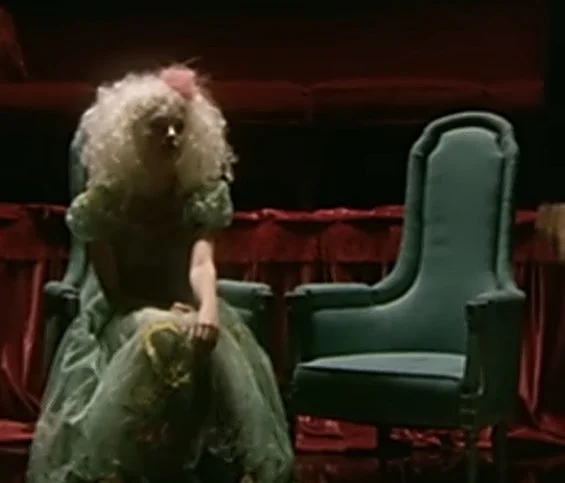








A psychological reading of Poutyface’s “Strawberries and Novocaine,” exploring self-criticism, emotional numbing, destructive coping, fear of being alone, panic and the seductive sweetness of temporary relief.