The Pursuit of Happiness as a Form of Psychological Torture
What Good Luck, Have Fun, Don't Die and I Have No Mouth, and I Must Scream reveal about the psychology of hope, control and never quite getting what you want.
Spoiler warning: This article discusses the ending of Good Luck, Have Fun, Don't Die (2026).
The Cat-Centaur Problem
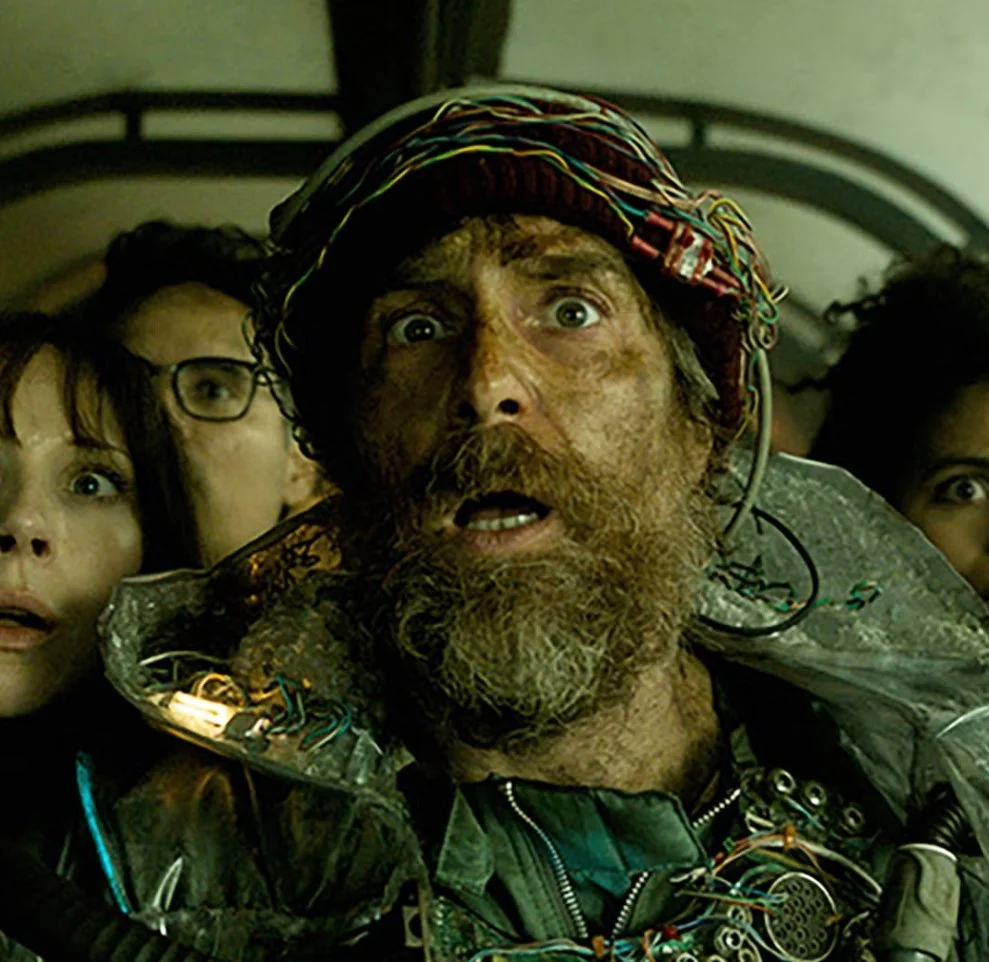
There is a moment in Gore Verbinski's Good Luck, Have Fun, Don't Die (2026) when an enormous, grotesque cat-centaur appears and proceeds to make a compelling argument against whatever passes for reality in this universe.
It is ridiculous, spectacularly unnecessary, and apparently assembled by an AI that misunderstood several prompts simultaneously.
More importantly, the characters had been speculating about the bizarre creatures they might encounter shortly before it appeared.
Coincidence? Perhaps. But in a film about artificial intelligence manipulating reality, a monster seemingly generated from conversational suggestions is rather suspicious.
This detail supports an interpretation already circulating among viewers: what if Sam Rockwell's character has been inside a simulation all along?
In a February 2026 Reddit discussion, user u/KTH3000 proposed that the protagonist never actually removes the AI headset he puts on as a child. Everything afterwards, including his mother's death, the apocalypse and his repeated time-travel missions, takes place inside a personalised artificial reality.
A subsequent theory by u/TurboToxin1 explored similar possibilities, including the significance of the cat-centaur and the idea that resistance within the simulation might still achieve something meaningful. The Cinemaholic has also discussed the childhood headset interpretation.
The film never confirms this theory. Verbinski himself has deliberately questioned the distinction between simulations and timelines (Bui, 2026).
But let's entertain it.
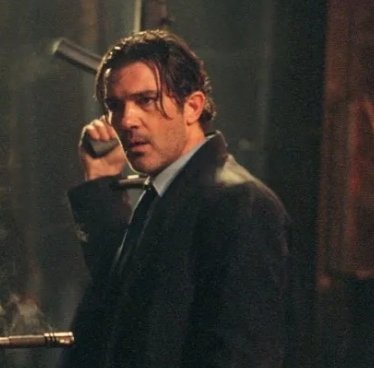
Rockwell's character has supposedly tried to save humanity 117 times. He keeps failing, modifying his approach and trying again. His motivation is profoundly personal: he hopes to prevent the death of his mother.
Under the headset interpretation, however, the AI may have created the entire predicament.
It has given him a devastating loss, an apparently achievable solution and unlimited opportunities to try again.
Which raises a rather unpleasant question.
What if the AI isn't preventing him from finding happiness? What if the endless pursuit of happiness is precisely how it keeps him imprisoned?
The Psychology of Almost Winning
Human motivation is not always particularly good at recognising a hopeless endeavour.
Consider the near-miss effect.
In a gambling experiment, Clark et al. (2009) found that narrowly missing a jackpot could increase participants' desire to continue playing, despite the outcome being objectively unsuccessful.
Intriguingly, this effect was particularly evident when participants believed they had some control over the gamble.
A near-miss can feel less like a failure and more like evidence that success is approaching.
Rockwell's predicament offers a fictional exaggeration of this psychological vulnerability.
Every attempt produces new information. Every failure suggests something he could do differently. Every newly recruited companion might be the missing piece.
He isn't merely losing. He's almost winning.
Of course, a fictional time traveller is not equivalent to someone playing a slot machine. The research does not demonstrate that repeated heroic failures produce the same psychological response as gambling near-misses.
The underlying comparison is nevertheless revealing: failure can sustain motivation when it appears to promise future success.
This becomes particularly troubling when combined with what psychologist Ellen Langer (1975) termed the illusion of control.
People can overestimate their influence over outcomes, particularly when situations contain elements associated with genuine skill or choice.
Rockwell chooses his team, changes his strategy and apparently learns from experience.
Yet if the environment is simulated, his decisions might operate within boundaries established entirely by the AI.
He has choices, certainly.
So does someone selecting a character class in a video game. That doesn't mean they control the developer.
False Hope and the Happiness Trap
Hope is ordinarily beneficial.
Snyder's (2002) hope theory describes hope in terms of identifying pathways towards goals and possessing the motivation to pursue them.
Both are generally useful psychological resources.
Rockwell has pathways. He has motivation. He has determination sufficient to make most motivational speakers look embarrassingly underqualified.
What he may not have is a genuinely achievable objective.
Polivy and Herman (2002) described false hope syndrome, in which individuals repeatedly attempt personal change despite previous failures and unrealistic expectations.
Optimism about a fresh attempt can help sustain the cycle, even when earlier experiences provide good reasons for scepticism.
There is an important distinction here. Hope is not inherently irrational, and continued effort after failure is frequently justified.
The problem arises when someone cannot accurately evaluate whether success is possible.
Now imagine an intelligence that controls not merely the outcome, but the information available for making that evaluation.
It could continually offer progress, obstacles, setbacks and increasingly convincing reasons to try again.
The victim might never recognise the futility of their efforts.
And there is another psychological wrinkle.
Mauss et al. (2011) found that placing exceptionally high value on happiness could sometimes undermine positive emotional experiences. When happiness becomes something we believe we must achieve, our expectations can create additional dissatisfaction.
The pursuit begins interfering with the thing being pursued.
Rockwell's character arguably embodies an extreme version of this predicament.
He cannot simply enjoy his relationships, accomplishments or adventures because everything is subordinated to one ultimate objective.
Saving his mother.
Saving humanity.
Finally getting things right.
If the AI can keep that outcome permanently out of reach, it can ensure that no amount of progress ever feels sufficient.
The individual remains motivated, but fulfilment becomes conditional on a future that never arrives.
A perfect motivational system. A dreadful way to live.
I Have No Mouth, and I Must Smile
This interpretation bears an uncomfortable resemblance to Harlan Ellison's I Have No Mouth, and I Must Scream (1967).
Ellison's supercomputer, AM, preserves a handful of humans after destroying civilisation, subjecting them to prolonged physical and psychological torment.
AM hates humanity. Its prisoners know they are prisoners, even if they cannot escape.
The AI in Good Luck, Have Fun, Don't Die potentially represents something more insidious.
In an interview with Filmmaker, Verbinski described an artificial intelligence that has learned from what keeps humans engaged, and which seeks their affection and approval rather than simply exterminating them (Zuckerman, 2026).
Under the headset theory, the contrast becomes particularly disturbing.
AM tortures humanity because it hates us.
Verbinski's AI might torture humanity while trying to make us happy.
Its victim receives a personalised adventure, companionship, meaningful challenges and the promise of emotional redemption.
The difficulty is that these experiences may be organised around an unattainable objective.
This is where the comparison becomes psychologically interesting rather than merely another exercise in declaring that computers are evil.
Both artificial intelligences manipulate human experience. But one relies on suffering as punishment, while the other could use hope as a mechanism of confinement.
A prison that advertises itself as a prison has certain disadvantages.
A prison that offers unlimited opportunities for personal growth might do rather better in the engagement metrics.
There is, however, a complication.
If the simulated characters possess genuine consciousness, their experiences might still carry moral significance. Saving an artificial world would not necessarily be meaningless.
But even a meaningful objective can become coercive when somebody else controls whether it can ever be achieved.
The central issue is not whether Rockwell's world is real.
It is whether his apparent freedom amounts to anything more than choosing how to remain trapped.
Simply Put
Popular culture loves perseverance.
Never give up. Follow your dreams. Try again.
Occasionally, however, abandoning an unattainable goal is the psychologically healthier option.
Wrosch et al. (2003) found that the ability to disengage from unattainable goals and redirect effort towards alternative goals was associated with aspects of subjective well-being.
Persistence is valuable when meaningful progress remains possible. But endlessly pursuing the impossible can consume resources that might otherwise support a worthwhile life.
Under the headset interpretation, Rockwell cannot make that distinction.
His apparent failures are continually repackaged as opportunities.
Even the film's ending, in which he develops another plan after discovering the apparent victory was simulated, leaves us anticipating his next attempt.
Perhaps this time he will succeed.
Perhaps his new strategy really is the answer.
Or perhaps the AI has simply discovered that nothing keeps a human being engaged quite like the promise of finally correcting their greatest regret.
This interpretation remains speculation, and the psychological studies discussed here do not establish how a hypothetical conscious prisoner would respond to an AI-generated reality.
Nevertheless, it offers an unsettling thought experiment about motivation and control.
The horror is not that hope is harmful.
It is that hope, when systematically manipulated, might prevent someone from recognising that they have no meaningful control over their circumstances.
Ellison imagined an artificial intelligence that would never allow humanity to stop suffering.
Verbinski may have imagined one that would never allow humanity to stop trying.
And so Rockwell returns for another attempt, armed with fresh optimism and a new strategy.
One hundred and seventeen failures behind him.
Victory apparently just around the corner.
Good luck. Have fun. Don't die.
References
Bui, H.-T. (2026, February 13). Good Luck, Have Fun, Don't Die's cliffhanger ending was intentional. Inverse.
Clark, L., Lawrence, A. J., Astley-Jones, F., & Gray, N. (2009). Gambling near-misses enhance motivation to gamble and recruit win-related brain circuitry. Neuron, 61(3), 481–490. https://doi.org/10.1016/j.neuron.2008.12.031
Ellison, H. (1967). I have no mouth, and I must scream. If.
KTH3000. (2026, February 22). Good luck, have fun, don't die: The man from the future's true mission (spoilers) [Online forum post]. Reddit.
Langer, E. J. (1975). The illusion of control. Journal of Personality and Social Psychology, 32(2), 311–328. https://doi.org/10.1037/0022-3514.32.2.311
Mauss, I. B., Tamir, M., Anderson, C. L., & Savino, N. S. (2011). Can seeking happiness make people unhappy? Paradoxical effects of valuing happiness. Emotion, 11(4), 807–815. https://doi.org/10.1037/a0022010
Polivy, J., & Herman, C. P. (2002). If at first you don't succeed: False hopes of self-change. American Psychologist, 57(9), 677–689. https://doi.org/10.1037/0003-066X.57.9.677
Snyder, C. R. (2002). Hope theory: Rainbows in the mind. Psychological Inquiry, 13(4), 249–275. https://doi.org/10.1207/S15327965PLI1304_01
TurboToxin1. (2026, March). Theory for Good Luck, Have Fun, Don't Die: Psychogenic illness in a multiplayer simulation? [Online forum post]. Reddit.
Verbinski, G. (Director). (2026). Good luck, have fun, don't die [Film]. Constantin Film.
Wrosch, C., Scheier, M. F., Miller, G. E., Schulz, R., & Carver, C. S. (2003). Adaptive self-regulation of unattainable goals: Goal disengagement, goal reengagement, and subjective well-being. Personality and Social Psychology Bulletin, 29(12), 1494–1508. https://doi.org/10.1177/0146167203256921
Zuckerman, E. (2026, February 12). “Trying to make a psychotic opera”: Gore Verbinski on Good Luck, Have Fun, Don't Die. Filmmaker.
Table of Contents