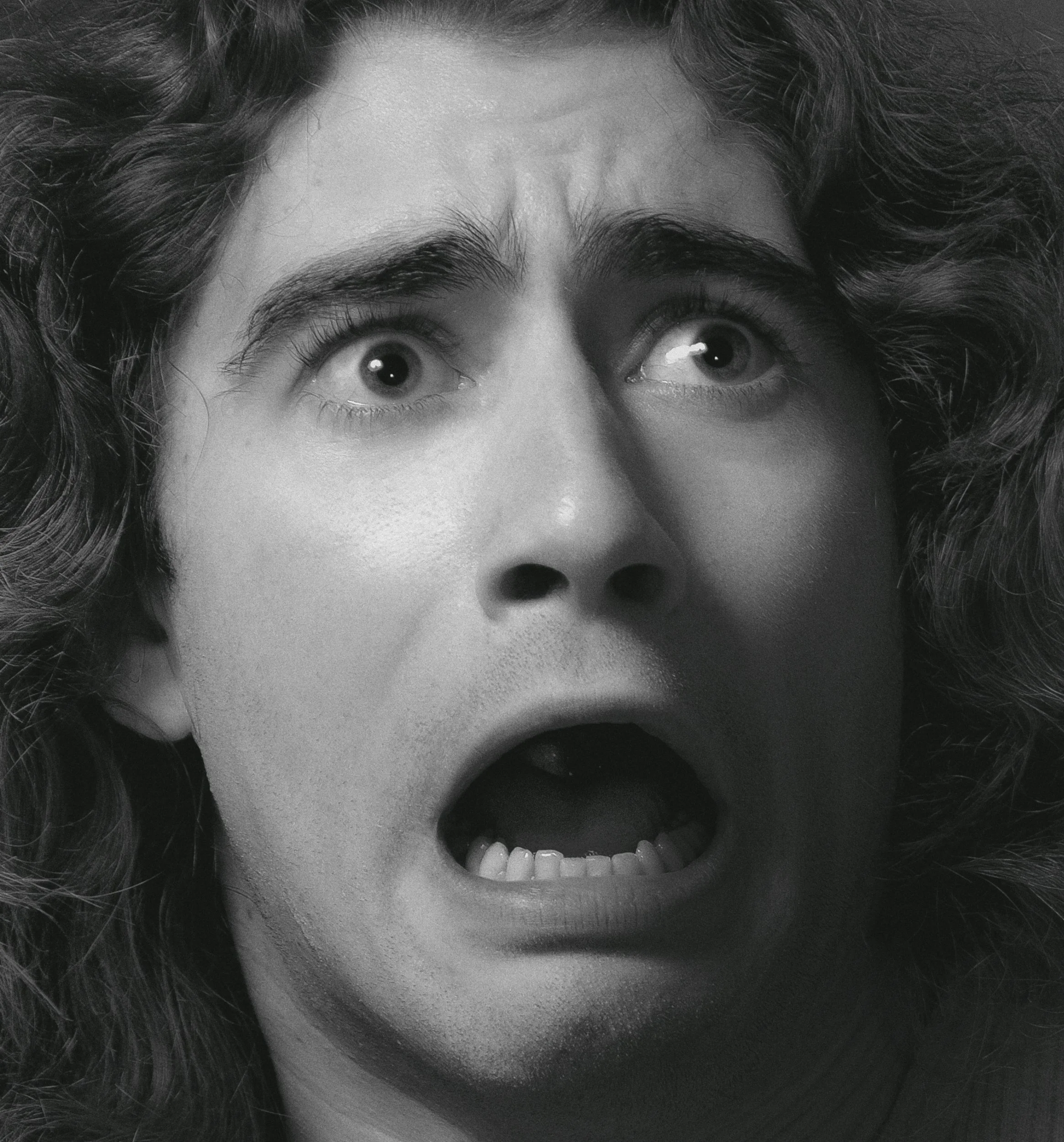
Double Ignorance Is Not the Dunning–Kruger Effect
The Dunning–Kruger effect has become shorthand for confident incompetence. But not all epistemic error is loud or arrogant. Sometimes the deeper problem is not that we overestimate what we know, but that we do not realise there is anything to know. This quieter state — double ignorance — is often mistaken for Dunning–Kruger. They are related, but they are not the same.
You Think You Understand
Imagine you are reading about monetary policy. The article mentions inflation targeting, bond yields, central bank independence, and quantitative easing. You recognise the terms. You have heard them before. The piece feels coherent. You finish it with a sense of understanding.
Now imagine someone asks you to explain, in operational detail, how quantitative easing works. Not the headline description, but the mechanism. Who buys what? Through which channels? With what accounting consequences?
Your explanation hesitates. You move from clarity to approximation. You realise your understanding is thinner than it felt.
Most people would describe this as a version of the Dunning–Kruger effect. You overestimated your grasp of a topic because the skills required to judge understanding are closely tied to the skills required to understand in the first place.
That interpretation may be correct.
But notice something important: in this scenario, you knew there was something to understand. You were aware that monetary policy is a domain of expertise. You recognised it as structured knowledge.
Double ignorance begins earlier than this.
What the Dunning–Kruger Effect Actually Describes
The Dunning–Kruger effect, first described by David Dunning and Justin Kruger in 1999, refers to a systematic miscalibration between perceived and actual competence. In their original experiments, participants completed tasks in domains such as logical reasoning and humour. Those who performed poorly tended to overestimate their relative standing. They lacked not only skill, but the metacognitive capacity to accurately evaluate their performance.
The central mechanism is straightforward. The knowledge required to perform well is often the same knowledge required to judge performance. When skill is low, evaluative accuracy is also compromised. As skill increases, calibration improves.
Importantly, several conditions are present. The domain is defined. Performance can be measured. There is an objective or semi-objective benchmark. The individual is participating in the task.
The error lies in judging one’s position within a known framework.
You are playing the game. You are simply misreading the scoreboard.
This is a calibration problem.
Double Ignorance: A Different Layer of Error
Double ignorance operates at a different level.
It is commonly summarised as “not knowing that you do not know.” While this overlaps conceptually with Dunning–Kruger, the overlap is incomplete. The difference lies in structure rather than intensity.
Double ignorance is a meta-epistemic condition in which an individual lacks knowledge and lacks awareness that knowledge is missing. It is not necessarily accompanied by inflated confidence. It does not require ego. It does not require measurable performance.
In fact, it may be entirely quiet.
Consider a person who discusses nutrition but has never encountered the concept of micronutrient density. They may not be overconfident. They may not claim expertise. They simply lack awareness that a deeper framework exists. Their ignorance is not miscalibrated within a known system. It exists outside the boundaries of the system as they conceive it.
They do not misjudge their score. They do not know there is a scoreboard.
This is not an error of estimation. It is an absence of representation.
The Map and the Missing Map
The clearest distinction between the two concepts can be framed metaphorically.
The Dunning–Kruger effect involves misreading the map. The terrain exists. The map exists. You are navigating it poorly and overestimating your skill.
Double ignorance involves not knowing that a map exists at all.
The person affected by Dunning–Kruger may confidently assert that they understand climate science after reading a handful of articles. They participate in the discourse. They believe their grasp is robust. Their confidence exceeds their competence.
The person in a state of double ignorance may not even realise that climate modelling involves probabilistic forecasting, ensemble simulations, and formal uncertainty quantification. They are not overconfident about these tools. They simply have no mental representation of them.
The domain, as far as they perceive it, is flatter and simpler than it actually is.
Double ignorance therefore concerns the boundaries of awareness. It is about what is not even conceived as relevant knowledge.
Why This Distinction Matters
The difference is not merely semantic. It has implications for how ignorance is corrected.
The Dunning–Kruger effect is, in principle, self-correcting under the right conditions. As individuals receive feedback, gain exposure to higher competence, or undergo training, their self-assessment tends to become more accurate. Increased skill improves metacognitive calibration.
Double ignorance is more resistant.
Correction requires a trigger that reveals the existence of missing structure. Without that trigger, there is no impetus to search, revise, or update. The individual does not experience cognitive dissonance because no contradiction is perceived.
In Bayesian terms, Dunning–Kruger involves poorly calibrated beliefs within a recognised hypothesis space. Double ignorance involves failing to represent parts of the hypothesis space altogether. You cannot update probabilities for possibilities you do not model.
This makes double ignorance more fundamental. It concerns the architecture of understanding rather than the accuracy of estimation within it.
The Role of Metacognition
Both phenomena involve metacognition, but at different depths.
In the Dunning–Kruger effect, the failure lies in assessing one’s performance. The individual attempts evaluation but does so inaccurately. There is a mirror, but it is distorted.
In double ignorance, the mirror may not exist. The individual lacks the meta-level frame required to even evaluate whether evaluation is needed.
This distinction matters in educational contexts. A student who believes they understand calculus but performs poorly on a test may be experiencing Dunning–Kruger-like miscalibration. With feedback and practice, their self-assessment improves.
A student who has never encountered the concept of proof in mathematics may not recognise that procedural fluency differs from conceptual understanding. Their ignorance is deeper, because the evaluative dimension itself is absent.
The difference is subtle but significant.
Overconfidence Is Not Required
One of the reasons double ignorance is frequently conflated with Dunning–Kruger is cultural emphasis on arrogance. Public discourse often highlights the loudest, most confident examples of epistemic failure. The caricature of the uninformed but certain commentator is easy to identify.
But double ignorance does not require bravado. It can manifest as quiet sufficiency. A person may feel moderately informed, not exceptional. They may express views calmly and cautiously. Yet entire dimensions of knowledge remain outside their conceptual frame.
In this sense, double ignorance is not a personality trait. It is a structural condition of bounded cognition. Human beings cannot represent all possible knowledge domains. We rely on simplified models. Some simplifications are harmless. Others obscure important complexity.
The danger lies not in confidence alone, but in unrecognised limits.
Is the Dunning–Kruger Effect a Subtype?
Conceptually, the Dunning–Kruger effect can be understood as a specific instantiation of double ignorance within measurable skill domains. The individual lacks competence and lacks awareness of that lack. This meta-ignorance manifests as inflated self-assessment.
However, double ignorance extends beyond skill-based tasks. It can occur in political reasoning, institutional design, financial literacy, technological debates, and health behaviour. In many of these domains, there is no simple performance metric. There is no immediate feedback loop revealing error.
This broader scope suggests that double ignorance is the more general phenomenon. The Dunning–Kruger effect is a structured, empirically studied case within it.
Recognising this hierarchy clarifies conceptual confusion. Not every case of epistemic limitation is Dunning–Kruger. Sometimes the issue is not miscalibrated confidence, but unrecognised incompleteness.
The Quiet Persistence of the Unknown Unknown
Double ignorance persists because it feels stable. There is no tension to resolve. The individual does not experience a sense of being wrong. They experience a sense of adequacy.
This stability explains why exposure to new information can sometimes feel destabilising. Discovering that one’s mental map is incomplete is not merely an informational update. It is a structural revision. It reveals that prior confidence, even if moderate, rested on a limited frame.
Psychologically, this can evoke defensiveness or curiosity. The response often depends on prior commitment to epistemic humility.
Simply Put
If double ignorance concerns the boundaries of awareness, its primary safeguard is epistemic humility. This is not self-deprecation. It is the recognition that understanding is layered and that unseen complexity likely exists beyond current comprehension.
Epistemic humility involves assuming that one’s map is incomplete. It does not require assuming that one is wrong about everything. It requires acknowledging that the terrain may extend further than currently represented.
The distinction between double ignorance and the Dunning–Kruger effect ultimately comes down to this: the latter concerns misjudging your performance within a game; the former concerns not realising the game is larger than you thought.
In a world saturated with information, expertise, and rapidly evolving systems, the deeper risk may not be confident incompetence. It may be unrecognised limitation.
And that is harder to detect, precisely because it does not announce itself.
References
Smithson, M. (1989). Ignorance and uncertainty: Emerging paradigms. Springer-Verlag.
Rumsfeld, D. (2002, February 12). Department of Defense news briefing. U.S. Department of Defense.
Table of Contents