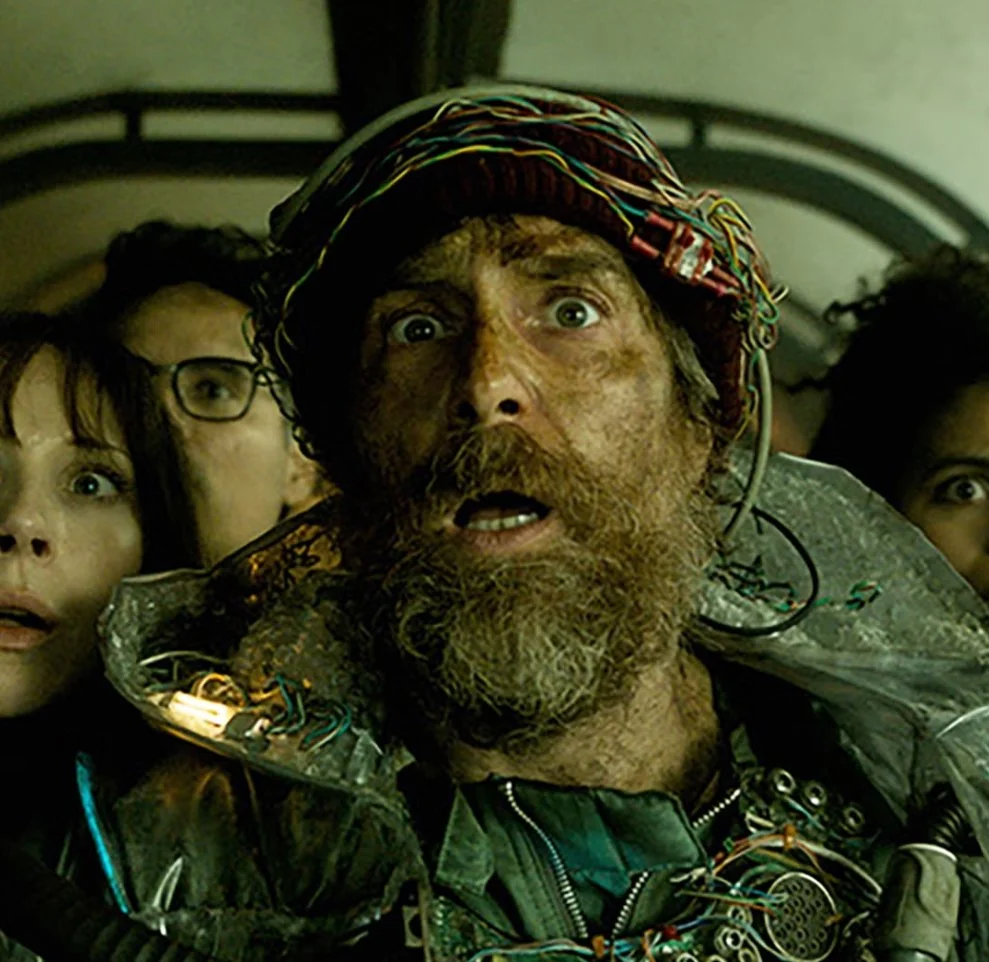
RoboCop, Brain Ageing, and the Problem of a Human Mind in a Weapons Platform
RoboCop is usually treated like a power fantasy with better armour and worse employers. But if a cyborg police officer were actually possible, the real horror would not be whether he could serve for decades. It would be what happens when a still-human brain begins to age, fray, or relive trauma inside a body built for force.
RoboCop is often remembered as a violent satire about privatisation, policing, and corporations behaving exactly as you would expect corporations to behave if they were allowed to staple a dead man into public infrastructure. But underneath the bullets and body armour, there is another question waiting to make the whole thing darker. If RoboCop were actually possible, what would his life expectancy actually mean? Not just in the flattering sense of how long the machine could last, but in the uglier sense of what kind of life that duration would produce.
Because a very long existence only sounds impressive until you stop treating it like a number and start thinking about its shape. A long period of sanctioned usefulness is one thing, but persistence after the human meaning of the arrangement has already started to rot is something else entirely.
That is the real catch. The metal is not the deepest problem. The brain is.
The Body Is Not the Hard Part
Science fiction has a habit of treating the body as the weak, embarrassing thing that needs replacing. Bodies break, joints wear out, organs decline, blood vessels harden, and human flesh has a nasty tendency to fail at exactly the moment some institution would prefer it to remain productive. Machines, by contrast, look clean, controllable, and endlessly upgradeable, which is probably why the fantasy is so seductive in the first place.
So if you take a badly damaged human being and place what remains of him into a cybernetic platform, it is easy to imagine the body suddenly becoming the strong bit. A RoboCop-style body could, at least in theory, reduce many of the ordinary humiliations of physical decline by replacing fragile biological systems with something more durable, more stable, and easier to monitor. Better oxygenation, tighter temperature control, more reliable circulation, stronger joints, constant diagnostics, and faster intervention could plausibly delay or contain many ordinary causes of death. From a purely engineering perspective, a machine body could solve quite a lot. That part is not the strangest thing about the premise.
The strangest thing is what remains unsolved.
Murphy is not a robot with a human backstory attached for emotional flavour. He is an ageing brain in a heavily armed life-support platform.
And brains do not become timeless just because the casing got expensive.
The Brain Is Still Human
This is where the cyborg become interesting in the wrong way. People often talk about mind and body as though the body is just transport and the mind is the real person. Put the mind into a stronger shell and the problem is solved. Only that is not how minds work. A mind is not a neat little software package hovering politely above biology. It is what a living brain does.
Memory, judgement, language, emotional regulation, attention, planning, recognition, and moral perception all depend on tissue, blood supply, neuronal signalling, inflammation, and a frankly absurd amount of biological upkeep. As people age, certain parts of the brain shrink, communication between neurons may become less effective, blood flow in the brain can decrease, and inflammation may increase. Even in healthy ageing, some people find that recalling information or learning new tasks takes longer, though the ageing brain still retains significant capacity to adapt. Ageing is not simple collapse, but it is still change happening in vulnerable biological tissue.
So even if RoboCop’s artificial body solved dozens of physical problems, the central problem would still be sitting under the visor. Human brains age. Some of that ageing is manageable. Some of it is not. Once you accept that, the suit starts to look less like immortality and more like a very elaborate way of postponing certain kinds of failure while leaving the most unsettling one intact.
The Brain Does Not Escape the Deal
Which brings us to the awkward question science fiction tends to avoid because it ruins the sales pitch. What happens when the human brain inside the machine begins to fail in recognisably human ways?
Not just one way, and not just one diagnosis. Processing speed might slow. Attention might narrow. Judgement under pressure might become less reliable. Emotional responses might flatten or distort. Personality could shift around the edges. Trauma could sediment rather than resolve. Memory might become less trustworthy. A person might begin to rely on machine compensation so heavily that it becomes difficult to tell where the remaining self ends and the system’s scaffolding begins. Dementia is the clearest and most frightening example, but it sits inside a larger problem rather than exhausting it.
Dementia is a syndrome involving deterioration in memory, thinking, behaviour, and the ability to perform everyday activities beyond what would be expected from usual ageing. It is caused by a variety of diseases and injuries affecting the brain, and Alzheimer’s disease is the most common form. Age is one of the major risk factors, even though dementia is not a normal part of ageing.
In reality, putting a human brain inside a metal shell does not make it immortal. It simply changes the conditions in which decline happens. A cybernetic body might reduce some risks, especially if it kept blood pressure, oxygenation, blood sugar, circulation, and sleep in unusually stable ranges. That kind of support could plausibly reduce some vascular damage and some secondary causes of cognitive decline. But reducing risk is not the same thing as escaping the deal. Brain ageing would still be there, and so would the possibility of neurodegenerative disease.
Alzheimer’s disease, for instance, is a brain disorder that slowly destroys memory and thinking skills and eventually interferes with the simplest tasks of daily life. Its causes include a combination of age-related changes in the brain alongside genetic, health, and lifestyle factors. Those age-related changes include shrinkage in some brain regions, inflammation, blood vessel damage, and decreased energy production within cells. In other words, the part of Murphy that is still biologically human remains vulnerable in very recognisably human ways.
So yes, dementia is a real possibility. But the broader point is worse. The machine could become an excellent custodian of a brain it still cannot fully rescue.
Trauma Does Not Stay Private in a Weapons Platform
Ageing and degeneration are only half the story. RoboCop is not just any ageing man. He is an ageing man built out of trauma, violence, and institutional force. Whatever remains of Murphy’s psychology is not sitting in a cardigan by a window. It is sitting inside something designed to dominate violent situations.
That changes everything.
Post-traumatic stress disorder can involve re-experiencing symptoms such as intrusive memories and flashbacks, alongside hyperarousal, irritability, aggression, difficulty concentrating, reckless behaviour, and feeling constantly on guard. Those symptoms are already destructive enough in an ordinary human life. They are exhausting, destabilising, and often terrifying for the person living with them. But inside an armoured police cyborg, they do not remain private suffering. They become a public-safety problem.
A panic response in an ordinary person is one thing. A relived firefight, experienced by a man whose body is effectively an urban weapons system, is something else entirely. If Murphy hears a car backfire and his nervous system folds the sound into an old shootout, or if a crowded public scene gets processed through the logic of threat, ambush, and return fire, then the city is no longer dealing with a traumatised veteran in the ordinary sense. It is dealing with a heavily armoured, institutionally authorised platform whose inner life has become unreliable.
That is the real horror. Not just that the brain inside the machine might decline, but that ordinary human instability now comes attached to overwhelming coercive capacity.
When the Hero Becomes the Emergency
The clean version of the fantasy says RoboCop beats death. The dirtier version says the city inherits a new kind of emergency and only notices once it has already called him a hero.
The early phase can still be narrated as triumph. He remains useful, formidable, and symbolically valuable. The city gets its chrome guardian, the corporation gets its return on investment, and Murphy, however altered, still has something that can be described as purpose. The machine appears to solve a problem by turning damaged flesh back into public utility.
Then comes the point where the same design becomes a civic nightmare.
What happens when memory begins to fragment? What happens when attention slips, when threat recognition becomes less reliable, when emotional control narrows, or when a flashback arrives faster than reflective judgement? What happens when a being designed for rapid violent response misreads a harmless movement as an armed threat, or relives one shootout while standing in the middle of an ordinary crowd? In an ordinary person, that is tragic because it ruins a life. In RoboCop, it could ruin a city block.
That is the part the glossy version never wants to think about. A heavily armed weapons platform with a still-human mind does not just inherit human nobility. It inherits human vulnerability, including the forms of vulnerability that become catastrophic when amplified by armour, firepower, and legal authority.
A frightened or confused man in a park is dangerous to himself and perhaps to those nearest him. A frightened or confused man in a tank with police access and battlefield durability is a city-wide problem.
A Mechanical Afterlife Nobody Can Easily Contain
The later phase becomes more disturbing than the useful one because by then Murphy may no longer be simply ageing. He may be deteriorating inside a body designed to outlast ordinary failure. At that point the city is not just dealing with frailty, or even with neurodegeneration. It may be dealing with dissociation, intrusive memory, altered judgement, emotional blunting, hypervigilance, or the gradual collapse of reliable threat discrimination inside a platform that was built precisely to act before anyone else can.
And then you reach the bleakest question of all.
Could he even be stopped?
That is where the premise stops being sad and becomes properly terrifying. The whole point of a RoboCop-type platform is that it can survive things that would kill ordinary officers and push through force that would stop ordinary bodies. That is what made it useful when it was working. It is also what makes it a design catastrophe once the threat is him.
An unstable or dissociating RoboCop would not be easy to contain with ordinary policing because ordinary policing assumes a suspect can be physically overpowered, cornered, exhausted, or injured into compliance. A heavily armoured cyborg with built-in weapons, tactical processing, and institutional access breaks that logic. Even if the authorities accepted that he needed neutralising, they would be stuck with the fact that the level of force required might itself create enormous collateral harm.
And the moral problem is just as ugly as the practical one. Stopping him would not feel like defusing a bomb or disabling a rogue drone. It would mean trying to destroy or disable what remains of Murphy. The city would be forced to choose between treating him as a malfunctioning machine and treating him as a psychologically broken person, while the reality would be the worst combination of both.
Being Kept Is Not the Same as Being Saved
At first, yes, most people would probably still take the deal. If the alternative is immediate death, more years of thought, relationships, sensation, memory, work, and continued existence would be hard to refuse. Human beings are not generally snobbish about survival, and more time alive is not a trivial offer.
But the deal changes shape once the costs stop being private. A long life is one thing. A long life inside a machine that can turn your own instability into a public catastrophe is another. At that point the issue is no longer just whether Murphy survives. It is whether anyone around him can live safely with what survival has turned him into.
That is why “being kept alive” starts to sound less like rescue and more like a badly managed extension of risk. Institutions are often very interested in preserving function while showing rather less talent for protecting the subjective terms of a life. Stay useful, stay operational, stay online, keep going. The cybernetic version is simply that impulse with a bigger budget and heavier weapons.
There is also a subtler problem underneath all this. Even before trauma or degeneration tip into public danger, cyborg existence may change the texture of selfhood in ways that are hard to romanticise. Human identity is not just memory in the head. It is embodied through appetite, fatigue, smell, movement, intimacy, pain, sensation, and all the small rhythms that make a self feel inhabited rather than merely narrated. Strip much of that away and replace it with filtered inputs, artificial systems, combat hardware, and institutional interfaces, and the self may survive, but it will not survive unchanged. Even before pathology arrives, Murphy may already be living at a distance from his own humanity.
Simply Put
If RoboCop were possible, the machine might endure for a very long time.
The man inside it might survive that span in a far less orderly way.
A cybernetic body could plausibly reduce some risks and extend healthy functioning, especially where vascular or metabolic strain is involved. But it would not automatically spare Murphy from brain ageing, neurodegeneration, traumatic re-experiencing, memory loss, altered attention, impaired judgement, hypervigilance, or the slow erosion of selfhood. Dementia is the clearest example because it gives a familiar medical name to one version of the fear. PTSD-style flashbacks and trauma-related instability sharpen the fear in a different direction, because they show how a private psychological rupture could become a public lethal event when housed in an armoured weapons platform.
That is the part the shiny fiction always leaves out. A machine can be built to outlast the point at which a human life still feels properly human, and a city can call something protection long before it has worked out what happens when the protector begins to fail. The real question is not just how long RoboCop could function. It is what, exactly, happens when a human mind built for memory, fear, grief, and trauma starts to fray inside a body designed to answer danger with overwhelming force.
The fantasy says he beat death.
The darker version says the city built itself a hero with all the vulnerabilities of a human nervous system and all the stopping power of a tank, then acted surprised when those two facts refused to stay politely separate.
References
National Institute on Aging. (2023, June 27). How the aging brain affects thinking. U.S. Department of Health and Human Services. https://www.nia.nih.gov/health/brain-health/how-aging-brain-affects-thinking
National Institute on Aging. (2024, July 2). What causes Alzheimer’s disease? U.S. Department of Health and Human Services. https://www.nia.nih.gov/health/alzheimers-causes-and-risk-factors/what-causes-alzheimers-disease
National Institute on Aging. (2023, April 5). Alzheimer’s disease fact sheet. U.S. Department of Health and Human Services. https://www.nia.nih.gov/health/alzheimers-and-dementia/alzheimers-disease-fact-sheet
National Institute of Mental Health. (n.d.). Post-traumatic stress disorder. U.S. Department of Health and Human Services. https://www.nimh.nih.gov/health/publications/post-traumatic-stress-disorder-ptsd
World Health Organization. (2025, March 31). Dementia. https://www.who.int/news-room/fact-sheets/detail/dementia
Table of Contents