There is a funny thing that happens when machines get very good at something.
The thing itself becomes less impressive.
Not immediately, of course. At first, everyone gathers around the machine and gasps. Look what it can do. Look how fast it can do it. Look how close it can get to the thing we thought only people could make.
Then, slowly, the awe curdles into boredom.
The miracle becomes a preset.
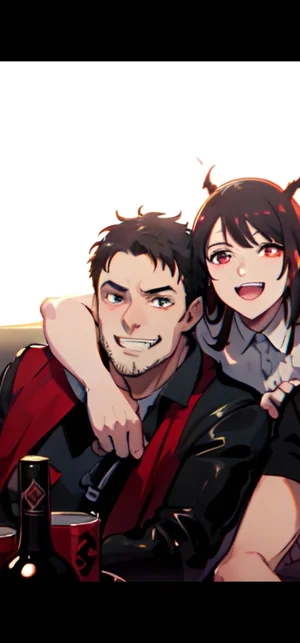
That is, I think, where we are beginning to arrive with AI art. Not because AI art is bad. In many cases, that is precisely the problem. It is too good in a very particular way. Too polished. Too composed. Too cinematic. Too frictionless. Too ready to be liked.
It has the strange gloss of an image that has never hesitated.
And that might be why bad art is about to get interesting.
Not bad art in the lazy sense. Not art that is careless, empty, or merely incompetent. I mean bad art as a deliberate refusal of machine-like smoothness. Art that is awkward, uneven, excessive, ugly, handmade, bodily, poorly behaved. Art that looks as though a person struggled with it and left the struggle visible.
In a world where perfection becomes cheap, the mistake starts to look expensive.
Photography did not kill painting
There is an obvious historical comparison here, although I am always wary of making it too neatly.
Photography did not kill painting. It changed what painting was for.
Before photography, one of painting’s great social functions was representation. Kings, saints, patrons, families, battles, landscapes, the dead, the powerful, the beautiful. Painting could preserve likeness. It could record. It could flatter. It could make someone appear permanent.
Then photography arrived and did something deeply annoying.
It captured visual reality faster.
Not better in every sense, but faster, cheaper, and with a new kind of authority. The photograph seemed to say, “This happened. This person existed. This light fell here.”
Painting could still do realism, of course. It still can. But realism was no longer its safest claim to importance. The machine had entered the room. So painting moved sideways. It became more interested in perception, colour, gesture, distortion, abstraction, mood, symbolism, dreams, inner life.
If the camera could capture what the eye saw, perhaps painting could explore what the eye felt.
Impressionism, Expressionism, Cubism, Surrealism, Abstract Expressionism. These were not simply escapes from realism, but arguments with it. They asked whether reality was just accurate shape and light, or whether it also included memory, emotion, time, trauma, desire, politics, and the instability of seeing itself.
The photograph did not make painting irrelevant.
It made painting self-conscious.
AI may now be doing something similar to digital art, illustration, design, and maybe visual culture more broadly. But the challenge is not quite the same. Photography challenged realism. AI challenges polish.
Photography said: I can depict the world.
AI says: I can make the finished-looking thing.
That is more unsettling.
The problem with perfect images
AI images often have a peculiar quality. They look complete before they look meaningful.
They arrive already lit. Already graded. Already textured. Already arranged. The character is dramatic. The background is atmospheric. The composition is pleasing. The colour palette knows what it is doing. The image has skipped the embarrassment of becoming.
This does not make it worthless. It can be useful, beautiful, funny, strange, commercially effective, creatively stimulating. I am not interested in pretending that AI art is simply fake art, or that everyone using it is doing something morally vacant. That is too easy, and usually too smug.
But I do think AI changes the emotional economy of images.
When polished images become abundant, polish stops being enough.
We have already lived through a version of this with filters, stock photography, Instagram interiors, corporate minimalism, and algorithm-friendly design. Visual smoothness became a language of professionalism, then quickly became a language of suspicion. Too clean can feel false. Too perfect can feel dead. Too optimised can feel as if no human being ever had an inconvenient thought near it.
AI intensifies this.
The perfect image no longer says, “Someone mastered a craft.”
It may only say, “Someone entered a prompt.”
That is not always fair. Serious AI work can involve iteration, judgement, editing, compositing, and taste. But culturally, the suspicion remains. Once an image can be generated in seconds, the viewer begins to ask different questions.
Not “is this impressive?”
But “where is the person?”
The return of the wonky line
This is where bad art starts to matter.
A wonky line is no longer just a wonky line. It becomes evidence.
A visible brushstroke becomes evidence.
A thumbprint in clay becomes evidence.
A strange proportion, a clumsy face, a half-erased mistake, a section that does not quite work but somehow feels necessary — these begin to operate as signs of human contact.
The flaw says: someone was here.
Of course, AI can imitate flaws. That is the annoying part. AI can generate fake brushstrokes, fake pencil marks, fake outsider art, fake childhood drawings, fake sketchbook pages, fake process. The machine can counterfeit imperfection too.
But I suspect viewers will become more sensitive to the difference between imperfection as style and imperfection as residue.
There is a difference between an image that has been made to look flawed and an image that seems to have survived its own making.
That might sound romantic, but I think it matters. Human work often carries traces of limitation. The artist got tired. The hand slipped. The material resisted. The idea changed halfway through. The body had to move through time. The work came from a sequence of decisions, not a single immaculate arrival.
Badness, in this sense, is not failure. It is texture.
It is the visible record of a negotiation between intention and reality.
Process becomes the artwork
This is also why I think filmed art processes are going to become more important.
Not just as marketing. As proof.
We are already used to watching people make things online. Time-lapse paintings, studio vlogs, pottery reels, restoration videos, craft videos, “watch me ruin this and rescue it” videos. But in the AI era, this kind of process content takes on a different role.
It becomes provenance.
The finished image may not be enough. The viewer may want to see the hand. The desk. The mess. The failed version. The rejected sketch. The moment where the artist changes direction. The bit where it almost goes wrong.
The making becomes part of the meaning.
That is interesting, because it could also become ridiculous. We may see the rise of over-engineered art processes, where the method is more elaborate than the result. Paintings made with pendulums. Portraits drawn while walking across a city. Sculptures made through absurd constraints. Artists using machines, pulleys, weather, body movement, live audiences, decaying materials, or deliberately inconvenient tools.
Some of it will be brilliant.
Some of it will be unbearable.
But I understand why it will happen. When a finished image can be summoned, the artist may start making the summoning difficult again.
The difficulty becomes the point.
Not because suffering automatically makes art better. That is a trap. A painting is not good just because someone had a terrible afternoon making it. But effort changes how we read an object. We value things differently when we believe they contain time, choice, difficulty, and risk.
That is not just aesthetic. It is psychological.
We are not only responding to the image. We are responding to the imagined mind behind it.
The psychology of “a real person made this”
Humans are very interested in origins.
We care whether a child made something, whether a master made something, whether a lover made something, whether a dead person touched something, whether something is original or copied, whether something is authentic or fake.
This can seem irrational. Two objects may look identical, yet we treat them differently because of their histories. The original painting matters more than the print. The handwritten note matters more than the typed message. The jumper knitted badly by someone who loves you may matter more than the perfect one from a shop.
The object carries a person.
AI art disrupts this because it can produce the appearance of intention without the same kind of lived origin. It can give us the look of melancholy without anyone being melancholy. The look of labour without labour. The look of symbolism without a symbolic life behind it.
Again, that does not mean AI images cannot be meaningful. People can use AI meaningfully. A person can select, direct, combine, edit, and contextualise. But the image itself no longer guarantees the same human presence.
So viewers may start looking elsewhere.
They may look to biography. To process. To materials. To limitation. To performance. To the artist’s body. To the story of how the work came into being.
This is where human flaw becomes valuable. Not because flaws are always beautiful, but because they are harder to separate from human limitation.
The mistake becomes intimate.
Bad taste as rebellion
There is another possibility too.
AI may not only lead to rougher art. It may lead to uglier art.
Deliberately ugly art. Tasteless art. Over-coloured, badly proportioned, emotionally excessive, childish, grotesque, silly, embarrassing art.
Because AI is very good at average beauty.
That sounds harsher than I mean it. AI systems are trained on huge bodies of existing images, and they tend to reproduce patterns of visual approval. So even when the prompt asks for something original, the result can feel haunted by consensus. It often gives us the image equivalent of a very confident mood board.
Bad taste may become a way out.
The ugly thing resists optimisation. The awkward thing refuses the smooth surface. The embarrassing thing interrupts the algorithmic desire to be instantly pleasing.
There is something psychologically interesting about that. Much of human creativity depends on misfit. The wrong association. The excessive reaction. The private obsession. The thing that should not work but does. The style that looks stupid until suddenly it becomes the only honest way to say it.
AI can remix the known beautifully.
But human beings are very good at being wrong in personally revealing ways.
That may become one of our remaining advantages.
The danger of fake authenticity
There is, however, an obvious problem.
Once human flaw becomes valuable, it will be packaged.
We will get artificial roughness. Curated mess. Professionally filmed authenticity. Studio chaos with perfect lighting. “Raw” art processes edited into content strategy. The aesthetic of vulnerability without the vulnerability. The appearance of outsider art made safely inside the market.
This has already happened everywhere else.
The casual selfie became a genre. The messy desk became a brand. The handwritten font became a corporate asset. The “authentic” apology video became a media ritual. The stripped-back acoustic version became another form of polish.
So yes, bad art may rise.
But so will fake bad art.
And then the viewer is back in the same suspicious position, asking: is this flawed because it had to be, or because flaw is currently fashionable?
Maybe that question is unavoidable. Maybe every authenticity signal eventually becomes a costume. But that does not make the signal meaningless. It just means the culture keeps moving.
The machine gets better.
The human response gets stranger.
The artist as witness
I think the deeper shift may be this:
The artist will become less valued as an image-maker and more valued as a witness to making.
That sounds subtle, but it changes everything.
The finished artwork used to be the main event. Increasingly, the artwork may include the trail: the sketch, the footage, the materials, the failed attempts, the artist’s explanation, the live performance, the visible decisions. The object becomes one part of a larger human event.
This is not entirely new. Performance art, conceptual art, craft traditions, outsider art, documentary practice, and social media have all been pulling in this direction for a long time. AI just makes the pressure more obvious.
If anyone can generate the image, then the question becomes: why this image, from this person, made this way, at this time?
That question is harder to automate.
Not impossible. But harder.
Because it asks not only for output, but for situatedness. For a life around the work. For a reason the work exists beyond its own surface.
Maybe we will miss bad drawings
There is something oddly moving about the possibility that AI perfection could make us kinder to bad drawings.
For years, people have mocked their own creative limitations. “I can’t draw.” “I’m not artistic.” “It looks like a child did it.” We treated technical skill as the entry ticket to visual expression.
But perhaps the future will be more forgiving.
Perhaps the amateur drawing will regain some dignity. The uneven handmade birthday card. The badly painted miniature. The strange local mural. The sketch that gets the feeling right and the anatomy wrong. The little comic someone made because they had an idea and no patience for perspective.
These things may start to feel precious again.
Not because they are technically superior to AI images. They are not. That is the point.
They are precious because they are not frictionless.
They are made from time, embarrassment, limitation, and choice. They carry the risk of being seen trying.
And that might become one of the most human things art can offer.
Simply Put
So yes, when AI gets too good, bad art gets interesting.
Not because badness is automatically profound. Most bad art is still just bad. But in a culture flooded with competent images, incompetence can become expressive. Awkwardness can become evidence. Flaw can become resistance. Visible process can become trust.
The next great art movement may not be about making things look more perfect.
It may be about making perfection feel beside the point.
The artist of the future may not need to prove they can make a flawless image. The machine can do that. The artist may need to prove something stranger and more fragile:
that a human being was genuinely involved,
that choices were made,
that something went wrong,
that something was rescued,
that the work passed through a life before it reached us.
In the end, maybe AI will not kill art.
Maybe it will make us suspicious of beauty and newly tender toward the botched, the bodily, the overworked, the badly lit, the smudged, the sincere, the almost-good.
Maybe the future of art is not perfection.
Maybe it is the return of the visible wound.
Table of Contents