The Categorisation Effect: How Fast the Mind Creates Groups
Human beings do not just notice difference. We organise it, label it, and start building meaning around it with startling speed. This interactive looks at how fast that process begins, and why the problem is rarely categorisation itself. It is what starts sticking to categories once they exist.
People like to imagine bias as something theatrical. A loud opinion. A bad ideology. A person saying the quiet part too loudly in public. Sometimes it is that. But long before that stage, something smaller and more ordinary is already at work. The mind sorts. It distinguishes. It reaches for pattern. Give it a field of variation and it will start drawing lines through it with unnerving confidence.
That is not a design flaw in the narrow sense. Categorisation is one of the ways cognition avoids drowning in detail. A brain that treated every object, person, and situation as wholly new each time would be almost useless. Psychology has long treated social categorisation as one of the starting points for intergroup bias, precisely because grouping is so basic to how people make sense of complexity. The awkward part is not that the mind groups. It is how quickly those groups begin to feel meaningful.
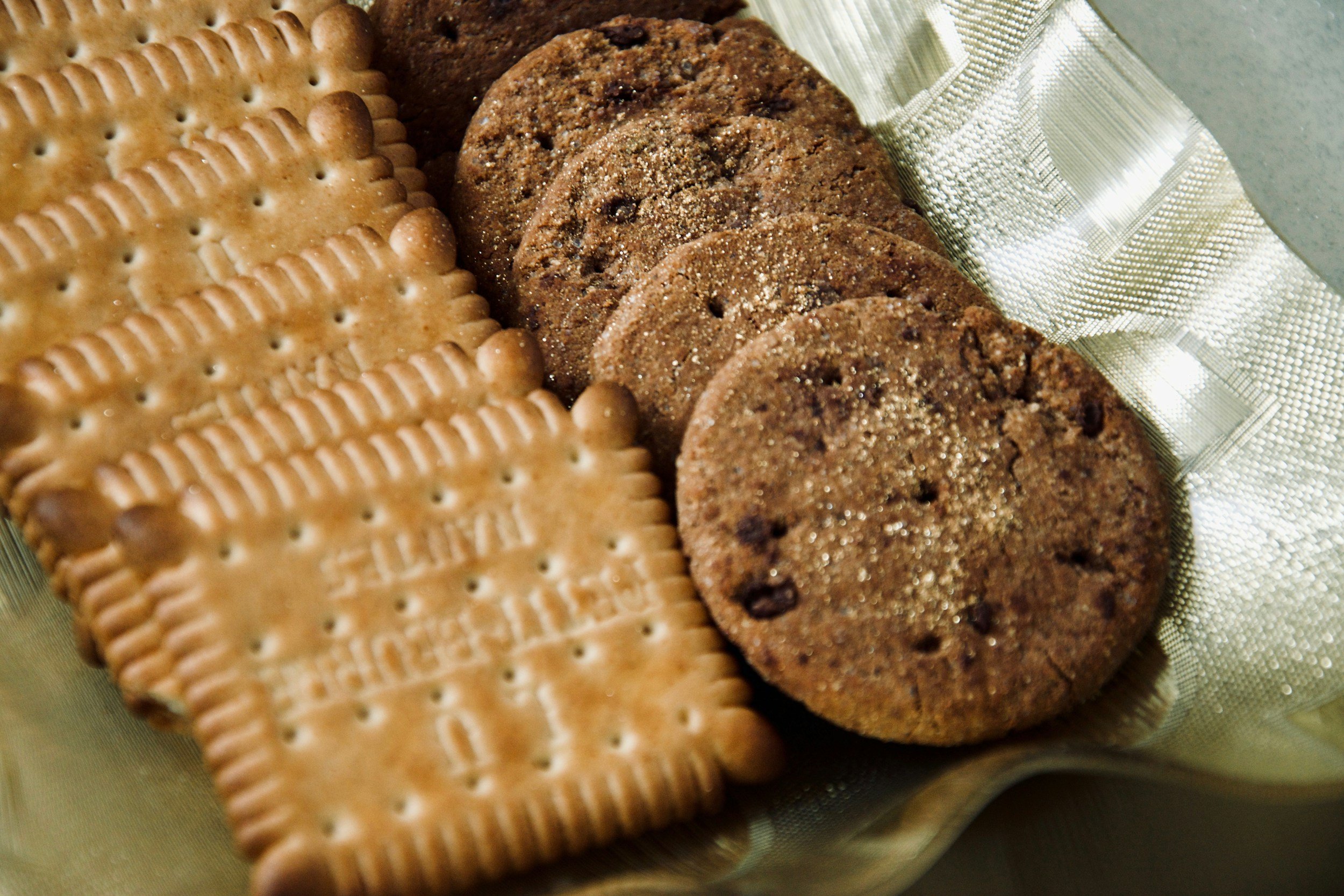
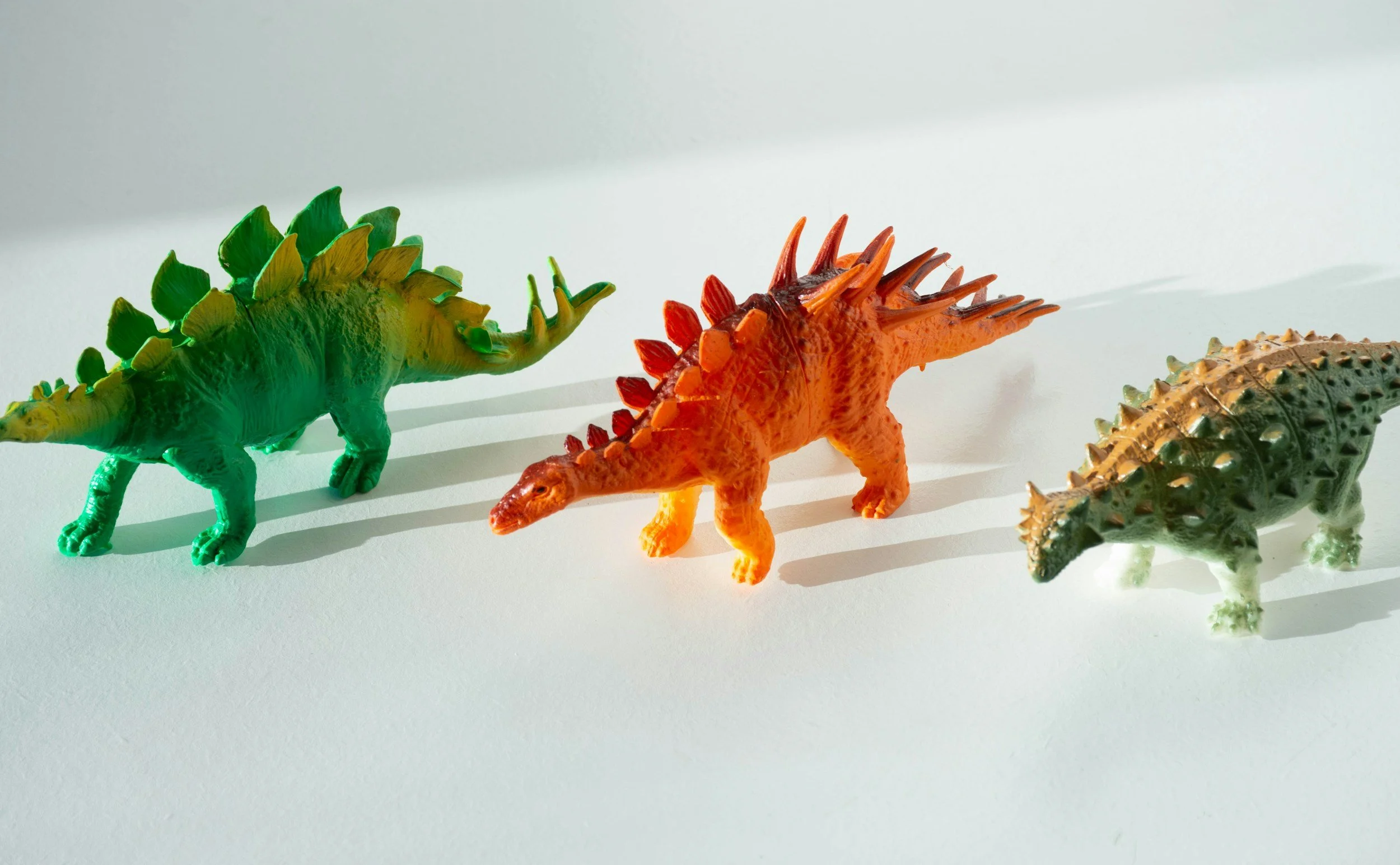
The interactive above is built to make that process visible without immediately turning into a lecture with buttons. You sort by one feature, then another, then by labels that carry no real substance of their own. The mechanism stays much the same while the feeling changes. What begins as a simple organisational move starts to look suspiciously like the early architecture of “us” and “them.” That is not because the app is secretly diagnosing you. It is because the mind needs far less material than we would like to admit before a category starts to feel like a fact.
Simply Put Psych · Interactive Demo
Human beings do not just notice difference. We organise it, label it, and start attaching meaning to it with unnerving speed. This interactive will not diagnose you. It will show how little raw material the mind needs before categories begin to feel real.
Phase 1
That is the uncomfortable part. Categories begin as shortcuts. Then they gather labels, expectations, preference, suspicion, status, and story. By the time we think we are simply “seeing what is there,” we are often standing in a structure the mind built far faster than we noticed.
What this interactive is actually showing
At its core, the experiment is a demonstration of social categorisation. The user is asked to sort based on minimal cues, then to notice how quickly the sorting process stabilises into something that feels coherent. Psychology has been circling this for decades. Research on minimal group procedures found that people can show in-group preference and discriminatory allocation even when the groups are arbitrary, recently created, and stripped of any meaningful history or practical stakes. In other words, groupness does not need much raw material before it begins to do psychological work.
That matters because the sequence is psychologically familiar. Categories appear quickly. Meaning gets attached after the fact. Confidence rises even when the information has not. The result can feel intuitive, obvious, even natural, despite resting on remarkably thin foundations. Much of the research on intergroup bias makes the same basic point in more technical language: people often favour in-groups over out-groups not only when there is deep conflict, but also under very minimal conditions where group boundaries are flimsy and newly imposed.
There is a grim little elegance to that. We often tell ourselves that serious bias must come from serious causes. Sometimes it does. But psychology keeps finding that categorisation itself has force. Not the whole story, obviously. History, institutions, status, norms, and power all matter enormously. Still, the mind’s habit of converting distinctions into social meaning is one of the mechanisms that makes the larger mess easier to sustain.
Why humans categorise at all
The first answer is efficiency. Categorisation reduces complexity and speeds judgment. It allows people to navigate a world that would otherwise be cognitively unmanageable. That applies to objects, events, and people alike. In social life, those categories can be based on visual cues, labels, inferred group membership, or the expectations brought to an encounter before a word has been exchanged. Social neuroscience work suggests these categorisation processes can begin very quickly, unfolding over the course of a few hundred milliseconds rather than after some leisurely period of careful reflection.
That speed is part of the problem. A process that begins quickly can feel like perception rather than interpretation. It feels as though you are simply noticing what is there. But social categorisation is not a transparent mirror of reality. It is an active mental simplification shaped by attention, memory, goals, prior learning, and context. Even the neuroscience literature is careful here. Group perception is not just a matter of spotting a visible feature and reading off its meaning. Top-down expectations and learned associations influence how group membership is perceived and how rapidly it is treated as relevant.
That is why categories can become sticky even when they began as nonsense. Once a label exists, it is easier to remember, easier to repeat, easier to defend, and easier to attach inference to. A category that begins as a convenience can become a default frame. Then it becomes a social fact in practice, not because it was ever especially deep, but because enough minds started thinking through it.
When labels become identity
One of the more unsettling lessons from minimal group research is that arbitrary categories can still provoke preference for one’s assigned side. Participants do not need a long shared history, intimate knowledge of fellow members, or real conflict of interest before in-group favouritism begins to appear. They merely need a group boundary and some reason, however contrived, to treat it as theirs.
This is one reason labels matter so much. Labels do not just name groups. They help stabilise them. Once something has a name, it is easier to imagine it as coherent, easier to discuss it as if it has a shared essence, and easier to smuggle expectations in behind the description. The category starts to feel like something discovered rather than something constructed. That is often where stereotype begins gaining traction. The label looks descriptive, but it quietly becomes explanatory as well.
This is also where people get defensive. Once a category feels real, any challenge to its meaning can feel like an attack on common sense itself. After all, the distinction is right there, apparently visible. But visible difference is not the same thing as socially meaningful difference, and socially meaningful difference is not the same thing as destiny, competence, moral worth, or threat. That gap is where a great deal of trouble lives.
The problem is not that we categorise
It is worth being precise here, because bad writing on bias often collapses into piety quite quickly. The problem is not that humans categorise. We have to. The problem is that we routinely mistake categorisation for understanding. We move from noticing a difference to treating it as explanatory, then from explanation to expectation, and from expectation to confidence. By that point the category can feel like evidence, even when it has mainly been doing the work of reducing ambiguity.
That is why the final phase of the interactive matters. Once groups exist, the move from classification to preference no longer feels absurd. Give one side a tiny advantage, a flattering description, or a whiff of default legitimacy, and the whole thing starts to acquire a shape that seems arguable rather than arbitrary. This is how categories thicken. First a distinction. Then a label. Then a preference. Then a story about why the preference makes sense. None of that requires a master ideology at the beginning. Often it just requires repetition and enough social reinforcement that the structure starts to feel like reality.
Intergroup psychology has also been careful to distinguish in-group favouritism from full-blown out-group hatred. These are related, but not identical, processes. Sometimes what looks like hostility is driven more by preferential treatment of “us” than by active malice toward “them.” That does not make it harmless. It just makes it more ordinary, and therefore harder to notice.
What can be done with that knowledge
Awareness is not a magic cure, but it is not nothing either. One of the reasons intergroup contact remains important in the literature is that under the right conditions it can weaken rigid group boundaries, complicate stereotypes, and shift how people think about one another. Pettigrew’s review of contact theory argues that equal status within the situation, common goals, cooperation, and authority support all matter, while also stressing the processes through which contact works, including learning about the out-group, changes in behaviour, affective ties, and reappraisal of one’s own group. In plainer English, people often think more clearly once the category stops doing all the talking.
That does not mean we can abolish categorisation and drift into some blissful post-group fog. It means we can get a bit less sentimental about our intuitions. The fact that a grouping feels immediate does not make it wise. The fact that a category is familiar does not make it natural in any deep moral sense. And the fact that a distinction exists does not tell us what significance it deserves. The mind is very good at sorting. It is less reliable when it starts treating the sort as a verdict.
How this interactive can be used
Used lightly, this works as a classroom demonstration for psychology, sociology, politics, or media studies. It can also function as a discussion starter for social perception, stereotyping, group identity, and the difference between noticing a pattern and loading it with narrative. In article form, it works best as a companion to writing on prejudice, media framing, political tribalism, or the everyday cognitive habits that make larger systems feel inevitable. The mechanics are deliberately simple. The implications are not.
Simply Put
The categorisation effect is not really about proving that people are secretly monstrous after three clicks and a shape-sorting task. That would be childish. It is about showing how quickly the mind begins to build social structure out of limited information, and how easily that structure can start to feel self-justifying. Categories help us think. They also help us stop thinking. The danger begins when we can no longer tell which job they are doing.
References
Pettigrew, T. F. (1998). Intergroup contact theory. Annual Review of Psychology, 49, 65-85.
Table of Contents