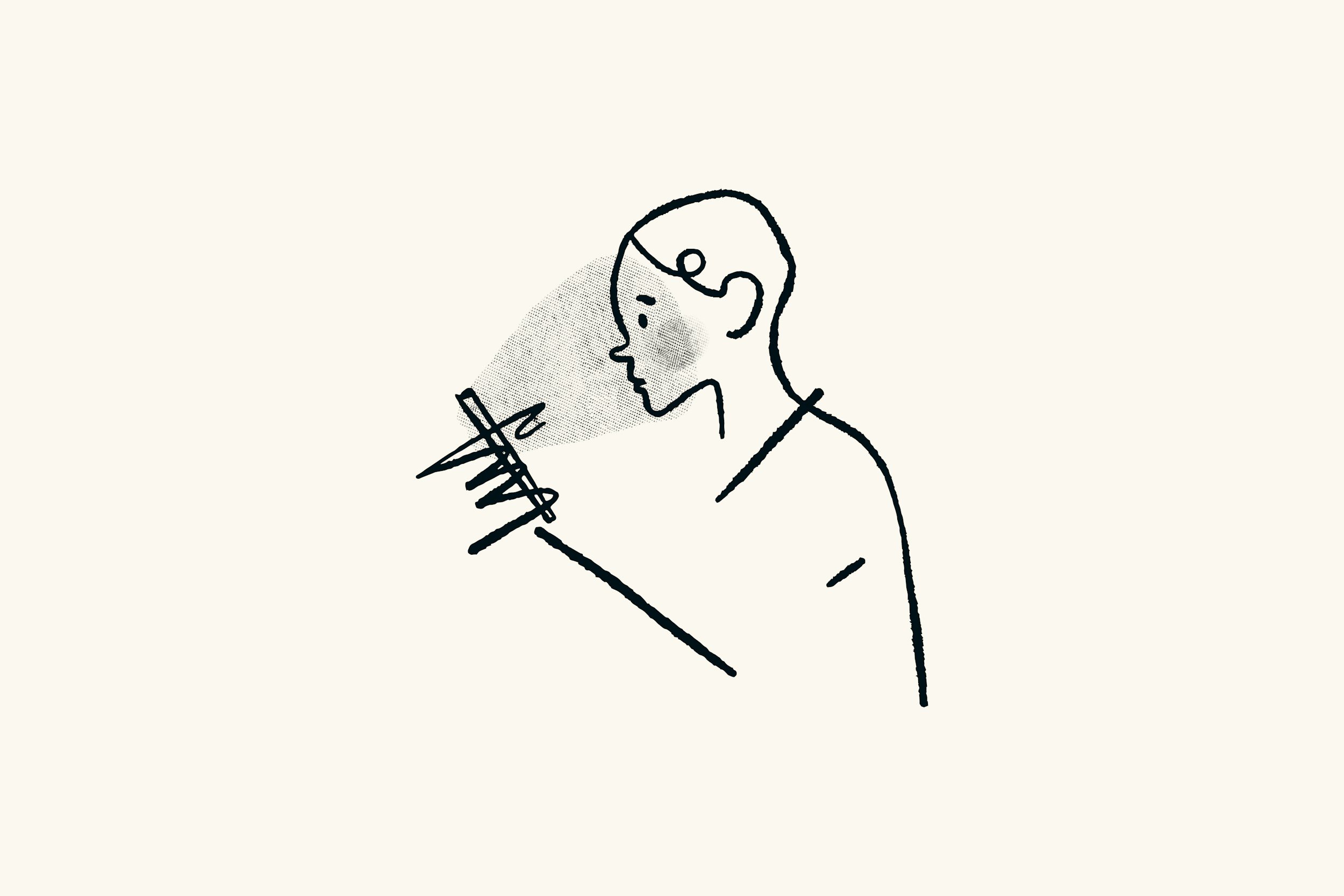
As our devices become inseparable from our daily lives, the human mind is evolving into a hybrid system that relies on both biology and technology. This essay explores how external tools have become a quiet extension of our cognition, reshaping memory, identity and the very boundaries of thought.
There is a quiet transformation happening inside our skulls, although nothing in the brain itself has changed. Neurons still fire the way they did for ancient hunters and medieval merchants. Memory still works through the same delicate choreography of encoding and recall. Yet the way we use our minds is shifting in a profound and possibly irreversible way. We are becoming creatures who think partly in their own heads and partly through a lattice of tools that surround us. The phone in a pocket, the search engine at our fingertips, the cloud notes that travel from device to device, all of these form a kind of external lobe. It is not biological, but it performs the functions of one. With it, we feel powerful and informed. Without it, we feel oddly diminished.
A Long Line of Cognitive Tools
This is not the first time humans have extended their minds beyond their bodies. We have always done this. The earliest symbols carved on bones were attempts to freeze a thought so it could outlive the thinker. Writing did more than preserve information. It reshaped what a human mind could afford to forget. Once people began writing in clay and ink, they no longer needed to hold every detail inside their heads. A farmer did not have to remember every trade he had made at the market. A ruler did not have to recall every promise or decree. These things could be placed outside the skull where they were safer from error. This shift did not weaken human memory. It freed it. What we call civilization is essentially a long conversation that writing allowed us to have with the future.
Books continued the pattern. Maps continued it. Tools of calculation continued it. Each new invention took one task away from raw biology and handed it to something sturdier or faster. This slow, steady migration of mental labor has shaped the modern mind so thoroughly that we seldom notice what has been lost or gained. The contemporary world, however, has accelerated this migration to such a degree that we can feel the shift in real time.
Life Without Our Extensions
If you want proof of the extended mind, imagine being dropped into your own city without your phone. You could still find your way home, but only through the fog of half-remembered streets. You could still reach your friends, though not without a scramble for numbers that no longer live in your memory. You could still recall facts for a conversation, although the ease of tapping a question into a search bar has trained you to know less and look up more. You are still a human being, but the scaffolding that normally supports you has vanished. In that moment you can sense how much of your cognition sits outside your skin.
The Cleverness of Cognitive Offloading
People often describe this with anxiety. They speak of digital amnesia as if it is a disease. They assume that relying on devices weakens the mind. The truth is more nuanced. The brain has evolved to be economical. It tends to offload tasks not because it is failing but because it is clever. Memory is expensive. It takes effort to encode facts and vigilance to retain them. The brain has always preferred to store what matters emotionally or socially and leave the rest in an accessible place. For thousands of years that place was writing. Today it is whatever screen is nearest.
What has changed is the speed of the exchange. The instant access provided by SSDs and search engines has created a new pattern of cognitive behavior. We remember less about the world and more about where the world is stored. This is the Google Effect, the idea that we do not keep facts in our heads as much as we remember how to retrieve them. The brain is not growing weaker. It is reallocating resources. It no longer needs to be a library. It functions more like an index.
A Larger and More Capable Mind
This shift may feel like a loss, but it is also a profound gain. With our technological extensions, we can summon information that no human mind could hold on its own. We can carry a map of the globe, a repository of literature, a calculator of impossible scale, and a record of our social ties all within a thin rectangle of circuits. The external mind is far larger than the internal one ever could be. It increases our reach and our capability in ways that are easy to overlook because they feel normal now.
The problem is not the existence of this extension but how completely we depend on it. When people lose access to their devices, they feel a sudden cognitive shrinkage. They sense that part of their mind has gone offline. This feeling is not an illusion. It is a direct consequence of building a cognitive system that relies on external components. A person can think without their devices, but it feels similar to trying to walk without a familiar cane. The body is capable. The habit is not.
The Echo of Older Transformations
This dependence mirrors other moments in human history when technology reshaped biology indirectly. When clothing became universal, we lost the need for thick body hair. When cooking softened food, our jaws became smaller. When artificial light extended the day, our natural adaptations to darkness weakened. Cultural change arrived much faster than biological evolution could follow, and those cultural habits altered what traits were useful or necessary. As a result, certain biological features diminished over generations because they were no longer relevant.
The extended mind may eventually leave similar traces, although not immediately. Evolution is slow, and most of the cognitive changes we see today are cultural rather than genetic. Forgetting phone numbers does not affect reproductive success. Relying on search engines does not alter which genes get passed on. The people of the future will still have brains capable of memory. What may shift instead is how we choose to use those brains. Over centuries, if external memory tools become deeply embedded in society or even integrated directly into neural interfaces, some kinds of biological memory might become less necessary. This is speculation, but it follows the same patterns we have seen before.
A Hybrid Mental Existence
What is certain is that our mental life is already hybrid. We think in partnership with tools. We store pieces of ourselves in devices. Our ideas live partly in clouds of data that no one can see or touch. This relationship is intimate enough that losing the tool feels like losing a part of our own mind. The line between self and device is blurred, not in a science fiction sense but in a functional one.
Some people see this as the beginning of decline. Others see it as the dawn of a new kind of intelligence. The reality is probably more balanced. Human cognition is expanding in some directions and contracting in others. We are gaining breadth and losing redundancy. We are becoming more capable with tools and more limited without them. This is not a flaw. It is the natural outcome of a species that has always survived through invention.
Who We Are Becoming
The question that remains is simple. Who are we becoming when such a large portion of our thinking happens outside ourselves? The answer may be that we are becoming something that has existed in potential since the first marks on stone. We are creating minds that are not confined to flesh. We are building a partnership between biology and technology that allows us to exceed the limits of either alone. This partnership changes us, but it also fulfills a very old human desire. We have always tried to reach beyond our own thoughts. Now we finally can.
If this is the age of the extended mind, then our task is not to fear the change. Our task is to understand it. We must learn to navigate a world where our abilities depend on systems we did not evolve with and often cannot fully control. We must find ways to maintain our humanity even as our tools become increasingly woven into our thinking. The future will belong to those who can balance the strength of their internal minds with the power of their external ones. In this balance, we may discover a new version of ourselves, one that is both ancient and transformed, and entirely at home in a world where the boundaries of thought have widened beyond measure.
Table of Contents