The Lasagna Problem: A Moral Dilemma No Philosopher Warned Me About
A simple ready meal reveals a surprisingly complex moral dilemma. When a the ingredients in a lasagna turn out to contain something that goes against my ethics, the decision of whether to eat it or throw it away exposes a deeper question in moral psychology: how do we make ethical choices when every option carries some form of harm?
Part I: The Moment the Label Changes Everything
I was genuinely looking forward to that lasagna.
Not in the dramatic, life-changing sense. Just the quiet anticipation of a good meal at the end of a long day. The sort of anticipation that accumulates slowly in the background while emails pile up, tasks multiply, and the day stretches further than expected.
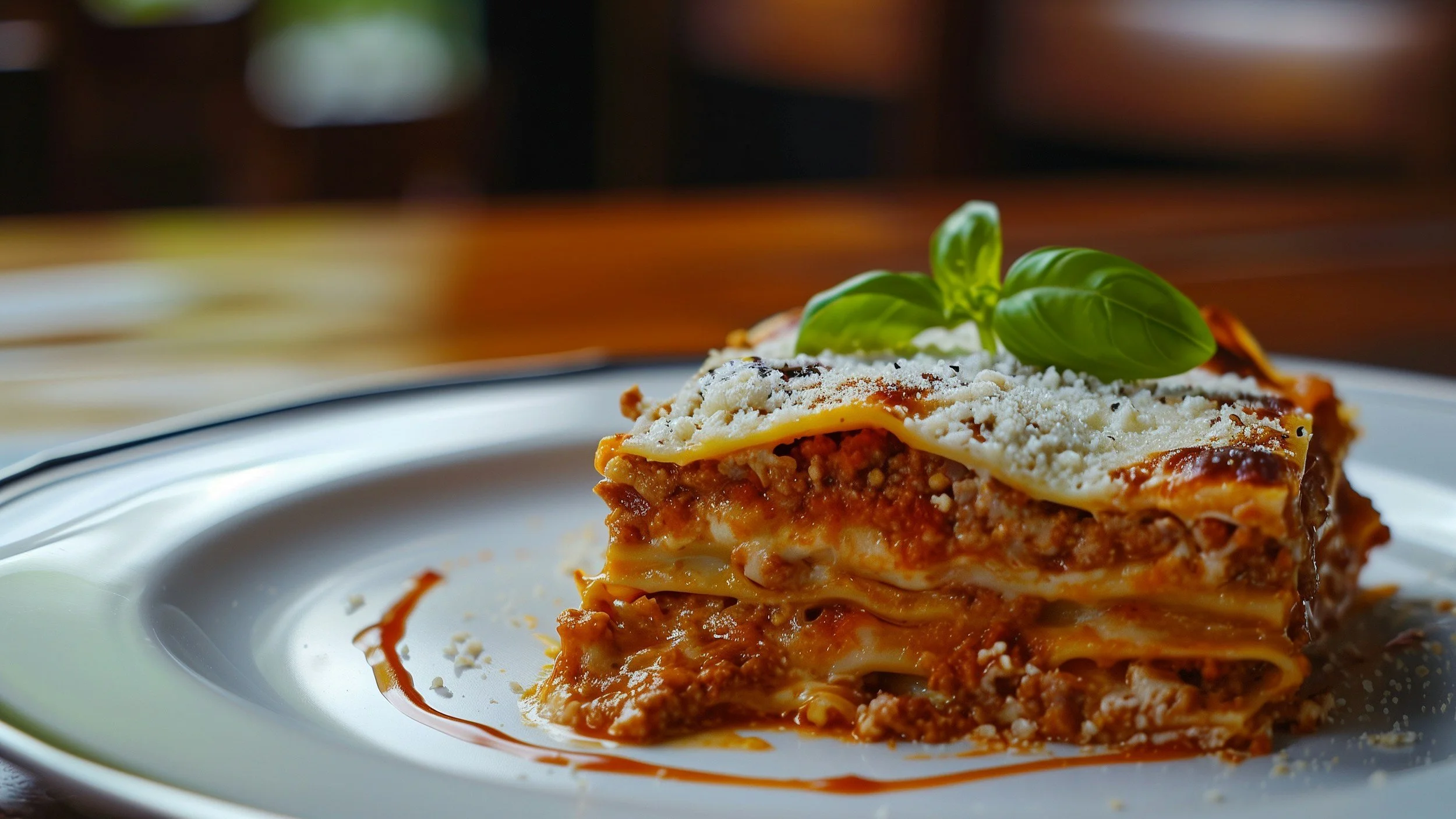
Dinner had already been decided. Chicken lasagna. Comfort food. Simple.
For context, I avoid eating mammals for ethical reasons. Not because I am trying to be morally pure, and not because I believe everyone should follow the same rules. It is simply where my personal line ended up after years of thinking about animal cognition, suffering, and environmental impact.
Pigs are intelligent. Cows are intelligent. Their capacity for suffering is difficult to ignore once you start reading the research.
So I do not eat them. Basically I don’t eat anything with a layered neocortex. That is my personal threshold for suffering, beit right or wrong.
Fish I still eat occasionally. Scallops more often. It is not a perfect system, but it is an attempt to reduce harm while still living in the real world.
Or at least that was the plan.
The lasagna was already in the kitchen. I turned the box over absent-mindedly, scanning the ingredients list the way many people do. Half paying attention. Half not.
Then one line stopped me.
Contains 4% pork.
Four percent.
Not pork lasagna. Not even pork and chicken lasagna.
Just four percent pork quietly folded into the tomato sauce like a culinary afterthought.
I stared at the box for longer than I care to admit.
Because suddenly this was no longer just dinner.
It had become a moral problem.
Part II: The Silent Ethics of the Kitchen
The immediate instinct was simple.
Throw it away.
If you do not eat pork, you do not eat pork. That seems straightforward enough.
Except it was not.
Throwing it away would not undo anything. The pig had already been slaughtered. The product had already been manufactured, transported, refrigerated, and sold.
Discarding the lasagna would not save a pig.
It would simply mean the pig had died for a meal that ended up in the bin.
That did not feel morally satisfying either.
Perhaps I could return it.
But returning it would almost certainly lead to the same outcome. Supermarkets do not place returned ready meals back on the shelf. They dispose of them.
Again, waste.
Then another thought appeared.
Cook something else.
But that solution carried its own quiet arithmetic.
Another meal would require more energy, more resources, and possibly another animal product. Replacing the lasagna with a chicken or fish meal would mean additional farming, additional emissions, additional suffering.
Suddenly the simple rule “do not eat mammals” had collided with another principle:
Do not waste food unnecessarily.
The two values were now pointing in opposite directions.
And there I was, standing in the kitchen, holding a lasagna like it was a philosophical grenade.
Part III: The Mathematics of Moral Discomfort
The strange thing about moral dilemmas is that they rarely announce themselves.
There is no dramatic music. No flashing warning signs.
Just a quiet moment where your internal rulebook suddenly becomes inadequate.
The pig was already dead.
The purchase had already happened.
The only remaining variable was what happened next.
Throwing the lasagna away would not reduce animal suffering. It would simply increase waste.
Eating it would violate a personal rule, but it would not increase harm. The harm had already occurred.
In other words, the ethical decision had shifted from preventing harm to deciding how to respond after harm had already happened.
That is a very different kind of moral problem.
And one that philosophers rarely talk about.
Part IV: Why This Feels Worse Than It Should
Part of the discomfort came from something psychologists know well: moral identity.
When people adopt ethical habits, those habits become part of how they see themselves.
“I do not eat mammals.”
It is a small sentence, but it carries weight. It becomes a shorthand for a broader set of values.
Compassion. Sustainability. Responsibility.
Breaking that rule—even accidentally—can feel like a threat to that identity.
Yet rigid moral rules can also produce strange outcomes.
If the lasagna went into the bin, the result would be greater waste and no reduction in suffering.
In that moment, the question quietly shifted.
This was no longer about maintaining a rule.
It was about deciding which value mattered most in this particular situation.
Part V: The Decision
In the end, I ate the lasagna.
Not because pork suddenly became acceptable.
Not because the rule disappeared.
But because the pig had already been killed, the purchase had already been made, and throwing the meal away would simply increase waste and environmental cost.
It was not a triumphant decision.
It was a pragmatic one.
A small attempt to minimise additional harm after the fact.
And that was when I realised something interesting.
This tiny kitchen dilemma was far more psychologically realistic than one of the most famous thought experiments in philosophy.
Part II: Why the Lasagna Problem Is Better Than the Trolley Problem
The Limits of the Trolley Problem
For decades, moral psychology has relied on variations of the trolley problem.
A runaway trolley is heading toward five people tied to a track. You can pull a lever to divert it onto another track where it will kill one person instead.
Should you pull the lever?
The scenario is designed to test the tension between utilitarian reasoning (saving more lives) and deontological ethics (not intentionally causing harm).
It has produced decades of research.
But the trolley problem has a major limitation.
It does not resemble the moral decisions people actually face.
Real ethical dilemmas rarely involve instant life-or-death choices between strangers tied to railway tracks.
Instead, they look more like the lasagna problem.
What Makes the Lasagna Problem Psychologically Realistic
The lasagna dilemma contains features that are common in real ethical decisions but absent from the trolley problem.
1. Irreversible Past Harm
The pig has already been killed. The harm cannot be undone.
2. Imperfect Information
The pork was discovered after purchase.
3. Competing Moral Principles
Avoiding animal suffering conflicts with avoiding food waste.
4. Moral Identity
Personal ethical rules shape how the decision feels psychologically.
5. Incremental Consequences
The decision does not determine life or death. It shifts harm slightly in one direction or another.
These factors make the scenario far closer to the kinds of moral trade-offs people encounter in everyday life.
Real Moral Decisions Are Messy
One reason the trolley problem remains popular is that it simplifies ethics into a clear binary choice.
Pull the lever or do nothing.
But real moral reasoning rarely operates in such clean terms.
People blend multiple ethical frameworks:
Consequentialism (minimising harm)
Virtue ethics (acting in accordance with values)
Intent-based ethics (considering whether harm was intended)
The lasagna problem forces these frameworks to interact in ways the trolley problem does not.
The Ethics of Imperfect Worlds
Perhaps the most important lesson of the lasagna dilemma is this:
Many moral decisions take place after harm has already occurred.
The question is not how to prevent harm entirely, but how to minimise further harm in an imperfect system.
Food systems are messy. Supply chains are complex. Mistakes happen.
Ethical living is not about achieving perfect moral purity.
It is about navigating those imperfections thoughtfully.
Sometimes that navigation begins with something as small as reading the ingredients list on a ready meal.
Questions to Reflect On
Does intention matter morally if the outcome is the same?
Is wasting food ethically worse than breaking a personal dietary rule?
Should ethical systems allow exceptions for genuine mistakes?
How should we balance animal welfare against environmental impact?
Simply Put: Ethics in an Imperfect World
The lasagna was good.
That detail matters more than it might seem. Not because the flavour justified the decision, but because it revealed something quietly uncomfortable about the way we imagine moral life.
Ethics is often presented as if it exists in pristine laboratory conditions. Philosophers construct perfect dilemmas with perfect information and immediate consequences. A trolley races down a track. Five lives on one side. One life on the other. Pull the lever or do nothing.
The scenario is clean. The logic is sharp. The choice is dramatic.
Real life is rarely like that.
Real moral decisions happen slowly, in kitchens and supermarkets, offices and conversations. They appear in ingredient lists, unexpected emails, awkward compromises, and moments where our principles collide with the messy realities of the world we inhabit.
The lasagna problem is not dramatic. No lives hang in the balance. No heroic sacrifice is required.
And yet it contains the same fundamental question the trolley problem tries to capture:
How should we act when every available choice carries some form of harm?
In those moments, moral purity becomes difficult to maintain. Every decision involves trade-offs. Every principle eventually encounters an exception.
The pig had already died.
The product had already been purchased.
Throwing the meal away would not restore the past.
What remained was a quieter question:
What action now produces the least additional harm?
That is the kind of ethical reasoning people actually perform in their daily lives. Not dramatic calculations about saving five strangers on a railway track, but small negotiations between competing values.
Compassion.
Responsibility.
Waste.
Consistency.
The goal is not perfection. Perfection is rarely available.
The goal is direction.
An ethical life is less like following a rigid set of rules and more like steering a ship through fog. The destination remains clear, but the path is constantly adjusted as new obstacles appear.
Sometimes that adjustment happens in unexpected places.
Like a quiet moment in a kitchen.
Holding a box of lasagna.
Reading an ingredient list that changes everything.
Not every moral dilemma arrives with the thunder of runaway trains.
Some arrive with four percent pork in the sauce.
Table of Contents