
Psychology of Christmas Nostalgia: Why December Feels Like Memory
Why does December feel less like a month and more like déjà vu with twinkly lights? This article unpacks the psychology of Christmas nostalgia, drawing on memory science, ritual theory, and cultural conditioning. For anyone seeking to understand holiday nostalgia, emotional memory, and why Christmas feels suspended between past and present, consider this your psychological field guide.
Christmas nostalgia is one of the most potent emotional cocktails in the cultural year—warm, familiar, oddly cinematic, and disproportionately powerful compared to its actual duration. Other holidays may be joyful or meaningful, but Christmas (and the December season around it) is uniquely susceptible to feeling like a memory even while it's happening.
Psychologists have long noted that nostalgia isn't just a wistful backward glance: it's a psychologically functional state, a cultural script, and a sensory-encoded experience. December simply happens to be a perfect storm for all three.
Below, we unpack the underlying mechanisms—cognitive, emotional, cultural, and sensory—that make the holiday season feel like slipping into a well-worn memory.
Nostalgia as an Emotion—and Why Holidays Trigger It
Modern researchers treat nostalgia as a discrete emotional experience rather than a personality quirk. Constantine Sedikides and colleagues define nostalgia as a “bittersweet, self-relevant, and socially grounded emotion” that emerges when we confront discontinuity—changes in identity, relationships, or life circumstances.
Christmas, saturated with rituals and routine, practically engineers such discontinuities:
We notice how we’ve changed since last year.
We compare present relationships to past ones.
We revisit the same songs, foods, and spaces that highlight the passage of time.
Nostalgia arises when familiarity collides with our awareness that the familiar is no longer the same.
This emotional mechanism explains why Christmas can feel strangely “time-looped.” Every December invites a psychological comparison between past and present selves—one of nostalgia’s most reliable triggers (Sedikides et al., 2008).
Rituals as Temporal Anchors
Anthropologists describe rituals as temporal anchors—behaviours that compress time by repeating with symbolic consistency. Christmas rituals (tree decorating, particular foods, the annual Mariah Carey resuscitation) function as recurrence points. They collapse the distance between now and then.
Psychologically, rituals do four things especially well:
They stabilise meaning.
Rituals give shape to values—family, generosity, belonging—in predictable ways (Hobson et al., 2018).They intensify attention.
Repetition under emotionally salient conditions heightens encoding.They sync personal and collective memory.
Everyone is repeating roughly the same behaviours at the same time, making memory socially reinforced.They dramatise the passage of time.
You only unpack ornaments once a year—built-in emotional punctuation.
The result? Christmas becomes a dense cluster of memory cues, which make the present feel like a continuation of every December before it.
The Neuroscience of “Holiday Memory”
From a cognitive standpoint, Christmas nostalgia is deeply sensory—rich in the exact cues that enhance memory consolidation.
1. Olfactory Flashbacks
Smell is notoriously effective at evoking autobiographical memory (the “Proust phenomenon”). Pine, clove, cinnamon, cold air, even old cardboard ornament boxes—these activate neural pathways that bypass typical memory filters, producing vivid, sometimes startling recollections.
2. Music as an Autobiographical Time Machine
Holiday music is repetitive across years, meaning most people accumulate a multi-decade soundtrack of December.
Research on music-evoked autobiographical memories (MEAMs) shows that familiar songs disproportionately activate the medial prefrontal cortex—especially resistant to age-related decline (Janata, 2009).
This helps explain why older adults often report intensely vivid Christmas memories: the brain’s music-memory system remains robust and emotionally charged.
3. Emotional Arousal & Memory Encoding
Emotional events produce stronger, more durable memories due to the role of the amygdala in modulating hippocampal encoding (McGaugh, 2004).
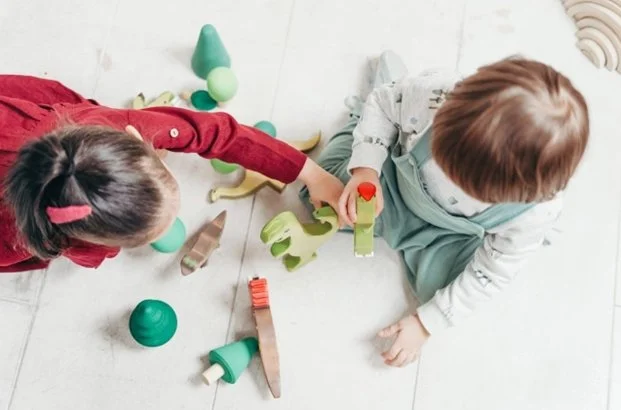
For children, Christmas tends to be emotionally amplified—anticipation, novelty, tradition, social gathering—which sets the stage for unusually strong autobiographical memories.
Thus, adult Christmas nostalgia is often childhood nostalgia in disguise.
Cultural Conditioning: How Society Teaches Us to Remember Christmas
Psychology alone cannot explain Christmas nostalgia. Part of its emotional force derives from cultural reinforcement.
1. The Christmas Narrative
Western culture frames Christmas as a repository of meaning—family, home, warmth, generosity. Even people who do not celebrate the holiday absorb the cultural script.
This script serves as a mnemonic scaffold, telling us what to pay attention to and how to feel about it.
2. Media as Inherited Memory
Holiday films, songs, and advertising create a collective nostalgia loop. We inherit memories that may never have been ours—Victorian carolers, snowy towns, uninterrupted multigenerational harmony—yet they color how we interpret our own experiences.
The result is an idealised nostalgia: a sense of longing for a Christmas that is partly lived experience and partly cultural mythology.
3. The Commercial Rhythm of the Year
December is also the most aggressively curated month in the commercial calendar. Retail environments standardise the sensory season—lights, scents, soundtracks—ensuring consistent annual exposure to the same cues.
This externally imposed repetition strengthens the associative network of holiday-related memory.
Temporal Self-Comparison: December as a Psychological Mirror
Psychologists refer to “temporal self-appraisal,” the process by which we compare our current self to past selves (Ross & Wilson, 2002). December, arriving at the end of the calendar year, amplifies this dynamic.
Christmas becomes a reflective checkpoint:
Who was I this time last year?
Who is missing this year?
What has changed in my family, my finances, my living situation?
Am I closer to or further from the person I hoped to be?
Nostalgia serves as a regulatory response to these uncomfortable evaluations. Studies show nostalgia increases self-continuity—the feeling that one’s identity is coherent across time (Sedikides et al., 2015).
In other words, when Christmas highlights change, nostalgia steps in to smooth the psychological edges.
The Paradoxical Comfort of Bittersweetness
One of the most misunderstood aspects of nostalgia is its dual affect: warm yet sad.
Psychologically, nostalgia functions this way because:
It evokes positive affect (belonging, identity, warmth).
It acknowledges loss or change (time passing, relationships shifting).
Christmas is an ideal incubator for this bittersweetness. The season blends joy with reminders of absence—people who have died, traditions that have changed, childhoods that have ended, relationships that no longer exist.
But this bittersweet emotionality is not a flaw; it's the functional core. Research shows nostalgia increases:
social connectedness
meaning in life
optimism
tolerance for existential threat
The sadness is what allows the warmth to land.
Why December Feels Slow—But Also Goes Fast
A curious phenomenon: people often report that December feels simultaneously elongated (rituals, cultural buildup) and ephemeral (“the holidays flew by”).
This paradox can be explained through two psychological mechanisms:
1. Prospective vs. Retrospective Time Perception
In the moment, attention-rich experience feels slow. Decor choices, travel logistics, family dynamics—these are cognitively demanding.
But retrospectively, when memory compresses repeated events, time appears shorter. Christmas rituals, repeated annually, create few novel memory “bookmarks,” causing the entire month to feel condensed when looking back.
2. Anticipation
Anticipation expands subjective time. Children experience “the long December” because their cognitive focus is future-oriented (e.g., gifts, school holidays). Adults, burdened with responsibility rather than anticipation, tend to experience the opposite.
This divergent temporal experience is why Christmas nostalgia often gravitates toward childhood: our early Decembers simply felt longer.
Modern Life: The New Layers of Christmas Nostalgia
Contemporary culture adds new psychological textures to Christmas nostalgia.
1. Digital Memory Trails
Smartphones have turned Christmas into a documented ritual.
Every year, social media platforms feed us “A year ago today…” reminders, effectively reinforcing nostalgic loops with algorithmic precision.
2. Fragmented Families & Friendsgiving Culture
The rise of blended families, long-distance migration, and chosen-family holidays increases the emotional complexity of December. Nostalgia becomes a negotiation between multiple pasts and multiple loyalties.
3. Pandemic Influence
The COVID-19 pandemic produced a sharp rupture in ritual continuity. For many, post-pandemic Decembers feel charged—either with relief (“back to normal”) or loss (“things are not the same”).
Psychologically, disrupted rituals intensify nostalgia, since they highlight temporal discontinuity.
Why Nostalgia Isn’t (Necessarily) Sentimental Escapism
Critics sometimes argue that nostalgia is inherently regressive—a refusal to engage with the present.
But psychological literature paints a more nuanced picture.
Nostalgia, when functioning adaptively:
regulates emotion, especially loneliness
supports identity, helping people integrate change
strengthens social bonds, even symbolically
inspires future-oriented behaviour, despite its backward gaze
The key distinction is intentionality.
Nostalgia becomes maladaptive when used to avoid present challenges rather than to make sense of them.
Christmas doesn’t create the avoidance—if anything, its rituals often highlight unresolved tensions. But nostalgia can offer a stabilising narrative to navigate those tensions.
Simply Put
Because Christmas is constructed—psychologically, culturally, neurologically—to be remembered.
It is engineered from repeated cues, emotionally heightened contexts, and a collective cultural script that invites reflection. It compresses personal history, overlays it with shared mythology, and presents the result back to us each year like a familiar film with a slightly altered cast.
December is a memory because we keep rehearsing it.
And perhaps that’s the real psychological function of Christmas nostalgia: not to escape into the past, but to give the present a sense of lineage—so that each new December becomes not a standalone point in time, but a chapter in a story we are still learning how to tell.
References
Table of Contents








Parties can be fun, awkward, noisy, overwhelming, or all of those within ten minutes. This article explores the psychology of social gatherings, small talk, social anxiety, sensory overload, conversation, exits, and the quiet strategic value of the snack table.