
ASMR and the Psychology of Being Soothed by Strangers
ASMR is easy to mock.
A stranger whispers into a microphone, taps a glass bottle, folds towels with alarming seriousness, brushes a fake scalp, or pretends to give you an eye exam while half the internet quietly relaxes into a state normally achieved only by cats and people who have never checked their energy bill.
On the surface, it looks absurd. Sometimes it is absurd. There are only so many videos of someone softly inspecting a wooden spoon before the human species has to ask itself a few questions.
But ASMR also makes psychological sense.
Autonomous Sensory Meridian Response, or ASMR, usually refers to a pleasant tingling sensation that begins around the scalp or neck and may travel down the spine. Not everyone experiences the tingles, and not everyone enjoys the content. For those who do, ASMR can feel calming, absorbing, safe and oddly intimate. Many people use it to relax, sleep, reduce stress, or create a little pocket of quiet inside a world that otherwise behaves like a badly managed group chat.
ASMR is not just “people liking whispers.” It sits at the intersection of sensory processing, attention, social comfort, digital intimacy, emotional regulation and the human need to be cared for without having to make conversation back.
Which, frankly, is a very modern need.
What ASMR Feels Like
People who experience ASMR often describe it as a tingling, fizzy, wave-like sensation across the scalp, neck, shoulders or spine. Others describe it less physically and more emotionally: calm, safe, sleepy, focused, comforted, or gently detached from stress.
The experience is usually triggered by specific sounds, sights or simulated social interactions. Whispering is the famous one, but it is far from the only trigger. Tapping, scratching, brushing, crinkling, page-turning, slow hand movements, careful demonstrations, personal attention, roleplay and repetitive tasks can all produce ASMR for some people.
The important phrase is “for some people.”
ASMR is highly individual. One person may feel a wave of relaxation from someone whispering and folding fabric. Another may feel nothing. A third may want to throw the headphones into the sea because mouth sounds have entered the room and ruined civilisation.
This variability is part of what makes ASMR interesting. It is not simply about the stimulus itself. It is about the relationship between the stimulus, the person, the context and the nervous system receiving it.
Why the Triggers Are So Specific
A lot of ASMR triggers have a strange precision to them.
Whispering. Tapping. Hair brushing. Measuring. Sorting. Gentle instructions. Soft movements. Small repeated sounds. Someone doing a task slowly and competently. Someone pretending to care for you with the emotional tone of a very calm optician.
These triggers often share a few features. They are predictable, low-threat, focused and controlled. They ask very little from the viewer. There is no need to answer, perform, explain, impress or manage anyone else’s feelings. You can simply receive the attention.
This is one reason personal attention roleplays are so common. Haircuts, eye exams, skincare routines, medical check-ups, make-up sessions, tailoring measurements, library assistance, spa treatments and whispered reassurance all simulate care. They recreate a situation where someone is focused on you, but safely and at a distance.
That distance is crucial. Real intimacy can be wonderful, but it also involves risk, expectation and reciprocity. ASMR offers a kind of intimacy without demand. The person on screen appears attentive, warm and careful, but they cannot reject you, misunderstand you, ask you to talk about your week, or notice that you are watching at 1:17 a.m. while holding your phone like a Victorian ghost with Wi-Fi.
It is care with a pause button.
Slightly bleak if inspected too closely, but also rather understandable.
ASMR and the Body
Research on ASMR is still relatively young, but it does suggest that the experience is more than a vague internet mood.
Early work by Barratt and Davis found that many ASMR users reported using videos for relaxation, sleep and mood regulation. Common triggers included whispering, personal attention, crisp sounds and slow movements. Poerio and colleagues later found that people who experience ASMR showed increased positive emotion and reduced heart rate while watching ASMR content, suggesting that ASMR can involve measurable physiological changes.
This is one of the more interesting parts of the phenomenon. ASMR can feel both relaxing and pleasurable. It is not simply sedation. It can involve calm, tingles, absorption and mild euphoria all at once. The body seems to settle, but attention remains gently engaged.
That combination may be part of the appeal. ASMR does not usually demand intense concentration, but it gives the mind something soft to hold. It is not silence, which can be uncomfortable for people whose thoughts immediately start rearranging furniture in the dark. It is not normal entertainment either, which often asks for emotional investment, narrative tracking, jokes, conflict or one more cliff-hanger from a streaming service that has already stolen the evening.
ASMR gives the nervous system a low-stakes object of attention.
A tap. A whisper. A brush. A slow movement. A tiny sound being treated as though it has diplomatic importance.
The Comfort of Predictability
Modern life is not especially gentle on attention.
Phones ping. News updates arrive. Tabs multiply. Work follows people home. Conversations blur into notifications. Even rest can become overstimulating, with people relaxing by watching content while also scrolling through smaller content, presumably because one rectangle was not enough.
ASMR works in the opposite direction.
It is slow. It is repetitive. It is controlled. It often uses quiet voices, predictable pacing and familiar routines. This predictability can be soothing because the viewer does not have to constantly reorient. Nothing sudden needs interpreting. Nothing urgent has to be solved. Nobody is shouting breaking news about something dreadful in a blazer.
For some people, ASMR may function like a sensory boundary. It creates a small, curated environment where the soundscape is manageable and the emotional tone is stable. That can be especially appealing for people who feel overstimulated, anxious, lonely, tired or mentally scattered.
This does not mean ASMR is a clinical treatment. It means people have found a way to regulate themselves using sensory and social cues. Humans have always done this. We use music, ritual, prayer, touch, rocking, storytelling, firelight, rain sounds, familiar voices, pets, routines and small acts of care to settle ourselves.
ASMR is not as strange as it first appears. It is an old need wearing headphones.
Digital Intimacy and the Stranger Who Seems to Care
ASMR is one of the clearest examples of digital intimacy.
The creator looks into the camera. They speak softly. They pay attention. They may simulate closeness, care, patience and reassurance. The viewer receives all of this privately, often in bed, often at night, often when tired or alone.
This is intimate, but not mutual. The creator does not know the viewer. The viewer may feel comforted by someone who will never know they exist. That is not fake exactly, but it is not the same as ordinary social connection either.
The internet is very good at producing these half-relationships. Parasocial contact, livestreams, podcasts, comfort videos, vlogs and ASMR all create forms of presence without direct reciprocity. Sometimes that is harmless and helpful. A familiar voice can genuinely soothe. A regular ASMR creator can become part of someone’s bedtime routine. A lonely person may feel less alone.
But there is a cultural sadness around it too. ASMR often works by simulating the kinds of attention many people do not receive enough of offline: patient, gentle, undemanding care. Someone takes time. Someone notices. Someone speaks softly. Someone does not rush.
It is worth asking why that feels so rare.
ASMR is not the problem. If anything, it is evidence of the problem. Many people are tired, overstimulated, touched too little, listened to too badly, and surrounded by noise that never seems to end. If a stranger whispering through a microphone helps them sleep, the stranger is not the strangest part of the story.
Why Some People Find ASMR Uncomfortable
Not everyone finds ASMR relaxing.
Some people feel nothing. Some feel irritation. Some feel discomfort, embarrassment or even disgust. Whispering, mouth sounds, tapping, close-up roleplay and simulated intimacy can feel invasive rather than calming.
This makes sense. Sensory responses vary enormously. A sound that feels delicate to one person may feel unbearable to another. Some people experience misophonia, where particular sounds trigger strong irritation, anger or distress. Others may dislike the closeness of ASMR roleplay because it feels socially unnatural, too intimate, or simply annoying in a way that makes their skin try to leave.
There is also a social awkwardness to ASMR. The viewer is often placed in a position of being cared for directly by someone who is not actually there. For some, this feels comforting. For others, it feels like accidentally making eye contact with a mannequin that knows too much.
That divide is important. ASMR is not a universal relaxation method. It is a particular sensory-social experience that works for some nervous systems and absolutely does not work for others.
Psychology rarely gives everyone the same button.
ASMR, Sleep and the Ritual of Switching Off
Many people use ASMR to sleep.
That makes intuitive sense. Bedtime often removes distraction, which is lovely unless the mind immediately decides to conduct a full audit of past mistakes, future threats and one awkward conversation from 2016. ASMR can interrupt that spiral by giving attention something gentle and repetitive to follow.
It may also create a ritual. Repeated bedtime cues can help the body learn that it is time to settle. For some people, ASMR becomes part of that transition: headphones on, lights low, familiar voice, predictable sounds, slower breathing, less mental noise.
The risk is not ASMR itself. The risk is over-reliance if someone becomes unable to sleep without it, or if ASMR is being used to avoid addressing a deeper sleep problem, anxiety pattern or loneliness. That does not mean people should stop using it. It means the question should be practical: is ASMR helping, or has it become the only thing holding the night together?
There is no need to moralise bedtime coping. People use all sorts of things to sleep: podcasts, rain sounds, audiobooks, fans, weighted blankets, herbal tea, three episodes of a sitcom they have seen so often the characters now qualify as extended family.
ASMR belongs in that wider family of self-soothing rituals. Useful for some. Peculiar to others. Not a cure-all. Not a moral failure. Just another way humans try to get the nervous system to stop behaving like an unpaid intern in a crisis.
Is ASMR Therapeutic?
ASMR may have therapeutic potential, but the evidence is not yet strong enough to treat it as a formal therapy.
That distinction matters. Many people report that ASMR helps with stress, sleep, low mood or anxiety. Some physiological findings support its calming effects in people who experience ASMR. But self-report and early lab findings are not the same as clinical proof.
It may eventually be useful as a complementary tool for relaxation, sleep routines or emotional regulation. It may overlap with mindfulness in the sense that it encourages focused attention and present-moment awareness. It may help some people downshift from stress into calm.
But ASMR is not a replacement for therapy, medical care, trauma support or proper sleep treatment. A whispered roleplay video may be soothing, but it should not be asked to carry the full weight of someone’s mental health. That seems unfair to both the person and the pretend cranial nerve exam.
The most sensible position is cautious curiosity. ASMR appears to help some people relax. It seems to involve real sensory and physiological responses for responders. It deserves more research. It also deserves not to be inflated into a miracle.
The internet is already quite busy doing that with everything else.
The Stigma Around ASMR
ASMR has often been misread as erotic.
This is understandable up to a point, but also lazy. ASMR content can be intimate, close, whispered and personal. Some videos may deliberately blur lines between relaxation, sensuality and performance. But for many viewers, the experience is not sexual. It is soothing, comforting or sleep-inducing.
The confusion says something about how poorly we understand intimacy. A person speaking gently, giving attention, moving slowly and creating closeness is often interpreted through a sexual frame because many cultures have limited public languages for non-sexual tenderness.
Care becomes suspicious. Softness becomes suggestive. Attention becomes flirtation. Whispering becomes automatically erotic because apparently we have forgotten that humans can be gentle without immediately organising a scandal.
This stigma may make people embarrassed to discuss ASMR, and it may have slowed serious research interest. It also obscures what is psychologically fascinating about the phenomenon: ASMR shows that people respond strongly to simulated care, controlled sensory input and gentle personal attention, even when they know the interaction is not “real” in the ordinary sense.
That is worth studying without sniggering like a teenager near a microphone.
The Commercialisation of Calm
ASMR began as a niche internet phenomenon but quickly became part of the wider attention economy.
Creators now earn through adverts, sponsorships, subscriptions, livestreams, memberships and branded content. This is not automatically bad. Creators put time, skill and emotional labour into their work, and many viewers genuinely value it.
But there is something slightly unsettling about the monetisation of calm. Relaxation becomes content. Personal attention becomes scalable. Care becomes a format. A whispered skincare roleplay is interrupted by an advert for a product the viewer does not need, because even fake tranquillity must eventually report to capitalism.
This is not unique to ASMR. Meditation apps, wellness subscriptions, sleep tech, therapeutic influencers and self-care products all sit in the same awkward space. People need rest, comfort and nervous-system relief. Markets notice. Markets arrive wearing soft colours and an affiliate link.
Again, ASMR is not the villain. The more interesting point is cultural. When calm becomes scarce, people will seek it wherever they can. If ordinary life does not provide enough quiet, care or recovery, industries will sell us simulations of them.
Sometimes those simulations help. Sometimes they simply reveal what is missing.
What ASMR Tells Us About Modern Life
ASMR has become popular partly because it fits modern psychological conditions.
People are overstimulated but under-soothed. Connected but lonely. Surrounded by content but starved of gentle attention. Expected to be productive, responsive and emotionally regulated, often while living inside a digital environment that behaves like a toddler with a casino.
ASMR offers the opposite. A small world. A slow voice. A simple sound. A predictable rhythm. No demand to speak. No need to perform. No judgement. No argument. No breaking news. No group chat. No “just circling back.”
It is tempting to treat ASMR as weird because the videos look strange. But perhaps the stranger thing is that so many people need a stranger online to whisper them into rest because ordinary life has become so poor at allowing it.
That does not make ASMR sad. It can be playful, creative, skilled, funny, comforting and genuinely pleasurable. Many creators have turned tiny sounds and simulated care into a weirdly rich art form.
But the popularity of ASMR still says something. It tells us that people want softness without obligation. Attention without scrutiny. Calm without effort. Intimacy without risk. Rest without having to justify it.
There are worse things to want.
Simply Put
ASMR looks strange until you ask what it gives people.
It offers gentle attention, predictable sound, sensory pleasure, low-pressure intimacy and a controlled environment where the nervous system can settle. For some, that produces tingles. For others, it brings calm, sleepiness or emotional comfort. For plenty of people, it does absolutely nothing except raise urgent questions about why someone is whispering at a hairbrush.
The science is still young. ASMR seems to involve real physiological and emotional responses for people who experience it, but it is not a formal therapy and should not be treated as a cure for anxiety, insomnia or loneliness.
Its deeper interest is cultural as much as neurological. ASMR shows how hungry people are for gentle attention in a noisy digital age. It turns care into content, which is both comforting and faintly bleak, as many modern comforts tend to be if you look at them for too long.
Still, if a soft voice, a tapping sound, and a pretend eye exam help someone sleep after a hard day, perhaps the weirdness is beside the point.
The brain is odd.
Sometimes it just wants to be reassured by a stranger folding towels with the seriousness of a sacred rite.
References
Raichle, M. E. (2015). The brain’s default mode network. Annual Review of Neuroscience, 38, 433–447.
Table of Contents



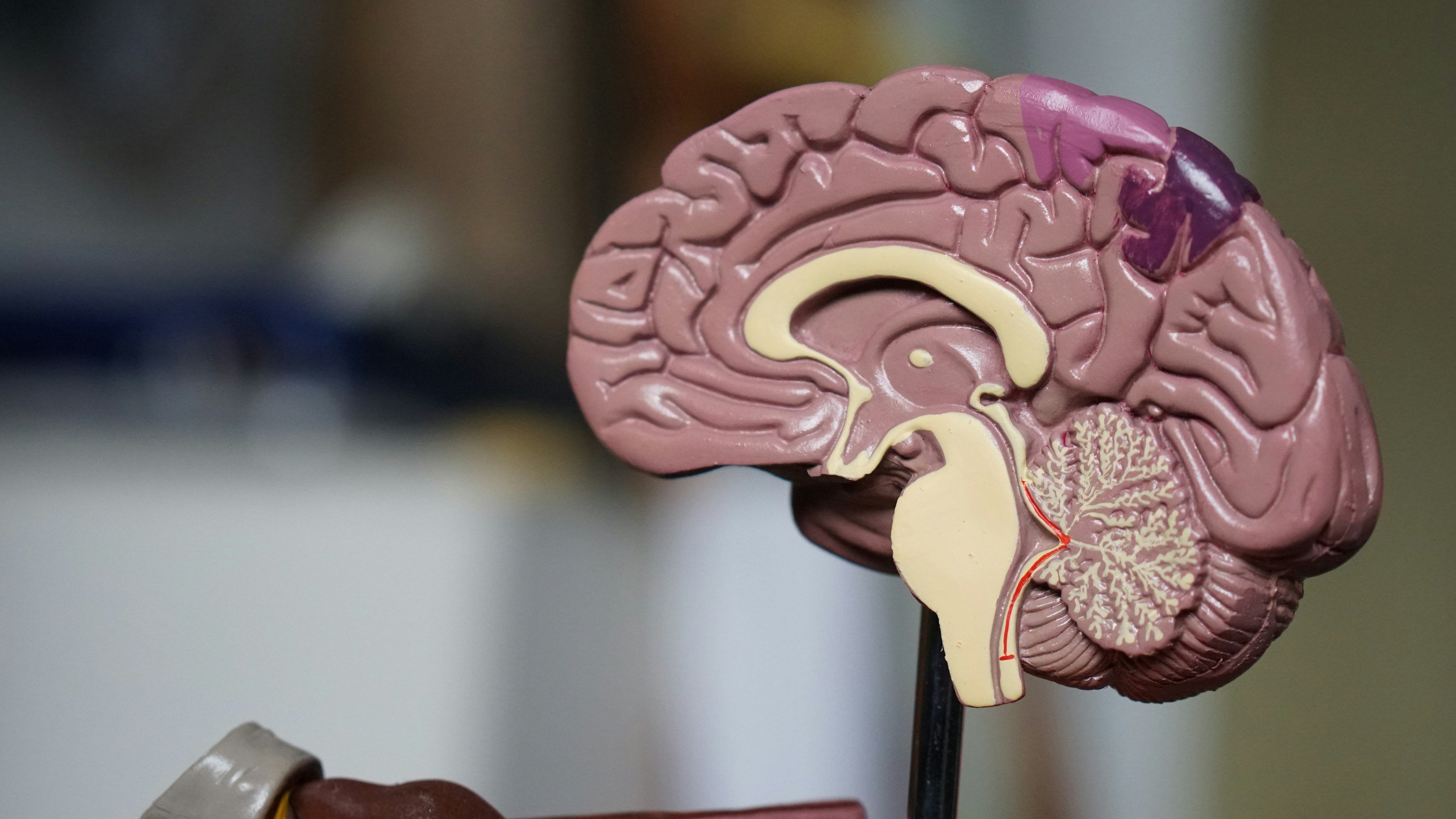

Learn about action potential in psychology, a fundamental process in neural communication affecting perception, learning, memory, and behavior. Discover its phases, importance, and link to disorders.