
What Is an Action Potential in Psychology? How Neurons Send Signals
An action potential is one of the basic ways neurons send information.
That sounds simple, which is dangerous, because neuroscience enjoys hiding small catastrophes inside simple sentences.
In psychology, action potentials matter because they are part of the biological machinery behind perception, movement, emotion, learning, memory, attention, and behaviour. They are not thoughts themselves. They are not memories in miniature. They are not little electrical versions of ideas sprinting around the brain with clipboards.
An action potential is a rapid electrical signal that travels along a neuron’s axon. It allows information to move from one part of a neuron to another, and eventually to other neurons, muscles, or glands.
If psychology is interested in the mind, action potentials are part of the wiring that makes the mind possible. Not the whole story, obviously. The brain is not just electricity. It is chemistry, structure, networks, timing, development, embodiment, and an alarming amount of biological admin.
But without action potentials, the nervous system would lose one of its most important signalling systems.
Which would make thinking, moving, seeing, remembering, and complaining about group projects rather difficult.
Key Points
- An action potential is a rapid electrical signal that travels along a neuron’s axon. It allows neurons to send information over distance.
- Action potentials follow the all-or-none principle. If stimulation reaches threshold, the neuron fires; if it does not, there is no action potential.
- The main phases are depolarisation, repolarisation, and hyperpolarisation. These depend mainly on sodium and potassium ions moving through voltage-gated channels.
- The refractory period helps keep signals moving in one direction. It also limits how quickly a neuron can fire again.
- Action potentials matter for psychology because neural signalling underlies perception, movement, learning, memory, emotion, and behaviour. They are not thoughts themselves, but they are part of the biological machinery that makes thought possible.
What is an action potential?
An action potential is a brief electrical impulse that travels down a neuron’s axon.
Neurons communicate using changes in electrical charge across their cell membranes. At rest, a neuron has a difference in electrical charge between the inside and outside of the cell. When the neuron receives enough stimulation, that balance changes suddenly, creating a rapid wave of electrical activity.
This wave is the action potential.
It begins near the start of the axon, travels along the axon, and reaches the axon terminals. Once it arrives there, it can trigger the release of neurotransmitters into the synapse, allowing the neuron to communicate with another cell.
So, in plain terms:
The action potential carries the signal along the neuron.
The synapse helps pass the message to the next neuron.
That distinction is useful. Action potentials are electrical events inside the neuron. Synaptic communication is usually chemical communication between neurons.
The nervous system, naturally, uses both. One method would have been too merciful.
Why action potentials matter in psychology
Psychology students often meet action potentials in biological psychology, biopsychology, neuroscience, sensation and perception, or cognitive psychology.
They matter because mental processes depend on neural communication.
When you see an object, sensory receptors and neurons send signals toward visual areas of the brain. When you move your hand, motor neurons help carry signals from the nervous system to muscles. When you learn something, patterns of neural activity and synaptic change help support memory. When you feel fear, pleasure, pain, or surprise, networks of neurons are involved.
Action potentials do not explain all of this on their own.
But they are part of the basic signalling system that allows neurons to communicate quickly and reliably.
A single action potential does not equal a thought. A pattern of activity across many neurons, networks, and synapses is where psychological function starts to emerge.
So action potentials are not the mind.
They are one of the things the mind is built from.
Resting potential: the neuron before it fires
Before a neuron fires, it has a resting membrane potential.
This means there is a difference in electrical charge between the inside and outside of the neuron. In many neurons, the resting potential is around -70 millivolts. The inside of the neuron is more negative than the outside.
This difference exists because ions are distributed unevenly across the cell membrane.
Important ions include sodium ions, potassium ions, chloride ions, and negatively charged proteins inside the cell. The neuron’s membrane also contains ion channels, which control when ions can move in or out.
At rest, the neuron is not doing nothing. It is maintaining a delicate electrical and chemical balance.
This balance is supported partly by the sodium-potassium pump, which helps maintain the ion gradients needed for signalling. It moves sodium ions out of the cell and potassium ions into the cell.
The pump is not the dramatic star of the action potential, but it keeps the conditions in place so neurons can keep firing over time.
A maintenance role, essentially. Less glamorous. Absolutely necessary. Much like whoever fixes the printer.
Threshold and the all-or-none principle
An action potential does not happen every time a neuron receives input.
The neuron has to reach a certain threshold.
If incoming signals make the inside of the neuron positive enough, often around -55 millivolts, the neuron reaches threshold and fires an action potential.
If the threshold is not reached, there is no action potential.
This is called the all-or-none principle.
The action potential either happens fully or it does not happen. It is not a tiny action potential for a weak stimulus and a larger action potential for a strong stimulus.
That raises an obvious question: if action potentials are all-or-none, how does the brain signal intensity?
The answer is not usually by making individual action potentials bigger. Instead, the nervous system can change how often neurons fire, which neurons fire, how many neurons are involved, and the timing of firing.
For example, a stronger stimulus may produce a higher firing rate or recruit more neurons.
The message is not carried by the size of one action potential alone. It is carried by patterns.
The brain, being difficult, prefers patterns.
The phases of an action potential
An action potential has several main phases: depolarisation, repolarisation, hyperpolarisation, and return to resting potential.
These phases happen very quickly, usually within milliseconds.
Depolarisation
Depolarisation is the rising phase of the action potential.
When the neuron reaches threshold, voltage-gated sodium channels open. Sodium ions rush into the cell because they are positively charged and are attracted to the more negative inside of the neuron.
As sodium enters, the inside of the neuron becomes more positive.
This rapid shift in charge creates the upward spike of the action potential.
At this point, the neuron has gone from resting quietly to doing something electrically dramatic, which is basically the nervous system’s version of suddenly deciding to send the email.
Peak
The membrane potential rises until it reaches its peak, often around +30 millivolts.
At this point, sodium channels begin to inactivate. Sodium stops rushing into the cell in the same way.
The neuron cannot just keep becoming more positive forever. Biology does have some boundaries, even if psychology occasionally forgets this.
Repolarisation
Repolarisation is the falling phase.
Voltage-gated potassium channels open, allowing potassium ions to leave the cell. Because potassium is positively charged, its movement out of the neuron makes the inside of the cell more negative again.
This helps bring the membrane potential back down toward resting level.
A common student mistake is to say that the sodium-potassium pump directly causes repolarisation. It does not do most of the immediate work here. Repolarisation is mainly caused by sodium channel inactivation and potassium leaving through voltage-gated potassium channels.
The sodium-potassium pump helps restore and maintain the broader ion gradients over time.
This is the kind of detail exam questions enjoy asking, because exam questions are like that.
Hyperpolarisation
After repolarisation, the neuron may become briefly more negative than its resting potential.
This is called hyperpolarisation.
It happens because potassium channels can stay open slightly longer than needed, allowing extra potassium to leave the cell.
During hyperpolarisation, the neuron is less likely to fire again immediately. It needs to return to its resting state before it can respond normally.
This helps regulate firing and prevents neurons from firing uncontrollably.
Which is useful, because uncontrolled electrical activity in the nervous system is not generally something we want to encourage.
Return to resting potential
After hyperpolarisation, the neuron returns to its resting potential.
Ion channels reset. The sodium-potassium pump continues maintaining the ion gradients. The neuron is then ready to respond again if enough stimulation arrives.
The whole process is fast, precise, and repetitive.
Neurons can fire action potentials many times, creating patterns of activity across the nervous system.
Those patterns help build perception, thought, feeling, movement, and behaviour.
No pressure, tiny electrical spike.
The refractory period
After an action potential fires, the neuron enters a refractory period.
This is a short period during which it is difficult or impossible for the neuron to fire another action potential.
There are two main parts.
The absolute refractory period is when the neuron cannot fire another action potential, no matter how strong the stimulus is. This is because sodium channels are inactivated and need time to reset.
The relative refractory period is when the neuron can fire again, but only if the stimulus is stronger than usual. This usually happens during hyperpolarisation.
The refractory period matters for two reasons.
First, it limits how quickly a neuron can fire.
Second, it helps action potentials travel in one direction along the axon. Because the part of the axon that just fired is temporarily unable to fire again, the signal continues forward rather than bouncing backward like an electrical toddler.
Direction matters. The nervous system is complicated enough without signals wandering around indecisively.
How action potentials travel along the axon
Action potentials move along the axon because one section of membrane triggers the next.
When one part of the axon depolarises, it causes nearby voltage-gated sodium channels to open. That nearby section then depolarises, triggering the next section, and so on.
This creates a travelling wave of electrical activity.
In myelinated neurons, this process is much faster.
Myelin is a fatty insulating layer wrapped around many axons. It is produced by glial cells: oligodendrocytes in the central nervous system and Schwann cells in the peripheral nervous system.
Myelin allows the action potential to effectively jump between gaps called nodes of Ranvier. This is called saltatory conduction.
It is faster and more efficient than continuous conduction along an unmyelinated axon.
The nervous system, for once, found a shortcut that is not academically suspicious.
What happens at the synapse?
When an action potential reaches the axon terminal, it can trigger communication with another cell.
In many neurons, the arrival of the action potential opens voltage-gated calcium channels. Calcium enters the axon terminal. This causes vesicles containing neurotransmitters to fuse with the presynaptic membrane and release neurotransmitter molecules into the synaptic cleft.
The neurotransmitters cross the synapse and bind to receptors on the postsynaptic cell.
This can make the next neuron more likely to fire, less likely to fire, or change its activity in other ways.
So the action potential does not usually jump directly from one neuron to the next. It reaches the terminal, triggers chemical release, and that chemical signal affects the next cell.
Electrical within the neuron. Chemical between many neurons.
The brain is not content with one communication system. It runs a mixed-media operation.
How action potentials encode information
Because action potentials are all-or-none, information is not mainly encoded by the size of the spike.
Instead, information can be encoded through:
how frequently a neuron fires,
which neurons fire,
when they fire,
how synchronised firing is across groups of neurons,
and how those signals affect downstream networks.
For example, a stronger sensory stimulus may cause a sensory neuron to fire more rapidly. A different stimulus may activate a different population of neurons. Timing can also carry information, especially in systems where precise coordination matters.
This is why it is misleading to imagine action potentials as little messages with words written inside them.
The message is in the pattern.
A single action potential is like one click. Meaning comes from the rhythm, sequence, location, and network context.
Less poetic than “the language of the brain,” perhaps, but more accurate.
Action potentials and sensory perception
Action potentials are essential for sensory perception.
When sensory receptors detect information from the environment, that information has to be converted into neural signals. This process is called transduction.
For example, in vision, photoreceptors in the retina respond to light with graded changes in membrane potential. These signals are processed through retinal circuits, and retinal ganglion cells then fire action potentials that travel along the optic nerve to the brain.
That distinction matters: photoreceptors themselves do not send typical action potentials all the way down the optic nerve. Retinal ganglion cells do.
In touch, pressure receptors in the skin respond to mechanical stimulation. In hearing, hair cells in the cochlea respond to vibration and influence auditory nerve signalling. In smell and taste, chemical information is converted into neural activity.
Across sensory systems, action potentials help carry information from receptors and early processing pathways toward the central nervous system.
Perception is not just the world arriving in the brain. It is the nervous system transforming physical energy into neural signals and then making sense of them.
The making sense part is where psychology starts getting nosy.
Action potentials and movement
Movement also depends on action potentials.
When you decide to move, networks in the brain help plan and initiate action. Signals travel through the nervous system to motor neurons. Motor neurons then send action potentials toward muscles.
At the neuromuscular junction, the motor neuron releases neurotransmitter, which helps trigger muscle contraction.
This is how neural signals become behaviour.
Writing, walking, speaking, blinking, reaching for a cup, pulling your hand away from something hot, and dramatically pointing at a PowerPoint slide all involve neural signalling and muscle activation.
This is another reason action potentials matter to psychology. Behaviour is not just an abstract output. It is built through biological systems that connect brain, body, and environment.
Even the most sophisticated human action still has to go through cells doing electrical work.
A humbling arrangement.
Action potentials, learning, and memory
Learning and memory depend on changes in neural communication.
Action potentials are part of this, but they are not the whole explanation.
When neurons are active together repeatedly, the strength of synaptic connections between them can change. This is called synaptic plasticity. Long-term potentiation, or LTP, is one well-studied form of synaptic strengthening that has been linked to learning and memory.
Donald Hebb famously proposed the idea often summarised as: “cells that fire together, wire together.”
That phrase is useful, but it can be oversimplified.
Learning is not just neurons firing. It involves synaptic change, neurotransmitter systems, gene expression, brain networks, attention, emotion, sleep, prior knowledge, and repeated experience.
Action potentials help provide the activity that can contribute to synaptic plasticity. But a memory is not stored inside one action potential. A memory is supported by patterns of change across neural systems.
So if someone says action potentials “create memories,” the better version is: action potentials contribute to neural activity patterns that can support synaptic plasticity, which is one biological process involved in learning and memory.
Less catchy. Less wrong.
Action potentials and psychological disorders
Disrupted neural signalling is relevant to many neurological and psychological conditions, but this needs careful wording.
Epilepsy is the clearest example. Seizures involve abnormal, excessive, or synchronised neuronal activity. This can involve disturbed excitability and patterns of action potential firing across neural networks.
Some medications used in epilepsy affect ion channels or neurotransmitter systems to reduce abnormal firing.
Action potentials are also relevant to conditions involving nerve damage, demyelination, pain, and movement disorders. For example, multiple sclerosis involves damage to myelin, which can disrupt signal conduction along axons.
Psychiatric disorders are more complicated.
Conditions such as schizophrenia, bipolar disorder, depression, and anxiety involve changes in neural circuits, neurotransmission, development, genetics, stress systems, and brain function. Action potentials are part of all neural communication, so they are obviously involved in the broad biological background. But it is too simplistic to say these conditions are caused by “action potential dysfunction.”
That would be like saying a broken society is caused by emails because emails were involved.
Technically present. Not the explanation.
For beginner psychology, epilepsy and demyelinating conditions are clearer examples. Psychiatric disorders should be discussed at the level of networks, neurotransmitters, development, cognition, and environment, not action potentials alone.
Local anaesthetics and action potentials
One useful example of action potentials in everyday life is local anaesthetic.
Local anaesthetics can block voltage-gated sodium channels. If sodium channels cannot function properly, action potentials cannot travel along pain fibres in the usual way. The pain signal is interrupted before it reaches the brain.
This is why a dentist can numb part of your mouth before doing something that would otherwise make you reconsider every life choice leading to that appointment.
This example shows how important action potentials are for sensation. If the signal cannot travel, the experience changes.
The pain is not simply “in the tooth.” It has to be carried and processed by the nervous system.
Which is useful knowledge, though not necessarily comforting while someone is approaching you with dental equipment.
Common mistakes students make
One common mistake is thinking that stronger stimuli produce bigger action potentials.
They usually do not. Action potentials are all-or-none. Stronger stimuli are more often represented by firing rate, timing, or the number of neurons involved.
Another mistake is saying the sodium-potassium pump causes the action potential spike. The spike is mainly caused by voltage-gated sodium channels opening and sodium rushing in. Repolarisation is mainly caused by sodium channels inactivating and potassium channels opening.
The pump maintains the ion gradients over time.
Another mistake is forgetting the refractory period. This matters because it helps explain why action potentials travel in one direction and why neurons cannot fire infinitely fast.
Students also sometimes treat action potentials as if they are the entire language of the brain. They are essential, but they are only part of neural communication. Synapses, neurotransmitters, receptors, neural circuits, glial cells, brain regions, and network patterns all matter too.
The nervous system is not one concept. Unfortunately.
Why psychology students should care
Action potentials can feel very biological, and psychology students sometimes wonder why they need to know them.
Fair question. Psychology is not medicine, and most psychologists are not going to spend their day calculating membrane potentials unless something has gone very wrong with their career plan.
But understanding action potentials gives you a foundation for biological psychology.
It helps explain how the nervous system sends signals.
It helps make sense of neurotransmission.
It helps with topics such as sensation, perception, movement, pain, sleep, drugs, epilepsy, learning, memory, and emotion.
It also protects you from vague brain talk. Once you understand action potentials, it becomes harder to fall for explanations that treat the brain as a glowing motivational cloud where “energy” and “signals” can mean anything the speaker wants.
That alone is probably worth the revision.
Simply Put
An action potential is a rapid electrical signal that travels along a neuron’s axon.
It happens when stimulation reaches threshold, triggering voltage-gated sodium channels to open. Sodium rushes in, the neuron depolarises, potassium later moves out, the neuron repolarises, and a brief refractory period helps reset the system and keep the signal moving in one direction.
Action potentials follow the all-or-none principle. A neuron either fires one or it does not. Stronger signals are usually represented by firing rate, timing, and patterns across neurons, not by bigger action potentials.
In psychology, action potentials matter because neural communication underlies perception, movement, emotion, learning, memory, and behaviour.
They are not thoughts.
They are not memories.
They are not tiny electrical feelings.
They are one of the basic signalling events that allow the nervous system to work.
Which, given that the nervous system is doing most of the heavy lifting behind being a person, makes them fairly important.
References
Engel, J., Jr. (2013). Seizures and epilepsy (2nd ed.). Oxford University Press.
Hebb, D. O. (1949). The organization of behavior: A neuropsychological theory. Wiley.
Hubel, D. H. (1988). Eye, brain, and vision. Scientific American Library.
Table of Contents




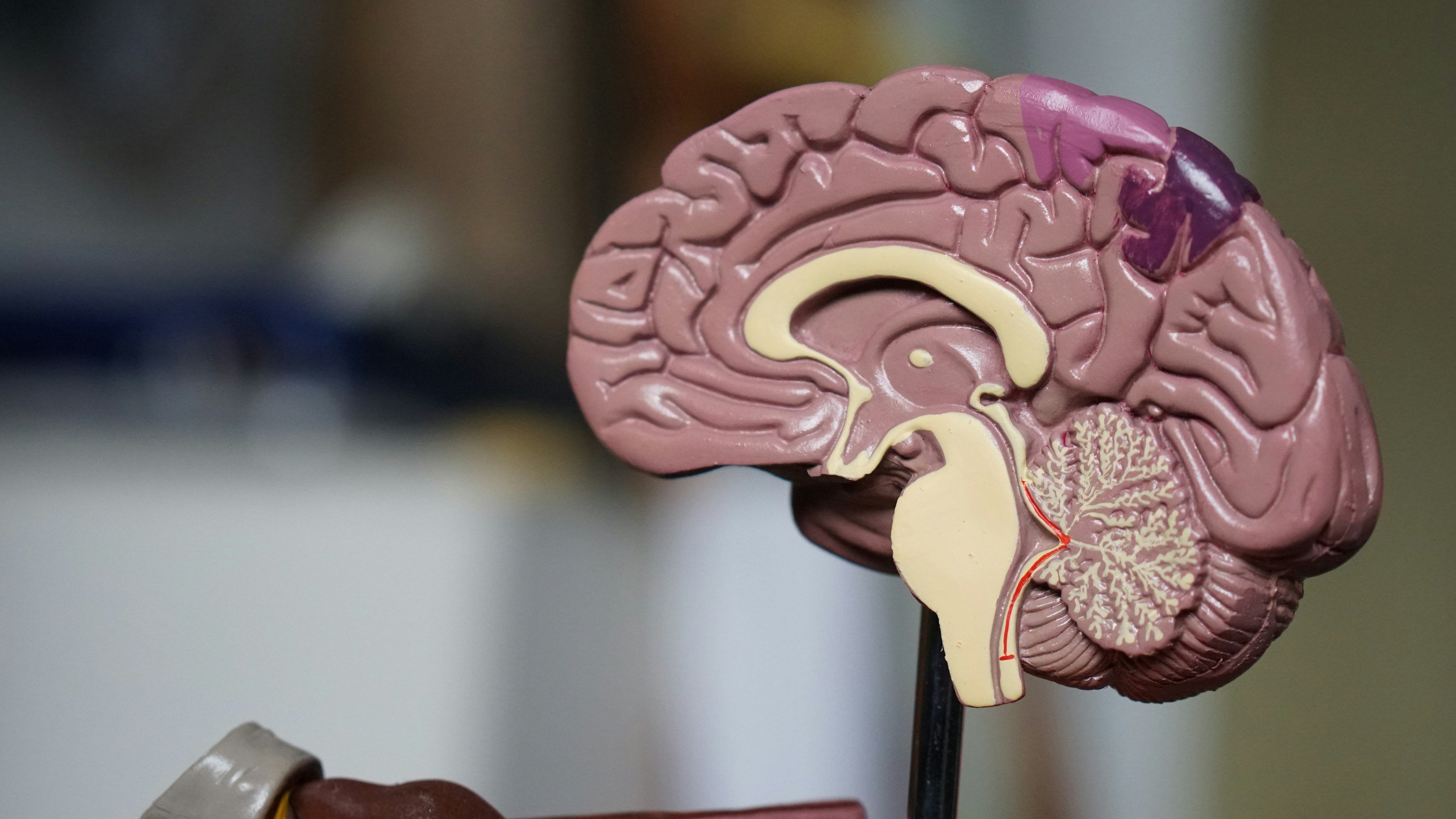

Learn about action potential in psychology, a fundamental process in neural communication affecting perception, learning, memory, and behavior. Discover its phases, importance, and link to disorders.