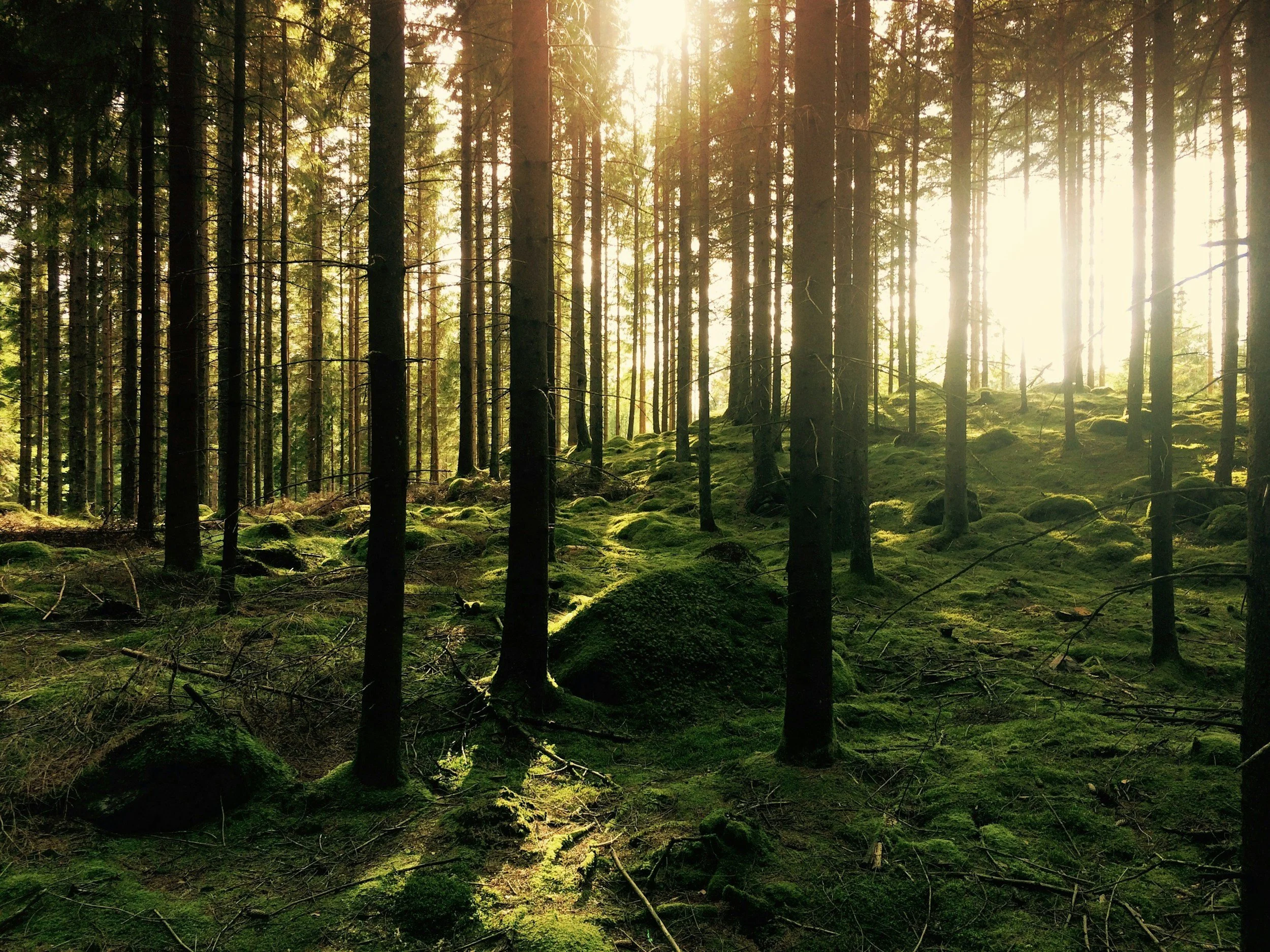
The Science of Forest Bathing: How Phytoncides Rewire Your Immune System
We’ve all felt that immediate sense of "reset" when stepping into a pine forest or a damp woodland. In Japan, this is known as Shinrin-yoku, or Forest Bathing. But while the experience feels like "vibes," the physiological shifts occurring in your body are grounded in rigorous biochemistry.
If you are looking for a science-backed way to lower stress and boost your immune system, the secret isn't just the fresh air—it’s the chemical dialogue between trees and humans.
What are Phytoncides? (The "Wood Essential Oils")
Trees aren't just standing there; they are active chemical factories. To protect themselves from rotting and harmful insects, trees emit antimicrobial volatile organic compounds (VOCs) called phytoncides. Common examples include:
α-pinene: Found in pines and conifers.
Limonene: Found in citrus and broadleaf trees.
When you walk through a forest, you inhale these compounds. Research led by Dr. Qing Li of the Nippon Medical School has shown that inhaling phytoncides significantly increases the activity of Natural Killer (NK) cells in humans.
The Role of Natural Killer (NK) Cells
NK cells are a type of white blood cell that provides rapid responses to virally infected cells and tumor formation.
The Data: A landmark study showed that a three-day forest trip increased NK cell activity by 50%.
The Longevity: Remarkably, this boosted immune activity lasted for over 30 days after returning to the city.
Stress Reduction: The Parasympathetic Shift
Forest bathing isn't just about the immune system; it’s a direct intervention for the Autonomic Nervous System (ANS). Modern urban living keeps us in a state of "Sympathetic" (fight or flight) dominance.
Lowering Salivary Cortisol
Multiple empirical studies have compared walking in an urban environment versus a forest environment with the same physical exertion. The results consistently show:
Lower Cortisol: Significant drops in the "stress hormone" found in saliva.
Blood Pressure Regulation: A measurable decrease in systolic blood pressure.
Heart Rate Variability (HRV): An increase in HRV, which is a key marker of a resilient, recovered nervous system.
Shutterstock
Practical Application: How to "Forest Bath" Effectively
To trigger these biological responses, you don't need a hiking permit or expensive gear. You just need a specific protocol based on the research:
The 20-Minute Threshold: Research suggests that the "stress-dip" begins to plateau at 20 minutes. If you’re short on time, a 20-minute sit in a wooded park is your biological "minimum effective dose."
Engage the "Soft Fascination": In environmental psychology, this is known as Attention Restoration Theory (ART). Don't look at your phone. Let your eyes wander over "fractals" (the repeating patterns in leaves and branches), which reduces cognitive fatigue.
Breathe Deeply: Since phytoncides are airborne, conscious deep breathing (nasal breathing) increases the volume of these compounds reaching your lungs.
Simply Put
Forest bathing is more than a walk in the woods; it is an evidence-based exposure therapy. By moving through high-density tree areas, you are essentially receiving a "chemical upgrade" that lowers systemic inflammation and fortifies your internal defenses.
References
Kaplan, S. (1995). The restorative benefits of nature: Toward an integrative framework. Journal of Environmental Psychology, 15(3), 169–182. https://doi.org/10.1016/0272-4944(95)90001-2
Li, Q., Nakadai, A., Matsushima, H., Miyazaki, Y., Krensky, A. M., Kawada, T., & Morimoto, K. (2007). Phytoncides (wood essential oils) induce human natural killer cell activity. Immunopharmacology and Immunotoxicology, 28(2), 319–333. https://doi.org/10.1080/08923970600809439
Park, B. J., Tsunetsugu, Y., Kasetani, T., Kagawa, T., & Miyazaki, Y. (2010). The physiological effects of Shinrin-yoku (taking in the forest atmosphere or forest bathing): Evidence from field experiments in 24 forests across Japan. Environmental Health and Preventive Medicine, 15(1), 18–26. https://doi.org/10.1007/s12199-009-0086-9