The Bobo Doll Experiment: A Critical Deconstruction
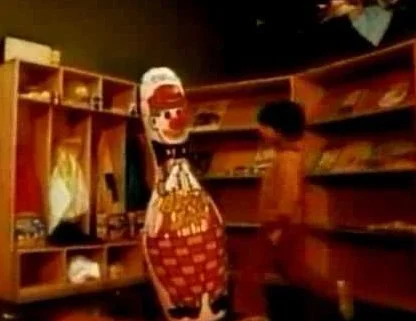
In 1961, Albert Bandura and his colleagues, Dorothea Ross and Sheila A. Ross, published a study that would become one of the most famous, and most over-simplified, experiments in psychology. Officially titled Transmission of Aggression Through Imitation of Aggressive Models, it is now usually remembered as "the Bobo doll experiment," which is unfortunate in one sense, because the clown-shaped inflatable punching toy tends to steal attention from the real intellectual point.
Bandura was not merely asking whether children would hit a weird plastic toy if they saw an adult do it first. He was challenging one of the dominant assumptions of mid-20th century psychology: that learning depended mainly on direct reinforcement. In other words, the prevailing logic was that children learned because they were rewarded, punished, or conditioned into doing so. Bandura suspected something more socially obvious and psychologically richer. People, especially children, may learn simply by watching.
That seems almost embarrassingly obvious now. Of course children copy what they see. Every parent, teacher, sibling, and exhausted adult in public already knows this in their bones. But at the time, Bandura’s work helped give that intuition experimental force. The Bobo doll study did not "prove" that media violence creates violent criminals, nor did it single-handedly bury behaviourism in a shallow grave. What it did do was offer powerful evidence that observation matters, and that people can acquire new patterns of behaviour without having to be directly rewarded for them first.
That was a big deal.
TL;DR Key Takeaways
Observation matters:
Bandura’s 1961 study showed that children could imitate aggressive behaviour after watching an adult model it, even without direct reward or punishment.A challenge to strict behaviourism:
The study did not make reinforcement irrelevant, but it did challenge the idea that learning only happens through direct conditioning.Imitation was specific, not vague:
Children did not merely become rowdy. Many reproduced particular aggressive actions and phrases they had just seen.Aggression in the lab is not the same as violence in life:
The study showed imitation in a controlled setting, not a settled blueprint for real-world violent behaviour.Its status as a classic should not exempt it from criticism:
The artificiality of the setup, the narrow sample, and the ethics all deserve scrutiny.
Academic note:
This is a critical analysis of the 1961 study. For a more descriptive and textbook-style summary, see our separate article on What Was the Bobo Doll Experiment (1961)?
Why Bandura Picked a Fight with Behaviourism
To understand why this study mattered, you have to remember the mood of psychology at the time. Behaviourism still cast a long shadow. Learning was often framed in terms of stimulus, response, reward, punishment, repeat. Skinner’s influence was enormous, and for good reason. Behaviourist approaches had explanatory power and experimental neatness. But they also had a tendency to reduce human beings to organisms reacting to reinforcement schedules, as if the social world were just background wallpaper.
Bandura thought that was too thin.
He suspected that children were not simply learning through trial and error or by waiting to see what earned a biscuit and what earned a telling-off. They were watching other people, absorbing social cues, and forming internal representations of what behaviour was possible, acceptable, effective, or perhaps just interesting. In short, they were learning from models.
That matters because most of human life is model-saturated. Children do not grow up in laboratories or reinforcement chambers. They grow up around parents, siblings, teachers, peers, television characters, YouTubers, streamers, politicians, and every other species of public adult who insists on demonstrating how one ought to behave. Bandura was trying to capture a piece of that social reality in experimental form.
Methodology: How to Frustrate Pre-Schoolers for Science
Bandura and colleagues recruited 72 children from the Stanford University Nursery School, 36 boys and 36 girls, aged roughly 3 to 6 years old. This was a convenience sample, which is the polite academic term for "these were the children available to us." It was manageable and practical, but not exactly a sweeping cross-section of humanity.
The children were assigned to one of three conditions:
1. The aggressive model condition
The child watched an adult behave aggressively toward a Bobo doll. This was not just general roughhousing. The adult performed distinct acts, including striking the doll, hitting it with a mallet, kicking it, and using aggressive phrases such as "Sock him in the nose" and "Pow."
2. The non-aggressive model condition
The child watched an adult play quietly and non-aggressively with toys, largely ignoring the Bobo doll.
3. The control condition
The child did not observe either model beforehand.
That was the basic setup, but the most memorable detail comes in the middle.
Before the final test phase, the children were taken to a room filled with attractive toys. They were then allowed to begin playing, only to be told shortly afterwards that these toys were reserved for other children. In other words, the researchers deliberately frustrated them. This was the so-called arousal or mild frustration phase, and by modern standards it has the unmistakable feel of psychology cheerfully wandering into territory an ethics committee would now stare at in stunned silence.
After being annoyed, the children were taken into another room containing, among other things, the Bobo doll, a mallet, and a selection of aggressive and non-aggressive toys. Researchers then observed what the children did.
It was, in effect, a test of whether observed aggression would be reproduced.
The Results: More Than Just "Kids Copy Things"
The findings strongly supported Bandura’s central idea.
Children who had observed the aggressive model showed more aggressive behaviour than those in the non-aggressive or control conditions. More importantly, they often reproduced specific acts and phrases they had seen the adult perform. This mattered because it suggested something more precise than general overstimulation. The children were not simply in a foul mood. They were imitating.
This is the part critics of simplified retellings sometimes miss. The strongest evidence in Bandura’s favour was not just that children hit the doll. A Bobo doll is, after all, a toy designed to be hit. The stronger point was that children copied the form of the aggression. They echoed particular actions and even verbal expressions. That looks much less like random play and much more like observed behaviour being encoded and performed.
There were also sex differences. Boys, on average, displayed more physically aggressive behaviour than girls, particularly after observing an aggressive male model. That said, this finding is often flattened into a lazy "boys are violent" conclusion, which is not especially helpful. The broader takeaway is that both boys and girls imitated what they observed, but the form and amount of aggression varied.
So the study did not show that all children become tiny sociopaths after watching one adult misbehave for a few minutes. It showed that modelled behaviour can be acquired and reproduced quickly, especially when it is vivid, salient, and performed by an adult in a structured setting.
That is still a substantial finding.
What the Study Did Show, and What It Did Not
The Bobo doll experiment offered strong evidence for observational learning. It showed that direct reinforcement is not necessary for the acquisition of at least some new behaviours. That is the important challenge to strict behaviourism. A child does not need to be rewarded for every behaviour in order to learn it.
But the study did not show that reinforcement is irrelevant altogether. One of the things Bandura would later develop more fully is that acquisition and performance are not the same thing. A person can learn a behaviour without immediately performing it, and whether they later act on it may still depend on reward, punishment, inhibition, context, social approval, and expectation.
This distinction matters because bad pop-psych retellings often turn Bandura into the man who proved that watching equals doing, full stop. That is too blunt. Watching can teach. It can shape scripts, expectations, and possibilities. Whether those scripts become stable behaviour is a more complicated question.
The Plastic Problem: Is This Aggression or Just Toy Use?
Now for the part where this classic study starts looking a bit awkward.
The most common criticism is also the most obvious one: a Bobo doll is not a person. It is not even a realistic victim. It is a weighted inflatable toy specifically designed to pop back up when hit. There is a built-in absurdity here. If you place a child in a room with a toy that exists to be knocked around, after they have just watched an adult knock it around, what exactly have you shown?
Critics argue that Bandura may have demonstrated imitation of a modelled play script rather than aggression in any deep or general sense. The child may have learned what one is "supposed" to do with this object in this room under these conditions. That is still observational learning, but it is narrower than proving the transmission of aggression in everyday life.
This does not make the study worthless. Far from it. But it does put pressure on what kind of claim we are entitled to make. The experiment showed imitation of aggressive acts in a lab environment toward a toy designed to absorb them. That is not nothing, but it is also not the same as demonstrating enduring violent tendencies, moral decline, or future criminal behaviour.
That leap, still routinely made in public discourse, is much larger than the data warrant.
Demand Characteristics: Did the Children Guess the Assignment?
Another issue is demand characteristics, which is a less dramatic phrase than it deserves.
Children are not passive lumps. Even very young children are often sensitive to cues about what adults expect from them. In Bandura’s study, the adult model behaved in a very noticeable way, the child was then led into a room containing the same toy, and the researchers sat back to observe. It is not unreasonable to think some children may have inferred that interacting with the doll in a similar way was, in effect, the point of the exercise.
This does not erase the finding, but it complicates it. Were children expressing aggression, or were they performing an experimentally cued role? Possibly both. The two are not mutually exclusive, which is part of what makes social psychology so interesting and so maddening.
The Sample Problem: Useful, Famous, and Narrow
The sample also deserves more criticism than it usually gets in introductory textbooks.
These were 72 children from a Stanford nursery school. That makes the study useful as a controlled demonstration, but limited in terms of generalisability. The children came from a fairly specific social and cultural setting. We should be cautious about treating the findings as though they map neatly onto all children across all contexts.
This does not mean the study tells us nothing. It means it tells us something under particular conditions, with a particular group, at a particular moment in history. That is a much less cinematic conclusion, but it is usually the truth in psychology.
The Ethics of 1961: Less "Best Practice," More "Well, Let’s See What Happens"
By modern standards, the ethics are not great.
The children were exposed to aggressive adult behaviour. They were deliberately frustrated. They were then observed in a setting designed to elicit aggressive responses. There was no meaningful long-term follow-up establishing whether any of this had lingering effects, and the broader ethical culture of psychology at the time was, to put it mildly, not what we would now call robust.
It is easy to slip into smug hindsight here, but the ethical criticism is not trivial. Studies involving children demand a higher level of care, and part of the unease surrounding the Bobo doll experiment is that it instrumentalised young children’s distress in the service of a compelling result.
Again, that does not erase the study’s importance. It just means we do not have to treat "classic" as a synonym for "above criticism."
So Did Bandura Change Psychology?
Yes, though not in the cartoonishly simple way the internet sometimes tells it.
Bandura did not single-handedly destroy behaviourism, and the Bobo doll experiment was not a magic key that unlocked all later debates about media violence, video games, or social contagion. But the study did help shift psychology toward a richer understanding of how behaviour is learned in social contexts.
It made imitation experimentally visible. It pushed learning theory beyond the narrow idea that only directly rewarded behaviour counts. It highlighted the role of models, attention, and social context. And it helped build the foundations for what would become social learning theory, later broadened into Bandura’s social cognitive framework.
That is a serious legacy for one inflatable clown and one extremely bad afternoon at nursery.
Simply Put: From the Lab to the Living Room
The reason this study still haunts public discussion is simple. It captured something uncomfortable. Human beings are porous. We absorb each other. We watch, copy, rehearse, adapt, and internalise. Adults model the world constantly, whether they mean to or not.
But the study’s afterlife has also been messy. It is too often dragged out as if it straightforwardly proves that violent media creates violent people, or that seeing aggression once is enough to explain complex social harms. That is not what Bandura showed. The real lesson is subtler and, in some ways, more unsettling.
Observation is not passive. It is one of the main ways culture gets into us.
That should make us thoughtful, not hysterical. It should make us critical of what children are shown, certainly, but also critical of simplistic moral panics. The Bobo doll experiment matters because it showed that behaviour can be learned socially. It does not give politicians a universal excuse to blame every social problem on screens, games, television, or whatever new medium the older generation has decided to fear this decade.
Bandura gave us something more useful than that. He gave us a way of thinking about human behaviour as social, modelled, and cognitively mediated. The inflatable clown just happened to be the messenger.
Related Articles
Discover key developmental learning theories and real-world examples that reveal how humans develop knowledge, skills, and growth across every life stage.
Did You Know the Bobo Doll Experiment Changed How We View Learning?
Discover how Albert Bandura’s groundbreaking Bobo Doll Experiment revolutionized learning theory by proving that children can acquire behaviors simply by observing others—reshaping psychology, education, and media studies.
Defining Developmental Psychology
Discover the fundamentals of developmental psychology, including major theories, stages of development, and the impact of nature vs. nurture on human growth. Learn how cognitive, emotional, and social development evolves throughout life.
Impact of The Bobo Doll Experiment
Explore the lasting impact of the experiment that aimed to unravel the mechanisms behind learned aggression and its transmission through imitation.
What Was the Bobo Doll Experiment (1961)?
The Bobo Doll Experiment, conducted by Albert Bandura, Dorothea Ross, and Sheila A. Ross in 1961, remains one of the most influential studies in the history of social psychology. Discover the ground-breaking 1961 Bobo Doll Experiment by Bandura, which revealed how children learn aggression through observation. A cornerstone of social psychology.
References
Table of Contents