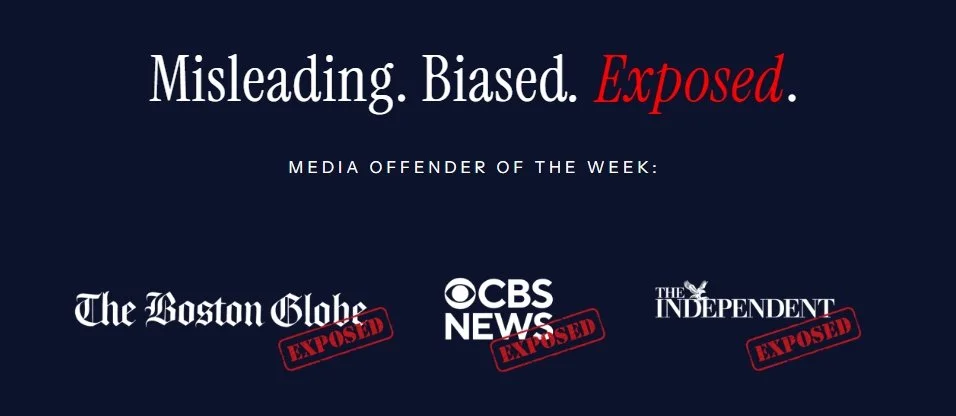
The White House’s “Media Offender” Page: An Academic Dissection of an Official Exercise in Projection, Propaganda, and Bureaucratic Immaturity
The White House’s “Media Offender” page claims to expose journalistic bias. Instead it reveals something far more telling. This academic teardown uncovers the contradictions, falsehoods, psychological manipulation, and institutional insecurity behind a taxpayer-funded exercise in propaganda dressed as public service.
The White House’s Media Offender of the Week page attempts to present itself as a rigorous watchdog operation. In practice it is an unintentional case study in political communication failure, institutional insecurity, and psychological projection. Far from revealing bias in journalism, the page reveals the anxieties and insecurities of the administration itself. For scholars of political psychology, this page is not only low hanging fruit. It is fruit that has voluntarily leapt into the basket.
This essay aims to document the page’s contradictions, identifying its factual distortions, and situating its rhetorical choices in well established psychological processes. The verdict is clear. This is not governance. It is grievance performance at taxpayer expense.
Demonstrable Falsehoods and the Strategic Use of Omission
One cannot evaluate the page without confronting its most striking tactic. It repeatedly calls accurate reporting false while strategically omitting the pieces of evidence that make the reporting true.
When journalists noted that Trump used terms such as “punishable by death” and “HANG THEM” in reference to political opponents, the White House declared this a lie. The page simply removes the original quotations, then insists that reporters fabricated the story. In academic terms, this is not fact correction. It is selective exposure followed by reframing, a behavior thoroughly documented in research on authoritarian communication.
There is an uncomfortable simplicity here. If the evidence contradicts the conclusion, the evidence is removed. The technique is not sophisticated. It is merely shameless.
The tariff example involving Italian pasta demonstrates the same tactic. Manufacturers publicly warned that certain products might leave the American market due to high tariffs. The White House page labels these warnings invented. This move is not only false. It is empirically incoherent. It asks readers to trust the administration’s interpretation of a private industry’s concerns over the industry’s own statements.
The Associated Press case is yet another illustration. Trump made scientifically baseless claims about Tylenol and autism. The AP accurately reported that these claims were unproven and, in some instances, widely discredited. The White House page declares this article a lie. In this instance the administration attempts to rehabilitate a falsehood by punishing those who corrected it. This is a textbook pattern noted in research on political disinformation campaigns. Punish the correction, not the error.
In every one of these examples, the White House page commits the misconduct it accuses the press of committing. The irony would be amusing if it were not publicly funded.
Contradictions and Cognitive Dissonance Management
The page is a masterclass in cognitive dissonance management. It enforces loyalty to the administration’s preferred narratives by deploying three well known psychological tools.
One. Denial of observable reality. When a policy decision or presidential statement causes public relations problems, the page retroactively redefines what happened. The public is asked to believe not what they saw or read, but what the administration insists they should have seen or read.
Two. Justification of conflicting narratives. Trump’s most inflammatory statements are reframed as calls for “accountability,” while mild criticism from journalists is described as treacherous. This forces supporters to reconcile incompatible claims by adopting the simplest solution. Anything that makes the President look good is true. Anything that makes him look bad is false. The page encourages this binary thinking by design.
Three. Attacking the source rather than addressing the inconsistency. Instead of reckoning with contradictions, the page redirects attention toward moral condemnation of the press. This aligns with Leon Festinger’s early research on dissonance resolution. When confronted with conflicting information, individuals tend to derogate the source of the dissonant evidence rather than reconsider their belief.
The White House page institutionalizes this psychological reflex.
Immaturity as Institutional Style
Any academic analysis of this document must acknowledge its unusual stylistic immaturity. Its categories include phrases such as “Left-wing lunacy” and “Hall of Shame.” Its graphics resemble internet memes. Its tone alternates between self pity and boastfulness with no apparent recognition of the contrast.
This is not accidental. It is a communicative aesthetic that mirrors the emotional landscape of online culture, not the norms of professional governance. Scholars of institutional behavior often evaluate maturity by the ability to distinguish between personal feelings and institutional responsibilities. By this measure the page performs poorly. It treats criticism as a personal attack on the President’s emotional equilibrium, rather than as a normal and necessary feature of democratic accountability.
The inadvertent inclusion of a Fox News anchor as an offender, followed by a quiet deletion after Fox complained, further illustrates the amateurish execution. The error would be humorous if it were not emblematic of a government office that appears to publish first and think later.
It is difficult to imagine a serious governmental office producing work that resembles a high school “burn book” unless that office had lost the ability to perceive its own responsibility for public trust.
Propaganda Through the Lens of Political Psychology
The page reveals three interlocking psychological mechanisms that are common in propaganda environments.
One. Projection. The page accuses journalists of fabricating stories. It then fabricates counter narratives. It accuses the press of omitting facts. It then omits the very quotations that reporters accurately documented. Projection is the easiest defense mechanism. It requires minimal subtlety and zero self reflection. The administration uses it liberally.
Two. Polarization reinforcement. Every unfavorable report is labeled malicious. Every disagreement becomes proof of ideological sabotage. The result is a simplified world of heroes and enemies. Research shows that such binary framing increases affective polarization and reduces the public’s ability to evaluate claims on their merits.
Three. The weaponization of certainty. Ambiguity is intolerable in the administration’s rhetorical universe. Hence the categorical language. Nothing is partially wrong. Nothing is subject to debate. Everything is entirely false or entirely righteous. Political communication scholars note that the authoritarian style relies on the elimination of nuance because nuance invites independent thought. The Media Offender page is allergic to nuance.
This rhetorical posture encourages supporters to adopt a form of epistemic dependency. If the administration defines truth, supporters no longer need to evaluate evidence. They only need to adopt the administration’s posture. This is an efficient form of propaganda, although not a particularly competent one.
The Waste of Taxpayer Resources and the Degradation of Public Institutions
Although the page appears unserious in tone, its implications are serious. Taxpayer money is being used to produce political agitprop in the name of public communication. Government resources are being directed toward partisan ridicule rather than information transparency. The result is a degradation of the public communication apparatus that citizens rely on for civic clarity.
Press freedom organizations have already noted that the page resembles techniques used in authoritarian contexts. These organizations are not known for hysteria. Their warnings stem from observable patterns. When governments begin using official channels to shame journalists, treat accurate information as treasonous, and canonize the leader’s narrative as the sole legitimate version of events, democratic norms begin to erode.
The Media Offender page is not a minor annoyance. It is a weak signal of a strong trend. It reflects an administration that governs through grievance, uses communication structures for emotional regulation, and treats journalists as adversaries rather than democratic partners.
Simply Put
If this page were produced by a fringe blog, it would be dismissed as an overwrought hobby project. The troubling fact is that it is produced by the White House. Its contradictions are documented. Its omissions are transparent. Its immaturity is unmistakable. Its propaganda techniques are textbook and poorly executed. As a contribution to public discourse it is negligible. As a diagnostic of the administration’s psychological and institutional condition it is highly informative.
The page demonstrates an administration that prioritizes personal grievance over public service, projection over evidence, and symbolic combat over responsible governance. Taxpayer money is funding a digital tantrum. Scholars of democracy can only hope that the public recognizes the performance for what it is.
Sources
White House. (2025). Media Offenders: Misleading. Biased. Exposed. https://www.whitehouse.gov/mediabias/
White House launches tracker to call out 'media offenders' – DW – 11/30/2025
White House Ramps Up War On Journalists By Naming ‘Media Offender Of The Week’
Trump Administration Launches ‘Media Offender of the Week’ Tracker - Newsweek
White House unveils 'Media Bias' website to expose 'fake news'
White House Forced to Correct Childish Anti-Media Site
White House launches website to excoriate media for ‘biased’ stories | US news | The Guardian
Trump ramps up reporter attacks with White House media bias tracker - The Washington Post
Table of Contents