Someone Was Listening: Dodie, Life Is Strange, and the Terror of Letting Someone In
Dodie’s “Someone Was Listening,” the title song from Life Is Strange: Double Exposure, sounds gentle at first. Then you listen properly and realise it is not especially gentle at all.
It is a song about fear, but not the obvious cinematic kind. There are no monsters at the window, unless you count intimacy, which, to be fair, many people do. The song is about the particular terror of being found by someone when you have spent a long time arranging yourself around the assumption that nobody is coming.
That is what gives it such a strong fit with Life Is Strange. The series has always understood that emotional danger is rarely tidy. People do not only fear abandonment. They also fear rescue. They fear being seen accurately. They fear being helped in a way that leaves them unable to pretend they were fine all along.
“Someone Was Listening” sits right in that uncomfortable space. It is not simply a song about wanting connection. It is about what happens when connection arrives and immediately feels like trespassing.
Minor character spoilers ahead for Life Is Strange: Double Exposure.
The home as a defence, not a comfort
The central image of the song is a person who has spent so long alone that they have effectively built a place around that loneliness. The phrase “built a home” does a lot of psychological work here.
A home is supposed to be safe. Warm, familiar, controlled. Somewhere you can shut the door and decide who comes in. But in the song, home starts to feel less like comfort and more like architecture built from fear. The walls protect, but they also trap. The rules provide order, but they also keep the speaker locked inside a private emotional system that nobody else is allowed to touch.
This is one of the most honest things about the song. Self-protection does not usually announce itself as damage. It often feels sensible. Mature, even. After enough hurt, distance can start to look like wisdom. You tell yourself you are being careful, when really you are quietly arranging your life so that nobody can get close enough to disappoint you properly.
That is not stupidity. It is adaptation. People build emotional defences because, at some point, those defences made sense. The problem is that old survival strategies are not always polite enough to retire when the danger changes. They hang around, reorganise the furniture, and start calling themselves personality.
The song captures that with painful neatness. The speaker’s protected inner world is not obviously irrational. It has rules. It has boundaries. It has reasons. It also has the faint smell of a room where nobody has opened a window in years.
When help feels invasive
Then someone arrives.
The figure in the song comes with a “mallet and light,” which is a wonderful little horror image disguised as help. Light usually suggests clarity, warmth, rescue, truth. A mallet suggests force. Put them together and you get the emotional experience of being helped by someone who might be right, but is still making an enormous amount of noise near your load-bearing walls.
This is where the song becomes more than a simple “let people in” anthem. It understands that help is not always experienced as kindness by the person receiving it. Sometimes help feels like exposure. Sometimes concern feels like control. Sometimes the person offering a way out looks, from inside the fortress, like someone trying to break in.
That ambiguity is very Life Is Strange. The series has always been good at making care feel complicated. Characters want to save each other, but saving someone can become messy when it collides with guilt, power, secrecy, grief, and the slightly inconvenient fact that other people have their own inner lives. The noble act and the intrusive act can look alarmingly similar from different angles.
The song does not treat vulnerability as a soft-focus breakthrough moment. It treats vulnerability as a negotiation with panic. The speaker wants help, or at least part of them does. But they also want control. They want connection without the humiliation of needing it. They want someone to understand the walls without touching them, which is a deeply human request and also, regrettably, not how walls work.
Trust after betrayal
The emotional centre of the song is distrust, but not the cartoon version where someone simply says, “I do not trust people,” while staring out of a rainy window like a rejected detective.
This distrust is more tangled. The speaker does not fully trust the person outside, but they also do not trust themselves. That second part is the more painful one.
When trust has been damaged, the obvious loss is faith in others. The quieter loss is faith in your own judgement. You start to wonder how you missed things. Why you opened the door before. Why you believed what you believed. Whether your instincts are protective or catastrophically theatrical.
That creates a miserable little trap. To connect with someone, you need some confidence in your ability to judge safety. But when that confidence has been shaken, every invitation begins to look suspicious. Even kindness can feel like a test you are about to fail.
This is where “Someone Was Listening” connects so well with attachment anxiety, trauma-shaped caution, and the ordinary defensive habits people develop after being hurt. It does not need to name any of those things clinically. The song works because it stays close to the lived feeling: the floor is unsteady, the room is familiar, the door is there, and every option has teeth.
Staying alone feels safer, but safety has become suspiciously similar to paralysis. Letting someone in might help, but it might also prove that the walls were necessary all along.
Why this sounds like Safi
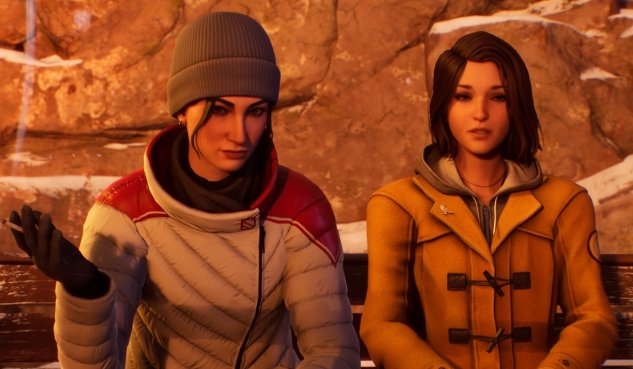
On first listen, it is easy to hear “Someone Was Listening” as a Max Caulfield song. Max is the obvious candidate because Life Is Strange has always associated her with isolation, responsibility, hesitation, and the cost of impossible choices.
Max carries a particular kind of loneliness. Her power separates her from other people because she knows things they do not know, remembers things they cannot remember, and has to live with consequences that are not always visible to anyone else. She is used to doubting her own decisions. She is used to being emotionally elsewhere, even when she is physically present.
So yes, the song can absolutely be read through Max. There is a Max-shaped shadow across it: the fear of choosing wrongly, the fear of involvement, the fear that trying to help might somehow make everything worse. Max has always been a character who knows that care is dangerous once it becomes action.
But the stronger reading is Safi.
Safi’s story in Double Exposure fits the song’s defensive architecture more directly. This is not mainly a song about responsibility. It is a song about self-protection. It is about a person who has built an internal house out of rules, masks, pain, and caution. That feels much closer to Safi’s emotional world.
Safi is not simply isolated. She is guarded. There is a difference. Isolation can happen to you. Guardedness is what you build afterwards. It is the managed face, the controlled access, the instinct to turn vulnerability into a liability before anyone else gets the chance.
That is why the imagery of walls, windows, rules, and intrusion fits her so well. Safi’s emotional life is not only about being alone. It is about having reasons to keep people out. Her fear is not abstract. It has history behind it. Betrayal, self-sabotage, complicated identity, and the need to manage how others see her all sit under the surface.
In that reading, Max becomes less the speaker of the song and more the disruptive figure outside the house. She is the one who arrives with attention, concern, and a talent for disturbing reality. She brings light, yes, but Life Is Strange light is rarely cosy. It usually reveals something everyone was trying very hard not to look at.
Max as the person at the door
Reading Max as the figure at the door gives the song more bite.
Max is not a simple rescuer. She is not emotionally uncomplicated enough for that, bless her. She is a person whose care often comes tangled with guilt, fear, and reality-bending consequences. When Max enters someone’s life, things rarely remain politely arranged.
So if Safi is the one inside the house, Max is not merely offering companionship. She is bringing disruption. She challenges the structure. She notices the cracks. She asks questions. She creates the possibility of being known, which sounds lovely until you remember that being known is exactly what some people have spent years avoiding.
This makes the song less sentimental. The terror is not that nobody listened. The terror is that someone did.
Because being unheard can become part of a person’s identity. It is painful, but it is also stable. If nobody listens, you do not have to change. You do not have to test your defences against actual care. You do not have to find out whether the walls are protecting you or merely preserving an older version of your pain.
Someone listening changes the problem. Now the speaker has to decide what to do with the fact that their call was answered.
That is much more frightening than silence in some ways. Silence confirms the old story. Response complicates it.
The fear of connection is still connection
The final emotional turn of the song is not a clean breakthrough. Good. Clean breakthroughs are often the enemy of decent writing and, frankly, of believable psychology.
The speaker does not stop being afraid. Fear remains loud. The need for connection does not erase the terror of it. Instead, the song arrives at a more adult and more uncomfortable truth: sometimes the fear of letting someone in is still preferable to the deadening safety of going it alone.
That is not a motivational poster. It is not a promise that vulnerability will be rewarded. It might not be. People can let others in and still get hurt. They can trust carefully and still misjudge. They can open the door and discover that the person outside has brought their own chaos, because people insist on doing that.
But the alternative is not neutral. Isolation has costs too. A closed system may feel safe, but it can also become airless. The walls that protect against pain can also block comfort, surprise, repair, intimacy, and all the other irritating things we apparently need.
The song understands that connection is not the absence of fear. Sometimes connection is what happens when fear is still there, sulking in the corner, and you open the door anyway.
Why it works for Life Is Strange
“Someone Was Listening” works so well for Life Is Strange: Double Exposure because the series has always treated emotional life as unstable ground. People in these games do not simply make choices. They live inside the aftermath of choices. They misread each other. They protect themselves badly. They ask for help in ways that make help difficult. They want to be seen, then panic when someone looks too closely.
That is what makes the song feel like more than a soundtrack placement. It captures the emotional machinery of the series: the ache of wanting someone near, the suspicion that closeness will cost too much, and the strange violence of being understood before you are ready.
For Max, the song brushes against responsibility, secrecy, and the burden of acting when every option feels contaminated. For Safi, it goes deeper into the psychology of guardedness: the home built from hurt, the rules that keep others outside, the fear that help may be another form of danger.
The ambiguity is part of the point. The song does not need to belong neatly to one character. It can echo between them. Max and Safi are both caught in the emotional weather of the same question: what happens when someone reaches you in the place you thought was unreachable?
Simply Put
“Someone Was Listening” is not just about vulnerability. It is about the insult of being helped when your defences have become part of who you are.
That is why the song stays with me. It does not treat connection as easy, pure, or automatically healing. It treats it as frightening, intrusive, necessary, and badly timed, which is closer to the truth than most songs about opening up tend to get.
In Life Is Strange: Double Exposure, that makes it especially fitting. Max and Safi are both shaped by the trouble of being seen, but Safi feels like the song’s strongest emotional match. Her story is not only about loneliness. It is about what happens when the walls stop being symbolic and start making decisions for you.
The title, then, lands with a quiet sting. Someone was listening. Not in the abstract, comforting, “you are not alone” sense. Someone actually heard. Someone came close. Someone brought light to the windows and noise to the bricks.
For a person who has survived by keeping the door shut, that is not only hope.
It is a threat.
References
Deck Nine Games. (2024). Life Is Strange: Double Exposure [Video game]. Square Enix.