Social Facilitation: Why We Perform Differently When Other People Are Around
Other people change how we perform. Sometimes they make us sharper, faster, and more focused. Sometimes they make a simple task feel like a public inquiry into our nervous system. Social facilitation helps explain why.
There are some things you can do perfectly well alone until another human being appears.
You can type normally, then someone stands behind you and your fingers begin working as though they have unionised against you. You can reverse a car, lift a weight, solve a problem, make a cup of tea, or walk across a room without drama, but the moment you feel watched, the task becomes strangely theatrical. Your body is still technically yours, but now it seems to be operating under external review.
Other people do odd things to performance.
Sometimes they improve it. A runner finds another gear when someone is beside them. A student works better in a library because everyone else is also quietly losing the will to live over a laptop. A musician plays with more energy in front of an audience. A gamer sharpens up when friends are watching.
At other times, people make everything worse. The simple sentence disappears during a presentation. The practised skill collapses under pressure. The answer you knew five minutes ago wanders off somewhere during the exam and refuses to answer its phone.
This is the basic territory of social facilitation: the way the presence of other people affects individual performance.
It is one of those psychology concepts that sounds obvious until you look at it properly. Of course other people affect us. We are social animals, not sealed productivity units with shoes. The interesting question is not whether people affect us, but why they sometimes make us better and sometimes make us worse.
The cyclists, the fishing reels, and the start of a very useful idea
The story usually begins with Norman Triplett.
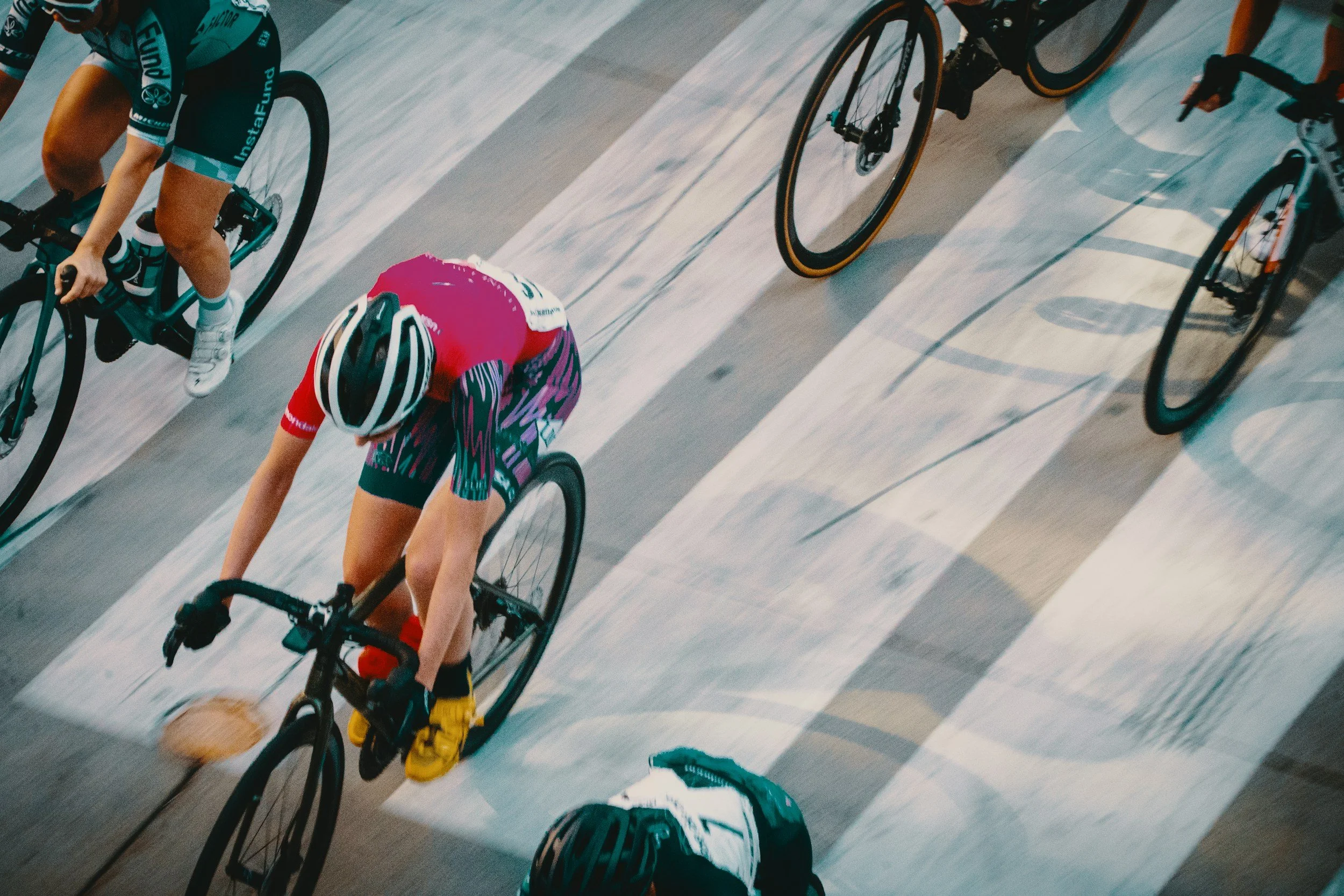
In the late nineteenth century, Triplett became interested in bicycle racing. He noticed that cyclists often seemed to ride faster when racing against other cyclists than when riding alone against the clock. From that observation came a wider question: does the presence of another person doing the same task change how well we perform?
To test this, Triplett designed a task involving children winding fishing reels. The children completed trials alone and alongside another child, while trying to move a small flag around a course as quickly as possible.
It was not glamorous research. There were no brain scanners, no elaborate software, no smooth animations of glowing neural pathways. Just children, fishing reels, competition, and the early beginnings of social psychology, which is honestly a more endearing origin story than most disciplines get.
Triplett concluded that competition could release extra energy and improve performance. His 1898 paper is often described as one of the first experiments in social psychology. It also sits comfortably in the early history of sport psychology, because the whole thing begins with cycling rather than someone reclining on a couch and blaming their mother.
There is a useful caution, though. The textbook version of Triplett’s study is tidier than the original evidence. Later reanalysis suggested that his data were not quite the clean victory for social facilitation that the legend implies.
That does not make Triplett unimportant. It makes him more interesting. Psychology did not arrive fully formed with perfect methods and polished statistics. It staggered into the room with fishing reels and a hunch, which is a decent summary of early science if we are being honest.
The question he opened still stands: what happens to performance when we are no longer alone?
Doing things together, and doing things while watched
Social facilitation can happen in slightly different ways.
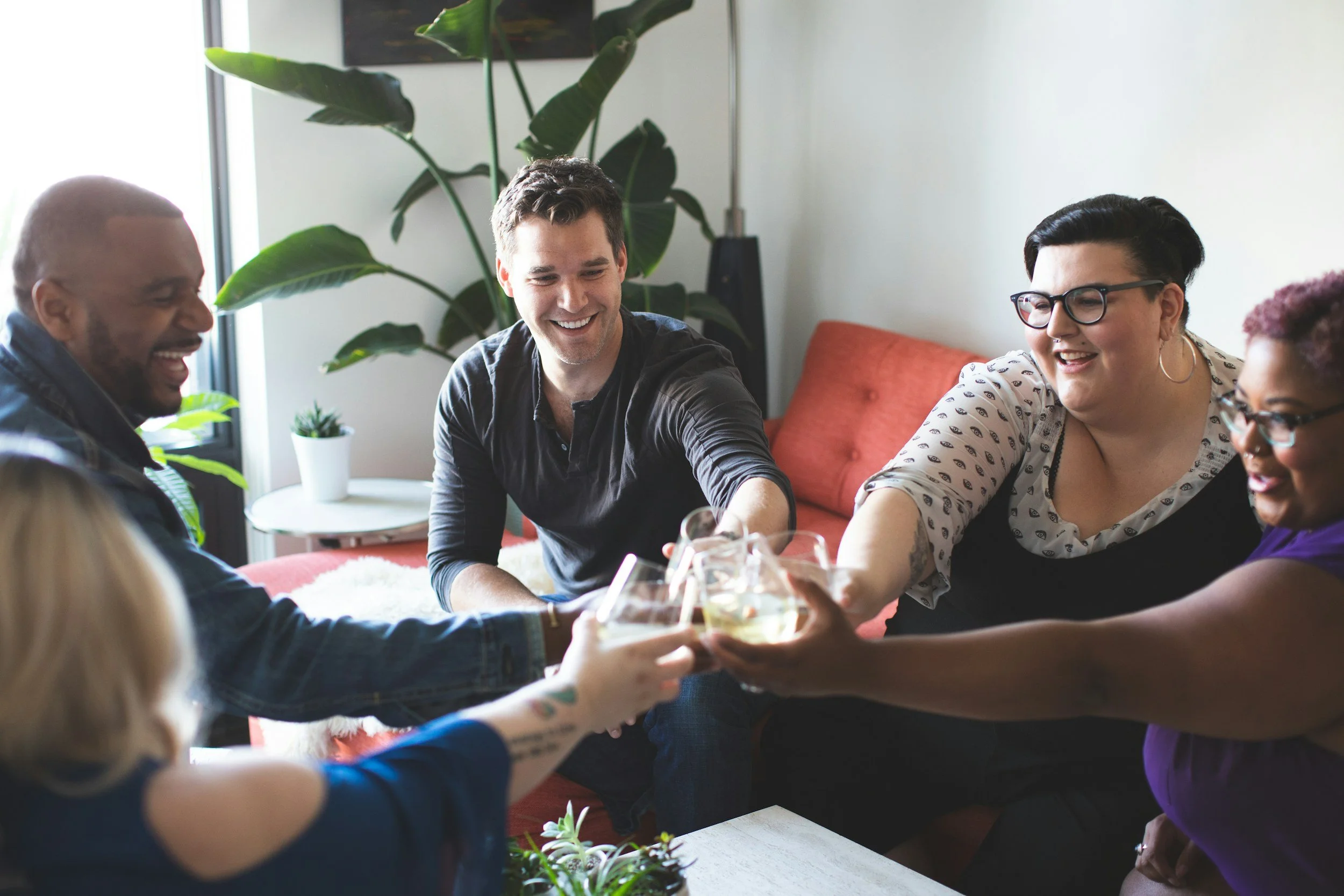
A co-action effect happens when other people are doing the same or similar task nearby. Think of running beside someone, studying in a library, cycling in a group, working at a gym, writing in a café, or sitting in a classroom where everyone is trying to solve the same problem. You may not be directly judged, but the shared activity changes the atmosphere.
An audience effect happens when people are watching you. This can be obvious, as in giving a presentation, performing on stage, taking a penalty, or being observed by a teacher. It can also be more psychological. Nobody may be staring dramatically from the shadows, but if you feel visible, evaluated, or compared, your body can behave as though a panel of judges has quietly assembled behind your left shoulder.
Both forms matter because the social presence does not need to be loud. Sometimes another person simply existing nearby is enough to change the task.
Anyone who has tried to parallel park while a stranger waits behind them understands this at a level too deep for language.
Why other people can make us better
One of the simplest explanations is that other people increase arousal.
Not arousal in the tabloid sense. In psychology, arousal means activation: alertness, energy, readiness, tension, bodily preparation. Heart rate may increase. Attention narrows. Effort rises. The system wakes up.
When the task is easy, familiar, or well-practised, that extra activation can help. You already know what to do, so the presence of others gives the task more charge. The response that comes most naturally is likely to be the right one.
This is why experienced performers often benefit from an audience. A confident speaker may become more animated. An athlete may find more intensity in competition. A student who knows the material may work faster when surrounded by others. A musician may play with more force when the room is alive rather than empty.
It also explains why social settings can make ordinary effort easier. Gyms, libraries, classrooms, rehearsals, co-working spaces, sports clubs, and study groups all borrow from the same principle. Other people give the task weight. They make it feel real.
Sometimes we do better around others because we are inspired. Sometimes it is less noble than that. Sometimes we just do not want to be the only mammal in the room visibly failing to begin.
Why other people can make us worse
The problem is that arousal does not automatically improve performance. It strengthens whatever response is most available.
Robert Zajonc’s classic account of social facilitation argued that the presence of others increases arousal, and that arousal makes dominant responses more likely. If the dominant response is correct, performance improves. If the dominant response is wrong, performance gets worse.
That is the key distinction.
If a task is simple or well-practised, your dominant response is probably useful. You know what to do, and social pressure gives it extra force.
If a task is difficult, unfamiliar, or fragile, your dominant response may be hesitation, rushing, overthinking, guessing, or making the same mistake with fresh commitment. Add an audience, and the nervous system helpfully amplifies the mess.
This explains a lot of ordinary suffering.
The learner driver stalls more when watched. The beginner at the gym loses form when someone looks over. The student forgets an answer they understood in private. The new employee makes strange little errors because someone senior is standing nearby. A person learning a language suddenly cannot retrieve the word for “bread,” despite having had a long and meaningful relationship with bread.
The issue is not always ability. It is often the stage of learning. A skill that is not yet stable can become less stable when attention, pressure, or evaluation enters the room.
This is why “performing under pressure” is not simply a personality trait. It is also a matter of practice, familiarity, and context.
The horror of becoming aware of yourself
Being watched can also make people self-conscious. That sounds mild, but self-consciousness can be a very efficient little saboteur.
When you are doing something automatically, attention is usually on the task. When you feel watched, attention may shift onto the self. How do I look? Am I doing this right? Did they notice that mistake? Are my hands always this strange?
This is particularly damaging for tasks that need flow. Skilled performance often depends on automaticity. You practise until the action no longer needs constant supervision. Then an audience appears, and the conscious mind turns up with a clipboard.
That is when people choke under pressure. The skill is there, but the pressure changes how they access it. Instead of letting the learned behaviour run, they start manually controlling something that should be automatic.
Sport, music, driving, gaming, public speaking, dancing, acting normal at a party: all of them can fall apart when the person starts watching themselves too closely.
There is a special kind of misery in becoming aware of something that normally runs by itself. Walking. Smiling. Holding a cup. Saying hello. Once these become objects of attention, the body starts behaving as though it was assembled from instructions found in a shed.
Being seen is not the same as being judged, but it can feel close
One debate in social facilitation research is whether performance changes simply because others are present, or because we think they might evaluate us.
This is where evaluation apprehension comes in. The idea is that other people affect performance especially when we believe they can judge, approve, disapprove, reward, compare, or criticise us.
A stranger sitting quietly near you in a café is one thing. A teacher standing over your shoulder while you solve a problem is another. A supportive audience is not the same as a hostile one. A coach, examiner, parent, manager, rival, crush, bored teenager, or internet comment section will not all produce the same atmosphere.
The social meaning of the audience changes the experience.
This is why some people work well in public spaces but freeze when formally assessed. It is also why a person can enjoy performing for friends but collapse in front of experts. The bodies in the room are only part of the story. The imagined judgement does a lot of the damage.
Modern life has made this stranger. We are visible in more ways than Triplett could have imagined. Social media turns ordinary action into potential performance. Online gaming adds spectators, rankings, leaderboards, streams, and clips. Workplaces use dashboards, shared documents, read receipts, productivity tools, and meeting cultures that can make everyone feel faintly observable.
Some visibility helps. It can motivate, focus, and connect. Too much visibility makes people brittle. If everything feels evaluable, comparable, and permanently stored somewhere, the nervous system never quite gets to put the clipboard down.
Learning needs the right kind of pressure
Social facilitation is especially useful for understanding learning.
People often practise in one context and perform in another. A student revises alone, then sits in an exam hall. A speaker practises in private, then faces a room. A musician plays at home, then performs on stage. A new employee understands the task in training, then panics when watched by someone with a lanyard and authority.
The performance context changes the task.
This does not mean pressure should be avoided entirely. It means the jump from private practice to public performance can be too large. If the correct response is not yet dominant, social pressure may amplify the wrong one.
A more sensible approach is gradual exposure to the performance setting. Practise alone first. Then with one trusted person. Then with a small group. Then in something closer to the real situation. It is less glamorous than “believe in yourself,” but more useful than simply hoping your nervous system becomes inspirational on demand.
The same principle applies to teaching, coaching, managing, and parenting. Observation is not neutral. Watching someone closely can change the thing you are trying to measure.
A confident learner may benefit from being pushed. A beginner may need space to repeat the task badly without every attempt becoming a public referendum on their worth.
A good teacher knows when to watch and when to step back. A bad one hovers, raises the pressure, watches the learner deteriorate, and then concludes they lack ability. Psychology would like a quiet word.
Simply Put
Social facilitation begins with a very ordinary fact: people change when other people are around.
Not always dramatically. Not always in the same direction. But enough to reshape performance.
Other people can energise us. They can sharpen effort, increase focus, and make familiar skills come alive. They can also make difficult tasks more difficult, fragile skills more fragile, and self-conscious people suddenly aware of their own elbows.
Triplett’s fishing reels may look quaint now, and the original data may be less heroic than the story became, but the question he raised still feels fresh.
What happens when performance becomes social?
The answer is not simply that people make us better or worse. They increase the pressure on whatever is already most likely to happen. If the skill is ready, that pressure can help. If the skill is still forming, it can turn the whole thing into a small private disaster with witnesses.
Sometimes other people bring out our best.
Sometimes they bring out our most dominant response, which is unfortunately not always the same thing.
References
Zajonc, R. B. (1965). Social facilitation. Science, 149(3681), 269–274.
Table of Contents