
There are few things more humbling for the human intellect than watching a beautiful sunset, feeling a moment of quiet awe, and then thinking:
“That cloud looks like a willy.”
It is not our most dignified cognitive achievement.
And yet, it is one of our most revealing.
Because the funny thing is not just that we see shapes in clouds. The funny thing is how quickly those shapes become meanings. One person sees a dolphin. Another sees a rocket. Another sees an angel fleeing the scene. Another sees three suspiciously anatomical cloud formations and immediately ruins the spiritual atmosphere for everyone.
The cloud has not changed.
The observer has.
This is why cloud reading, silly as it sounds, might be one of the most underrated forms of everyday psychology. It is not mystical. It is not scientific in the strict clinical sense. It should not be used to diagnose anyone, predict the future, or decide whether your ex still thinks about you.
But as a small act of reflection, it is surprisingly powerful.
Because clouds are almost perfect projection surfaces. They are visible, unstable, ambiguous, and shared. They give us just enough form to hang meaning on, but not enough certainty to settle the matter. They are the sky’s version of a half-finished sentence.
And the mind hates a half-finished sentence.
The Brain Does Not Like Blank Space
The reason we see faces in plug sockets, animals in stains, monsters in dressing gowns, and willies in the wind is partly because the brain is a prediction machine.
We do not simply record the world as it is. We interpret it. We organise it. We use past experience, expectation, emotion, memory, and context to make sense of what is in front of us. This is usually helpful. If something rustles in the grass, it is safer to briefly think “snake” and be wrong than to think “probably nothing” and be bitten.
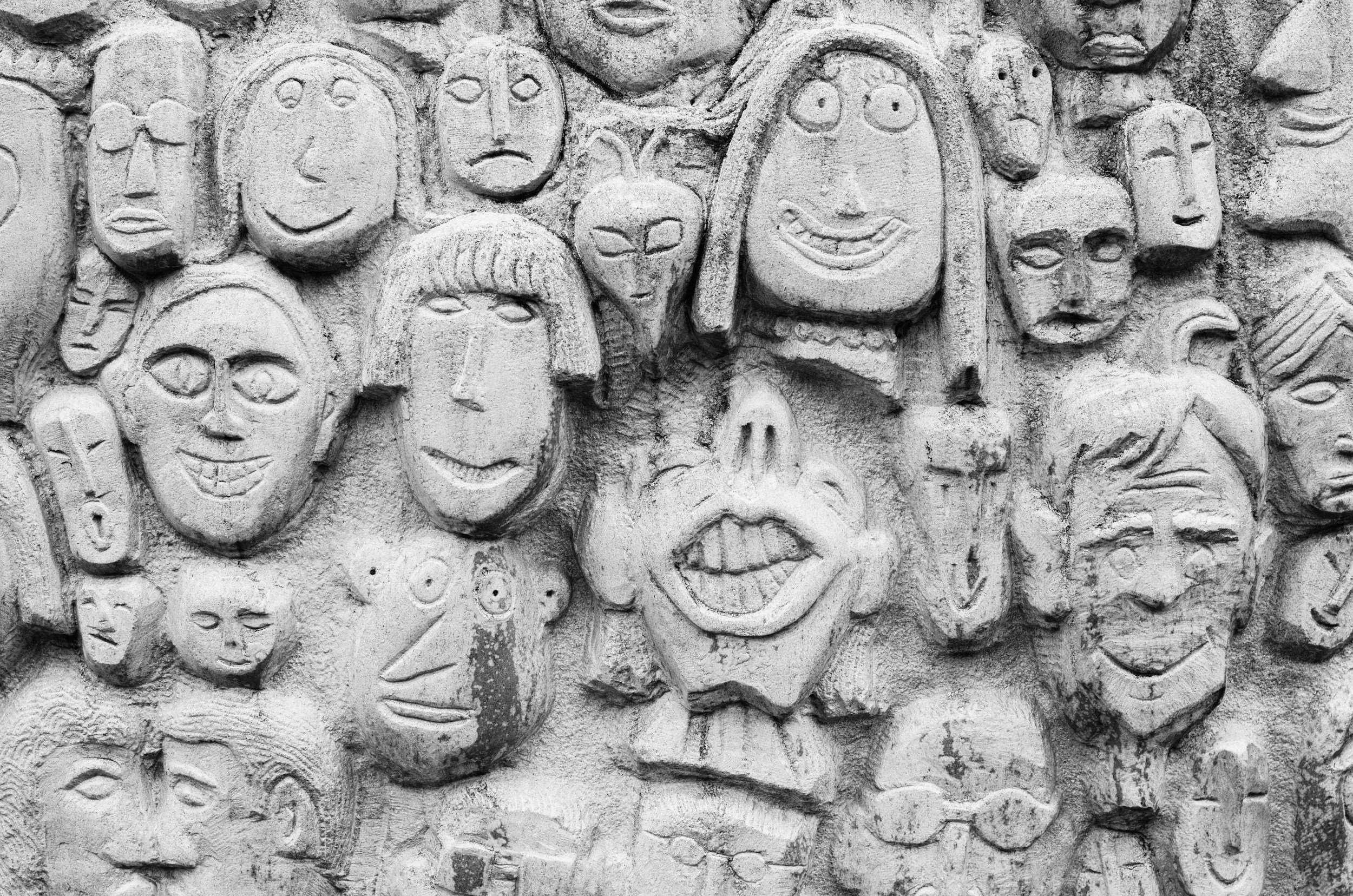
This tendency to perceive meaningful patterns in vague or random information is often called pareidolia. Faces are the classic example. Human beings are so socially tuned that we can detect the suggestion of a face in almost anything: headlights, toast, wallpaper, clouds, buildings, handbags, the front of a disappointed-looking toaster.
That is not a failure of intelligence. It is part of how perception works.
The world is full of incomplete information. We are constantly filling in gaps. Most of the time, we do it so smoothly that we do not notice. Cloud shapes just make the process obvious because the material is so openly absurd.
There is no dolphin in the sky.
There is no angel.
There is almost certainly no giant airborne penis.
But there is a mind trying to make sense of softness, movement, shadow, colour, and form.
That is where things get interesting.
Clouds Are External Dreams
Dream analysis has always had a strange hold on us because dreams feel intimate. They come from inside us. They arrive uninvited, full of odd images and emotional residue. Even when we do not believe dreams are messages, we often feel they are somehow meaningful.
Clouds are different. They are external. Everyone can see them. They are not privately authored by the sleeping mind. They are just weather.
And yet, what we see in them can feel strangely personal.
This makes cloud reading almost like external dream analysis. The image is outside you, but the interpretation is yours. The sky provides the ambiguity. You provide the meaning.
That distinction matters.
A dream asks, “What did my mind produce?”
A cloud asks, “What did my mind select?”
That might make cloud reading less mystical, but in some ways more revealing. You are not analysing an internal film made by the unconscious. You are noticing how your mind behaves when reality gives it room to improvise.
Do you see threat first?
Comedy?
Animals?
Sex?
Spiritual symbols?
Movement?
Faces?
Escape?
Conflict?
Connection?
You are not discovering the secret truth of the cloud. You are discovering the habits of your own attention.
Projection Without the Drama
The word “projection” can sound heavy. In pop psychology, it often gets used as an accusation. “You’re projecting” usually means “you are putting your issues onto someone else, and I am winning this argument.”
But projection does not have to be dramatic or pathological. At its simplest, it refers to the way we bring our own inner material to ambiguous situations.
A cloud does not come with a label. A painting does not come with only one emotional reading. A stranger’s facial expression is rarely as clear as we think. A bridge can be a symbol of strength and stability, or a symbol of connection. A dark forest can feel peaceful to one person and threatening to another. A quiet room can feel calm, lonely, safe, or oppressive depending on who is sitting in it.
The object matters.
But the frame matters too.
This is where symbolic interpretation becomes useful, provided we do not turn it into nonsense. The question is not “what does this cloud definitely mean?” That is the dream dictionary trap. The moment someone says, “If you see a dolphin, it means you desire emotional freedom,” we have left psychology and entered the gift shop.
A better question is:
“What meanings does this image make available?”
Then:
“Which one did I reach for first?”
That is the psychological doorway.
A bridge can be strength, mastery, infrastructure, connection, escape, danger, transition, or exposure. None of those meanings is the one true meaning. They are possibilities. The revealing part is which possibility feels alive to you.
The same applies to clouds.
A shape in the sky may be read as a rocket, a body part, a dolphin, or an angel fleeing into the evening. The image is the same. The interpretation changes. And somewhere in that gap between image and interpretation, the self briefly leaves a fingerprint.
The Correction Is Part of the Meaning
One of the most interesting moments in cloud reading is not the first perception. It is the correction.
You look up and think, “That looks like a willy.”
Then, almost instantly, another part of your mind steps in and says, “No, no, obviously it is a dolphin. Be an adult.”
That little internal edit is fascinating.
The first perception may be quick, playful, crude, anxious, sentimental, or strange. The correction is often social. It is the part of the mind that knows what it is supposed to say. The part that tidies up the first draft. The part that turns “willy” into “abstract form” because it has a degree and a mortgage.
But both responses matter.
The first image tells us something about spontaneous association. The correction tells us something about self-presentation, shame, humour, taste, and social context.
This is why cloud reading works better when it is playful. If you try too hard to be profound, you will censor the good stuff. The point is not to produce a respectable interpretation. The point is to notice the mind before it puts on a blazer.
This Is Not a Diagnosis
It is important to say this clearly: seeing things in clouds does not mean you are disturbed, delusional, secretly obsessed, spiritually chosen, or being contacted by the universe.
Pareidolia is normal. Pattern-making is normal. Symbolic thinking is normal.
In fact, a lot of mental life depends on it. We understand stories through metaphor. We read emotion through expression. We form identities through symbols. We attach meaning to places, songs, objects, rituals, clothes, rooms, smells, photographs, and landscapes.
Human beings are not just information processors. We are meaning-makers.
The risk comes when we forget that we are participating in the meaning-making process. A reflective person can say, “That cloud looks like an angel, and that makes me think about escape.” A less grounded version might say, “The sky is definitely sending me a message and everyone must act accordingly.”
The difference is not whether meaning appears.
Meaning appears all the time.
The difference is whether we can hold it lightly.
That is the healthy use of this kind of reflection. Not certainty. Not prophecy. Not diagnosis. Just curiosity.
A Small Practice in Noticing
There is a simple version of cloud reading that works as a quick self-awareness exercise.
Look at the sky for a moment and ask:
“What did I see first?”
Then:
“What feeling came with it?”
Then:
“What did I change it into once I thought about it?”
That is enough.
You do not need a journal made of recycled moonlight. You do not need incense. You do not need to announce that you are doing “sky work.” You can just notice.
Maybe you see something funny because you are in a lighter mood than you realised. Maybe you see something threatening because your nervous system is already on alert. Maybe you see animals because you are drawn to movement and life. Maybe you see religious imagery because your mind is reaching for transcendence, protection, or escape. Maybe you see rockets because everything currently feels like propulsion, ambition, danger, or leaving.
Or maybe the cloud just looks like a willy.
That is allowed too.
The point is not to force depth onto everything. The point is to recognise that even silly interpretations can reveal the machinery of perception. Sometimes humour is the safest way for the mind to tell the truth. Sometimes the ridiculous image is the one that gets past the guards.
Simply put
Cloud reading never really became a serious psychological tradition, and perhaps that is for the best. The last thing we need is someone charging £80 an hour to tell us that a cumulus formation means we fear commitment.
But as an everyday reflective act, it deserves more respect.
It reminds us that perception is not passive. We do not simply receive the world. We meet it halfway. We bring memory, mood, language, culture, fear, desire, humour, and expectation to everything we see.
The sky is not a blank screen, exactly. It is more like an invitation.
A child sees a dragon.
A tired adult sees a storm coming.
A romantic sees wings.
A comedian sees something unprintable.
A psychologist sees projection.
And sometimes, all of them are right.
Not because the cloud contains all those meanings in some magical sense, but because meaning is not located entirely in the object. It happens in the relationship between the object and the observer.
That is why clouds are so good for this. They do not last long enough to become monuments. They drift, blur, stretch, dissolve, and reform. They resist final interpretation. They keep reminding us that the mind is doing something creative in real time.
So the next time you look up and see a dolphin, an angel, a rocket, or a suspiciously anatomical weather event, do not rush to correct yourself.
Pause for a second.
Ask what you saw.
Ask why that version appeared first.
Then let it pass.
After all, the cloud was never the important part.
The important part was the meaning you made before the wind took it away.
References
Table of Contents











Parties can be fun, awkward, noisy, overwhelming, or all of those within ten minutes. This article explores the psychology of social gatherings, small talk, social anxiety, sensory overload, conversation, exits, and the quiet strategic value of the snack table.