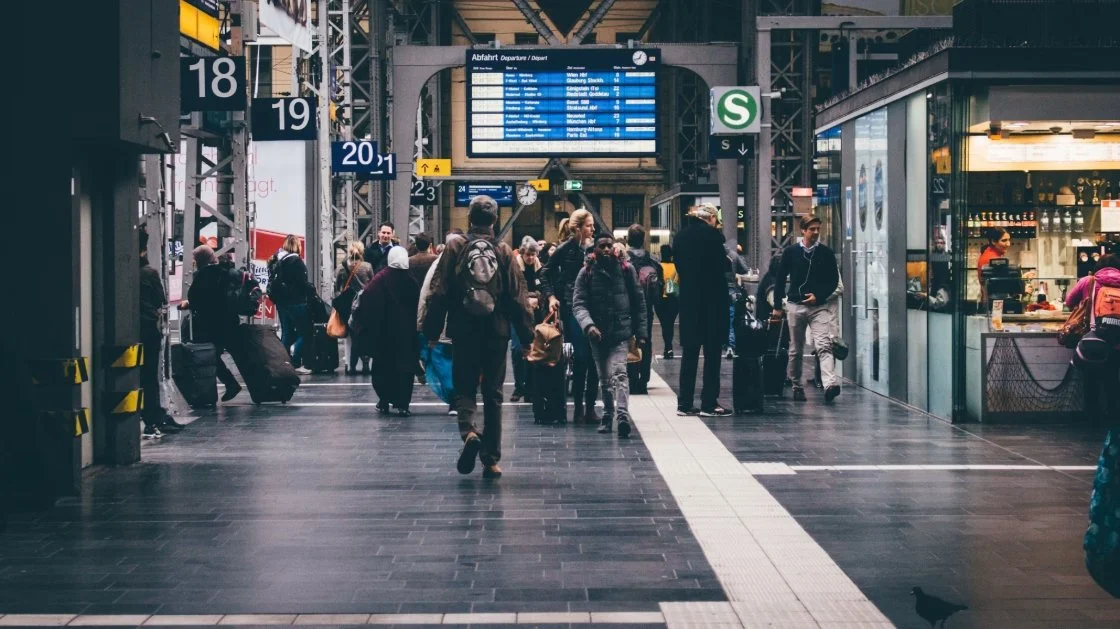
Large transport hubs demand a lot of attention. You may need to read unfamiliar signs, monitor departure boards, avoid crowds, and keep track of your belongings at once. Delays and platform changes can add another layer of strain.
Mental exhaustion in a station is therefore a predictable response to a demanding environment, not a personal failure. A few practical adjustments can reduce the number of decisions you face and leave more attention available for the parts of the trip that genuinely need it.
Sensory Saturation in Crowded Concourses
Busy concourses combine several forms of sensory input. Announcements compete with conversation, footsteps, and transport noise, while bright screens and moving crowds fill your visual field. Your brain must decide which signals matter, and that constant filtering drains mental energy.
Common signs of sensory overload in public include irritability, difficulty concentrating, physical tension, and a strong urge to leave. Some people also notice that ordinary decisions become unusually hard. Choosing a platform entrance or finding a café may suddenly feel like a complicated task.
Reduce the incoming information where possible. Step away from the main flow of passengers and stand near a wall, pillar, or quiet corner. This removes movement from at least one side of your visual field. Lower your screen brightness and pause any non-essential notifications. Noise-reducing earplugs can soften background noise, but you should still be able to hear announcements that affect your trip.
Timing also matters. Arriving 15 to 25 minutes early gives you room to stop and orient yourself without rushing, but arriving far too early can extend your exposure to the environment. If waiting is unavoidable, look for a quieter seating area away from ticket barriers, escalators, and large departure boards. Guidance on sensory-friendly train travel also recommends planning for noise, lighting and personal comfort before reaching the station.
Wayfinding and Mental Fatigue
Wayfinding involves more than following arrows. You must build a mental picture of the building, identify your position within it, and update the route when signs or staff instructions introduce new information. Poor visibility, unfamiliar terminology, and crowded sightlines make this process harder.
Wayfinding also has an emotional side. Uncertainty can create anxiety, particularly when a missed turn could mean missing a connection. Repeated confusion and information overload may contribute to emotional dysregulation, making it harder to stay calm, process directions, and make decisions under pressure. The emotional experience of wayfinding shows why clear information affects confidence as well as physical movement.
Before entering the station, identify three points: the entrance you’ll use, the main departure area, and your likely platform zone. A screenshot of the station map is often more reliable than depending on mobile reception inside a large building. Save the train number and departure time in the same place so you aren’t switching repeatedly between apps.
Inside, follow one information source at a time. Check the official departure board first, then use overhead signs to move towards the correct area. Searching several displays, apps, and messages at once can produce conflicting details and increase cognitive load.
If you lose your bearings, stop before checking directions. Continuing to walk while trying to interpret a map divides your attention and may carry you farther from the correct route. Find a safe space outside the main pedestrian stream, confirm where you are, and choose the next visible landmark. “Walk to the blue information board” is easier to process than a six-step route across several levels.
Eliminating Friction Around Central Stations
Small practical problems consume attention quickly. A heavy case makes stairs and long corridors harder, a low phone battery creates uncertainty, and an unplanned meal adds another decision during a tight connection. Resolve these details before entering the busiest part of the hub.
Start with your luggage. Keep travel documents, medication, water, and charging equipment in one accessible pocket. If you have several hours between arrival and check-in, carrying a suitcase through crowded public spaces may add avoidable physical and mental strain. For example, travellers asking is there luggage storage at Union Station Toronto can review nearby bookable storage options before reaching the station. Confirm opening hours, booking details, and the collection deadline in advance.
Next, prepare for predictable device problems. Charge your phone before leaving and carry a compact power bank if your tickets, maps, or payment cards depend on it. Take screenshots of QR codes and booking references because underground platforms and enclosed concourses may have patchy reception.
Choose a meeting point before splitting up from companions. “Near the main entrance” is too vague in a building with several entrances. A named shop, information desk, or numbered exit gives everyone a fixed destination if messages fail.
Finally, leave some flexibility around food and toilets. Use facilities before joining a platform queue, and carry a simple snack if it suits you. These basic needs can become urgent under stress, drawing attention away from signs and announcements at exactly the wrong moment.
Anchoring Techniques for Overwhelmed Commuters
When overload builds, return your attention to a small amount of immediate information. Anchoring techniques can interrupt the spiral of scanning every face, sign and possible route.
Begin with physical contact. Notice both feet on the floor and the pressure of your bag strap or coat against your body. Take a slow breath with a slightly longer exhale, then name three neutral things you can see. A clock, a green sign, and a row of seats are enough. The objects themselves don’t matter. The exercise gives your attention a clear boundary.
Next, state the immediate task in plain language: “I’m waiting for platform information” or “I need to reach exit four.” This limits the urge to solve every later part of the trip at once. If the platform hasn’t been announced, you don’t yet need to work out the exact carriage position.
Crowds require practical awareness alongside emotional regulation. Advice for moving through crowded hubs includes keeping your belongings controlled and staying aware of changing pedestrian flow. Hold bags close without gripping them so tightly that your shoulders tense. Move to the side if you need to stop, since standing in the centre of a moving crowd can increase pressure and confusion.
If symptoms continue to rise, ask station staff a specific question. “Which sign should I follow for platform six?” requires a simpler answer than a full explanation of your trip. Clear questions reduce the amount of information you must process.
Building Resilient Travel Routines
A resilient routine turns repeated decisions into familiar actions. This can be especially useful for commuters, people who experience sensory sensitivity and travellers who find unfamiliar buildings stressful.
Create a short pre-departure sequence and keep it consistent. Check the service status, confirm the arrival entrance and save the ticket offline. Pack essential items in the same pockets each time. Repetition builds reliable cues, so you spend less attention searching for a charging cable or wondering where you placed your travel card.
Plan a buffer that reflects the trip’s complexity. Ten extra minutes may suit a familiar direct route, while an unfamiliar international connection could need far more. A buffer absorbs ordinary friction such as a queue, a slow lift, or a last-minute platform change. Excessive waiting may be counterproductive if prolonged exposure to crowds drains you.
After travelling, note one point of difficulty while it is still fresh. Perhaps the station’s north entrance was quieter, a particular waiting area had fewer announcements, or your bag became uncomfortable after 20 minutes. Use that observation to adjust the next trip. Avoid turning the review into a judgement of how well you coped.
Regular commuters can also establish a recovery cue for arrival. Drinking water, sitting quietly for five minutes, or walking a calm route out of the station tells the body that the demanding part has ended. On your next visit, aim for one dependable sequence: enter through the planned door, check one departure board, and wait in a spot outside the main flow. Familiarity can make even a very large hub feel more manageable.
Table of Contents