Falling on Their Swords: Why British Prime Ministers Keep Choosing the Blade
British politics still enjoys the language of honour. It likes ceremony, grave statements, black doors, flags, duty, service, and phrases that make institutional panic sound as if it has been carefully tailored in Savile Row.
So when a prime minister reaches the end, they rarely just quit. They do not say, “My MPs have lost their nerve, the polling is poisonous, and my continued presence has become electorally inconvenient.” They “fall on their sword.”
It is a lovely phrase, really. Noble. Antique. Slightly Roman. It turns a political collapse into a moral gesture. The defeated leader becomes someone who has accepted responsibility, preserved dignity, and chosen sacrifice over selfish survival.
The trouble is that in modern Westminster, the sword is rarely held by the person falling on it.
It is usually being held by the party.
When the Party Holds the Sword
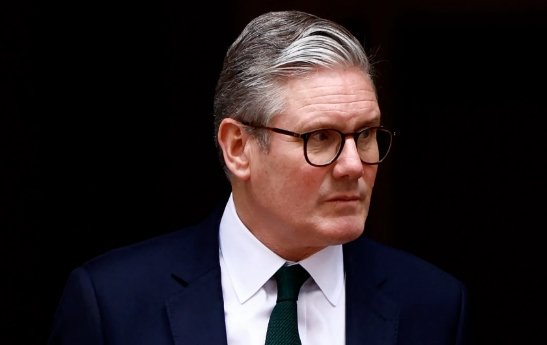
Keir Starmer’s announced resignation, less than two years after Labour’s landslide election victory, fits a pattern that has become too familiar to feel exceptional. The United Kingdom has developed a strange modern habit: prime ministers arrive promising stability, discover that governing is unpopular, then leave before the public has had a chance to judge them at the next general election.
David Cameron left after Brexit. Theresa May was consumed by Brexit. Boris Johnson survived scandal until scandal became insufficiently loyal to him. Liz Truss turned economic self-harm into a speedrun. Rishi Sunak inherited the ruins and lost. Now Starmer, elected as the grown-up corrective to chaos, has ended up as another exhibit in the national museum of premature exits.
The official language is always composed. There is reflection. There is duty. There is service. There is usually a sentence about family, which no decent person wants to mock too harshly because politics does genuinely eat lives. But beneath the polished surface is a cruder mechanism: parties remove leaders when the symbolic cost of keeping them becomes too high.
That is the part we should pay attention to.
Accountability, or Convenient Disposal?
“Falling on your sword” traditionally means accepting blame. In the classical version, the act has a brutal clarity. Defeat has happened. Honour requires ownership. The defeated person chooses the end rather than waiting for humiliation.
In Westminster, the psychology is messier. A resignation can be accountability, but it can also be displacement. The party takes a wide, structural failure and squeezes it into one human shape. Living standards have stalled. Public services are strained. The economy feels anaemic. Immigration is politically toxic. Trust is low. The opposition smells blood. Reform lurks in the corner like a fox that has learned PowerPoint.
Then, after all that, the party decides the problem is the leader.
Sometimes it is true. Leaders matter. They set tone, direction, priorities and emotional weather. A bad leader can make a hard situation worse. A weak leader can make a government feel hollow. A leader who cannot communicate purpose leaves the public with only pain, abstraction and the faint sense that someone in a suit is asking them to be patient for reasons too boring to survive contact with a gas bill.
But the danger of resignation politics is that it lets everyone else pretend the deeper problem has been handled.
The Psychology of the Sacrificial Leader
A leadership resignation turns government failure into a personnel issue. Replace the face, reset the story, stand someone new outside the black door, and hope the country mistakes movement for repair. It is politics as rebranding exercise, with the usual British bonus of everyone pretending the rebrand is an act of grave constitutional responsibility.
There is a psychological comfort in this. Parties under threat want control. MPs facing angry voters want a villain. The media wants a plot. The public wants consequences. A leadership change offers all of them something. It gives the party a new beginning, MPs a line to use on doorsteps, journalists a contest, and voters the sensation that someone has paid a price.
The problem is that symbolic punishment is not the same as political renewal.
A country can change prime minister and still keep the same fiscal constraints, the same exhausted public services, the same cost-of-living pressure, the same housing crisis, the same regional inequalities, and the same national mood of damp managed decline. There is only so much healing one leadership contest can do before it becomes theatre with a ballot paper.
This is where the idiom starts to curdle. Falling on your sword sounds like an act of responsibility, but in contemporary British politics it often becomes a way for parties to avoid collective responsibility. The leader absorbs the shame. The system survives unexamined. Everyone moves on, or at least pretends to, until the next leader discovers that the public has not been magically pacified by a new face and a slightly different tie.
How the World Reads British Instability
This also damages how the country is seen from outside.
Internationally, Britain has long traded on an image of political steadiness. Not glamour, necessarily. Not speed. Not wild visionary energy. More the reputation of being a boringly competent country with old institutions, reliable courts, diplomatic memory, and a useful habit of not turning every crisis into a constitutional panic room.
That image has taken a beating.
From outside, the past decade has not looked like healthy democratic responsiveness. It has looked like churn. A referendum detonates the political order. Prime ministers come and go. Foreign partners build relationships with one leader, then the next, then the next. Investors watch fiscal promises become dependent on internal party weather. Allies trying to coordinate defence, Ukraine policy, Europe, trade, climate, migration and security have to keep asking the same awkward question: who exactly speaks for Britain this year?
Stability Is a Reputation, Not a Slogan
Credibility is not only about policy. It is also about continuity.
A country can be respected while changing governments. Democracies do that all the time. Elections are meant to change things. But constant leader turnover between elections creates a different impression. It suggests that the political class cannot hold itself together long enough to deliver on its own promises. It makes commitments feel provisional. It encourages allies to hedge, markets to wait, rivals to probe, and smaller partners to wonder whether a British agreement will outlive the next polling collapse.
There is also a reputational irony here. Britain spent years after Brexit trying to prove that it was still serious, still outward-facing, still globally relevant, still capable of being more than a country angrily refreshing its own weather app. Each new prime minister has arrived with some version of the same promise: stability, renewal, competence, grown-up government, reset, seriousness.
The words are fine. The shelf life has been less impressive.
The Collapse of Boring Competence
Starmer’s particular difficulty is that he was elected as the answer to instability. He was not sold as a revolutionary figure. He was sold as the adult in the room, the careful lawyer, the manager, the man who would make politics boring again in the best possible sense. For that project to collapse into another leadership transition is politically brutal because it does not merely damage one politician. It damages the idea that boredom itself can save us.
And perhaps that is the darker lesson.
The British public does not simply want calmer leaders. It wants visible improvement. It wants a politics that can survive contact with ordinary life: bills, housing, waiting lists, wages, trains, schools, safety, immigration, dignity, and the miserable little admin tasks of living in a country that increasingly feels like it was designed by a committee that left halfway through.
When those things do not improve, the leader becomes the container for national frustration. They are easier to remove than the conditions that made them unpopular. So the sword appears again.
When Resignation Replaces Governing
There is accountability in resignation, but there can also be cowardice hidden inside it. Not always personal cowardice. Sometimes institutional cowardice. The unwillingness to govern through unpopularity. The inability to explain trade-offs. The fear of telling voters that some problems cannot be fixed within one media cycle. The habit of treating public anger as a signal to change leader rather than a signal to change the structure underneath.
Democracy needs leaders who can be removed. That is rather the point. Nobody should mourn the loss of untouchable prime ministers. The danger is not that leaders resign. The danger is that resignation becomes the substitute for governing.
A prime minister should sometimes fall on their sword. There are failures so clear, so personal, so damaging, that remaining in office becomes an insult to the public. But when every storm ends with another leader bleeding politely outside Downing Street, the ritual begins to lose meaning. The blade no longer signals honour. It signals exhaustion.
Simply Put
Britain now looks like a country where leaders do not weather public opinion so much as get processed by it. Polling shifts, factions panic, newspapers sharpen the mood, MPs count their majorities, and suddenly the national interest requires the very thing that also happens to be convenient for the party.
The sword gleams. The speech is written. The exit is framed as dignity.
Then the next leader steps forward, promising stability, renewal and seriousness, while standing on a floor still sticky from the last act of sacrifice.
References
GOV.UK. (2026). Past Prime Ministers.
Reuters. (2026, June 22). A decade of chaos: Britain prepares for seventh prime minister.
Reuters. (2026, June 22). Unloved and directionless, UK’s Starmer quits after just two years.
Table of Contents